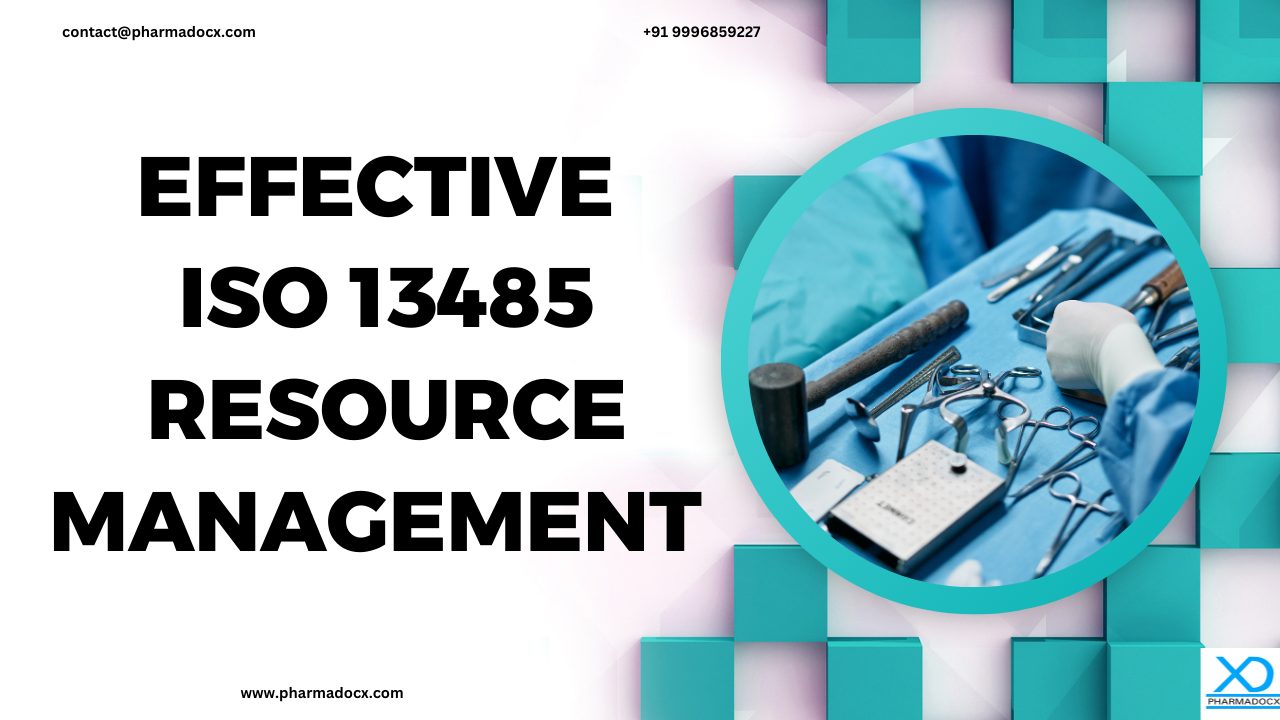
ISO 13485 resource management is a critical part of the Quality Management System (QMS) under ISO 13485:2016. ISO 13485 resource management ensures organizations maintain competent personnel, reliable infrastructure, controlled environments, and calibrated monitoring tools. This is necessary to consistently deliver safe, effective, and compliant medical devices. It requires companies to define and maintain personnel competence through training and records. Additionally, it requires companies to provide and sustain suitable infrastructure, such as buildings, utilities, and equipment. Moreover, it requires establishment of controlled work environments to prevent contamination or errors. Furthermore, it requires companies to ensure monitoring and measurement equipment is properly calibrated and traceable to international standards. Thus, these elements create a structured, auditable framework that supports regulatory compliance, operational efficiency, risk mitigation, and safeguards patient safety.
What is ISO 13485?
ISO 13485 is the internationally recognized standard that specifies requirements for a quality management system (QMS) in the medical device industry. It ensures that organizations consistently design, develop, produce, install, and service medical devices that meet regulatory and customer requirements. It covers the entire product lifecycle from concept and design through manufacturing, distribution, and post-market activities. Its focus is risk management, regulatory compliance, and maintaining effective processes to safeguard patient safety. Compliance with ISO 13485 is often a prerequisite for regulatory approval in many countries. Hence, it is a cornerstone for organizations seeking to demonstrate their commitment to quality and gain global market access.
What is ISO 13485 resource management?
ISO 13485 is the international standard for QMS in the medical device industry, covering the entire product lifecycle. ISO 13485 resource management ensures that organizations allocate and maintain adequate resources, namely human, physical, and infrastructural, to meet regulatory and customer requirements. Resource management under ISO 13485 focuses on systematically planning and controlling the resources required to establish and sustain an effective quality management system. It covers key elements, such as human resources, infrastructure, work environment, and essential equipment. When managed efficiently, these resources ensure that every aspect of production and service delivery complies with regulatory standards while consistently meeting customer expectations.
4 Key components of ISO 13485 resource management
ISO 13485 resource management has several key components. It ensures organizations have the right capabilities, infrastructure, and environment to consistently deliver safe and effective medical devices. We have discussed the major key components.
- Human resources: Personnel must be competent based on education, training, skills, and experience. Organizations must define competence requirements for each role, provide training or take other actions to achieve competence, evaluate effectiveness of training, and maintain records of competence and training. Employees must be aware of how their work impacts product quality and patient safety.
- Infrastructure: Infrastructure includes buildings and workspace, utilities (electricity, water, HVAC), equipment (production, testing, IT systems), and supporting services (transportation, communication). Organizations must provide and maintain infrastructure to ensure product conformity. Preventive maintenance and calibration programs are essential.
- Work environment: Work environment must be suitable to achieve product requirements. It includes controlled conditions (e.g., cleanrooms, sterile areas), safety, cleanliness, and ergonomics, and environmental controls to prevent contamination or mix-ups. Organizations must document and monitor environmental conditions in cases where they impact product quality.
- Monitoring and measurement resources: Equipment used for inspection, measurement, and testing must be calibrated against traceable standards, maintained and verified regularly, and identified with calibration status. Records of calibration and maintenance must be maintained. If equipment is found nonconforming, organizations must assess the validity of previous results and take corrective action.
Why do these components matter?
- Audit readiness: Proper resource management ensures organizations can demonstrate compliance during regulatory audits.
- Risk mitigation: By ensuring competence and infrastructure reliability, companies reduce risks of product failure or regulatory non-compliance.
- Operational efficiency: Streamlined resource allocation improves productivity and reduces waste.
- Patient safety: Resource management safeguards the end user by ensuring devices are manufactured under controlled and competent conditions.
Benefits of effective resource management
Effective resource management under ISO 13485 is a cornerstone of compliance, quality, and competitiveness. It ensures safe devices, efficient operations, and resilient organizations.
- Regulatory compliance and audit readiness: Ensures organizations meet ISO 13485 and regional regulatory requirements (FDA, Health Canada, EU MDR, CDSCO).Demonstrates competence, infrastructure control, and calibration records during audits. Reduces risk of nonconformities and penalties.
- Enhanced product quality and patient safety: Competent personnel and controlled environments minimize errors and contamination. Calibrated monitoring equipment ensures accurate testing and validation. Directly safeguards patient health by ensuring devices are safe and effective.
- Operational efficiency: Streamlined allocation of people, infrastructure, and tools reduces downtime. Preventive maintenance avoids costly breakdowns. Training programs improve productivity and reduce rework.
- Risk mitigation: Proactive resource planning reduces risks of supply chain disruptions, equipment failures, or skill gaps. Documented competence and calibration records provide traceability in case of product recalls or investigations.
- Employee engagement and competence: Structured training and awareness programs empower staff. Clear competence requirements build confidence and accountability. Motivated employees contribute to a culture of quality.
- Cost savings: Preventive maintenance and efficient resource use reduce waste and repair costs. It helps avoid regulatory fines and product recalls. Additionally, optimized workforce utilization lowers overhead.
- Strategic flexibility and scalability: Well-managed resources allow organizations to adapt quickly to new regulations, technologies, or market demands. Supports expansion into new geographies with harmonized compliance frameworks. Enables digital QMS modernization and integration of advanced tools.
How to implement effective ISO 13485 resource management? 5 step strategy
To successfully implement ISO 13485 resource management, organizations should adopt a structured approach that includes:
- Assessment: Perform a comprehensive evaluation of existing resource management practices to identify gaps and opportunities for improvement.
- Planning: Create a detailed resource management plan that defines required resources, such as personnel, infrastructure, and equipment, along with clear roles and responsibilities.
- Training: Establish robust training programs to ensure employees understand ISO 13485 requirements and their responsibilities in sustaining the Quality Management System (QMS).
- Documentation: Keep accurate and complete records of all resource management activities, including training logs, equipment calibration data, and maintenance reports.
- Continuous improvement: Regularly monitor, review, and refine resource management processes to remain aligned with evolving regulatory requirements and industry best practices.
Pharmadocx Consultants: Your trusted ISO 13485 support
Therefore, effective resource management under ISO 13485 is the backbone of a robust quality management system. It ensures that organizations have the right people, infrastructure, environment, and monitoring tools to consistently deliver safe and compliant medical devices. By aligning competence, maintenance, calibration, and controlled conditions with regulatory requirements, companies can not only achieve audit readiness but also strengthen operational efficiency, reduce risks, and safeguard patient safety. When implemented as a continuous improvement cycle, resource management transforms compliance into a strategic advantage. It builds resilience, trust, and long-term success in the global medical device market.
We at Pharmadocx Consultants offer comprehensive services to assist medical device manufacturers in managing their resources efficiently and effectively. Our service covers gap analysis, staff training, and infrastructure optimization. Our team will provide the expertise and support needed to comply with ISO 13485 resource management requirements. By partnering with us you can easily achieve ISO 13485 compliance. Our support will enhance operational efficiency, product quality, and boost overall success in this competitive and highly regulated medical device industry. Drop an email at [email protected] or call/Whatsapp on 9996859227 to partner with our team. Effective ISO 13485 resource management will ensure competent teams, reliable infrastructure, and controlled environments that drive patient safety, operational efficiency, and global market readiness.