The Medical Device Single Audit Program (MDSAP) is a global framework that satisfies the regulatory requirements of multiple countries. MDSAP reduces duplication and ensures consistent quality product oversight. It is now recognized by several major regulators worldwide. In this blog, we have focused on the benefits of MDSAP.
MDSAP is not just another certification. It is a regulatory audit program that can open doors to multiple markets simultaneously but demands preparedness and operational discipline.
What is MDSAP?
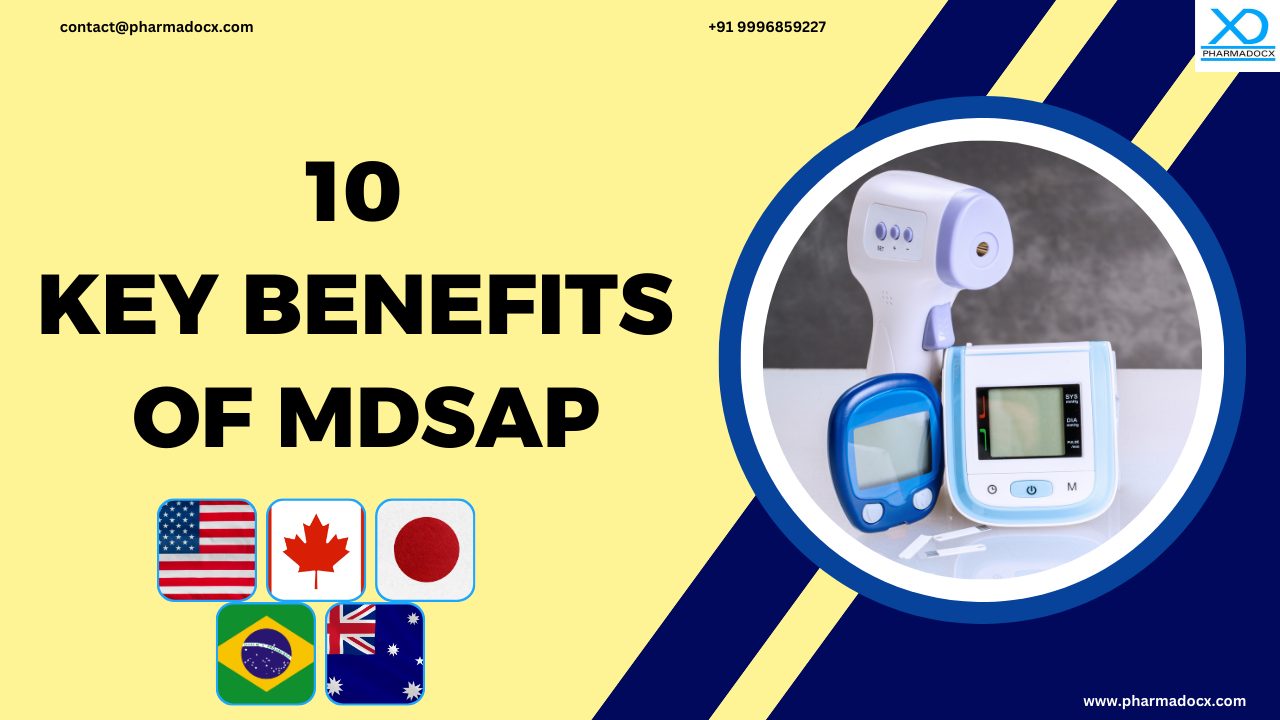
The Medical Device Single Audit Program (MDSAP) allows medical device manufacturers to undergo a single, comprehensive audit of their QMS to meet the regulatory requirements of multiple jurisdictions simultaneously. MDSAP is an international initiative developed by the International Medical Device Regulators Forum (IMDRF). Built on the foundation of ISO 13485:2016, MDSAP audits evaluate processes, such as management responsibility, design and development, production controls, and post-market surveillance, while also incorporating country-specific regulatory requirements. The program is officially recognized by regulators in the United States (FDA), Canada (Health Canada), Brazil (ANVISA), Japan (MHLW/PMDA), and Australia (TGA). Hence, one audit report can be used across these markets.
For manufacturers, MDSAP reduces the burden of multiple audits, enhances global market access, and ensures consistent compliance. However, it is often more rigorous than single-country audits and requires robust preparation and documentation. Key benefits of MDSAP are efficiency, global market access, consistency, and reduced audit fatigue due to multiple audits.
Purpose and vision of MDSAP
- Efficiency: Reduces audit duplication and regulatory burden.
- Safety: Enhances global oversight and product safety.
- Transparency: Promotes consistent audit standards and outcomes.
MDSAP audit focuses on seven key processes
- Design and development
- Management
- Measurement, analysis, and improvement
- Production and service controls
- Purchasing
- Device marketing authorisation and facility registration
- Medical device adverse events and advisory notices reporting
Each process is linked to specific questions, audit tasks, and evaluation criteria. These must be addressed to demonstrate compliance with ISO 13485:2016 and the regulatory requirements of all the participating MDSAP countries.
What is the MDSAP audit cycle?
The MDSAP audit cycle has a three-year period. It is designed to ensure ongoing compliance with ISO 13485:2016 guidelines, global regulatory requirements as well as participating regulatory authorities’ requirements. It consists of 3 phases:
- Initial Certification Audit (Year 1)
- Surveillance Audits (Years 2 and 3)
- Recertification Audit (Year 3 end/start of next cycle)
Each of these stages of the MDSAP audit cycle has defined purpose, scope, focus areas.
Countries participating in MDSAP
- MDSAP members: Health Canada,Therapeutic Goods Administration of Australia, Brazil’s Agência Nacional de Vigilância Sanitária, U.S. Food and Drug Administration, and Japan’s Ministry of Health, Labour and Welfare and the Japanese Pharmaceuticals and Medical Devices Agency
- MDSAP official observers: Singapore’s Health Sciences Authority, European Union, The World Health Organization (WHO) Prequalification of In Vitro Diagnostics (IVDs) Programme, and United Kingdom’s Medicines and Healthcare products Regulatory Agency
- MDSAP affiliate members: Argentina’s National Administration of Drugs, Foods and Medical Devices, Ministry of Health of Israel, Taiwan Food and Drug Administration, South African Health Products Regulatory Authority, Federal Commission for Protection from Sanitary Risks of Mexico, Kenya’s Pharmacy and Poisons Board, and Republic of Korea’s Ministry of Food and Drug Safety
Key features
- Single audit, multiple approvals: One audit report can be submitted to all participating regulators.
- Audit model: Structured around defined processes (e.g., management, design, production, post-market surveillance).
- Risk-based approach: Focuses on areas critical to patient safety and regulatory compliance.
- Audit sequence: Auditors follow a standardized sequence to ensure consistency across jurisdictions.
How does MDSAP work?
We have presented in brief how does MDSAP work.
- A recognized Auditing Organization (AO) conducts the audit using the MDSAP audit model. It evaluates the manufacturer’s Quality Management System (QMS) against ISO 13485:2016 and jurisdiction-specific requirements.
- The audit covers key processes like management controls, design and development, production, purchasing, and post-market surveillance.
10 key benefits of MDSAP
MDSAP helps streamline and simplify the regulatory process. It reduces costs associated with multiple regulatory processes, minimizes redundant inspections, and improves global market access. We have highlighted the 10 key benefits of MDSAP.
Benefits of MDSAP
- Single audit, multiple markets: One audit report satisfies regulatory requirements for the U.S. (FDA), Canada (Health Canada), Brazil (ANVISA), Japan (MHLW/PMDA), and Australia (TGA). This reduces duplication and accelerates global market access.
- Reduced audit burden: Instead of preparing for separate audits by each regulator, manufacturers undergo one harmonized audit. This leads to less disruption of operations and fewer audit scheduling conflicts. Hence, this is one of the key benefits of MDSAP.
- Regulatory confidence and transparency: Regulators gain access to standardized, detailed audit reports. This enhances trust in manufacturers’ compliance systems and reduces the need for additional inspections.
- Alignment with ISO 13485:2016: MDSAP audits are built on ISO 13485, thereby ensuring global consistency in quality management systems. Hence, manufacturers already certified as ISO 13485 compliant find it easier to adapt to MDSAP requirements.
- Risk-based approach: Focuses on processes most critical to patient safety and product quality. This helps companies prioritize resources where risks are highest.
- Audit predictability and standardization: Auditors follow a defined sequence and structure, thereby reducing variability. Hence, manufacturers know exactly what to expect, thereby making preparation more efficient.
- Improved internal readiness: Preparing for MDSAP strengthens documentation, training, and compliance culture. Hence, companies become more resilient under audit pressure.
- Competitive advantage: Demonstrating MDSAP compliance signals strong global regulatory alignment. This can be used as a differentiator and advantageous edge when partnering with distributors or entering new markets.
- Reduced regulatory inspections: FDA may rely on MDSAP audit reports instead of conducting routine inspections. This saves time and resources for both regulators and manufacturers. Thus, this is one of the major benefits of MDSAP.
- Facilitates global harmonization: MDSAP encourages convergence of regulatory requirements across participating countries. Hence, it helps manufacturers design systems that meet multiple jurisdictions simultaneously, thereby reducing complexity.
Benefits of MDSAP for regulatory bodies and patients
MDSAP is beneficial for medical device manufacturers as well as regulatory bodies and patients. We have highlighted how it is beneficial for regulatory bodies and patients.
- Regulatory bodies: Participating regulatory bodies will be assured that the MDSAP audits have been conducted in accordance with the mutually agreed terms and requirements. Hence, the QMS and manufacturing process as well as the finished product will be as per standards agreed upon by the participating country. This will also reduce the workload of individual regulatory authorities.
- Patient safety: MDSAP certification assures patients and end-users that all medical devices are safe and effective as well as are of internationally accepted quality standards.
Pharmadocx Consultants: Your trusted MDSAP certification partner
Therefore, the Medical Device Single Audit Program (MDSAP) streamlines compliance, reduces regulatory burdens, and strengthens global market access through a single, harmonized audit process. By aligning with ISO 13485 and incorporating country-specific requirements, MDSAP not only saves time and resources but also fosters a culture of quality, risk-based thinking, and operational discipline. Its standardized approach enhances transparency for regulators, builds trust with stakeholders, and provides companies with a competitive edge in an increasingly complex global landscape. Hence, MDSAP promotes regulatory confidence, patient safety, and international growth.
In this blog, we have highlighted the benefits of MDSAP. MDSAP certification is crucial to enter and place your products in various regulated global markets. We at Pharmadocx Consultants offer end-to-end MDSAP certification service tailored to your needs. To easily secure the MDSAP certification, drop an email at [email protected] or call/Whatsapp on 9996859227.