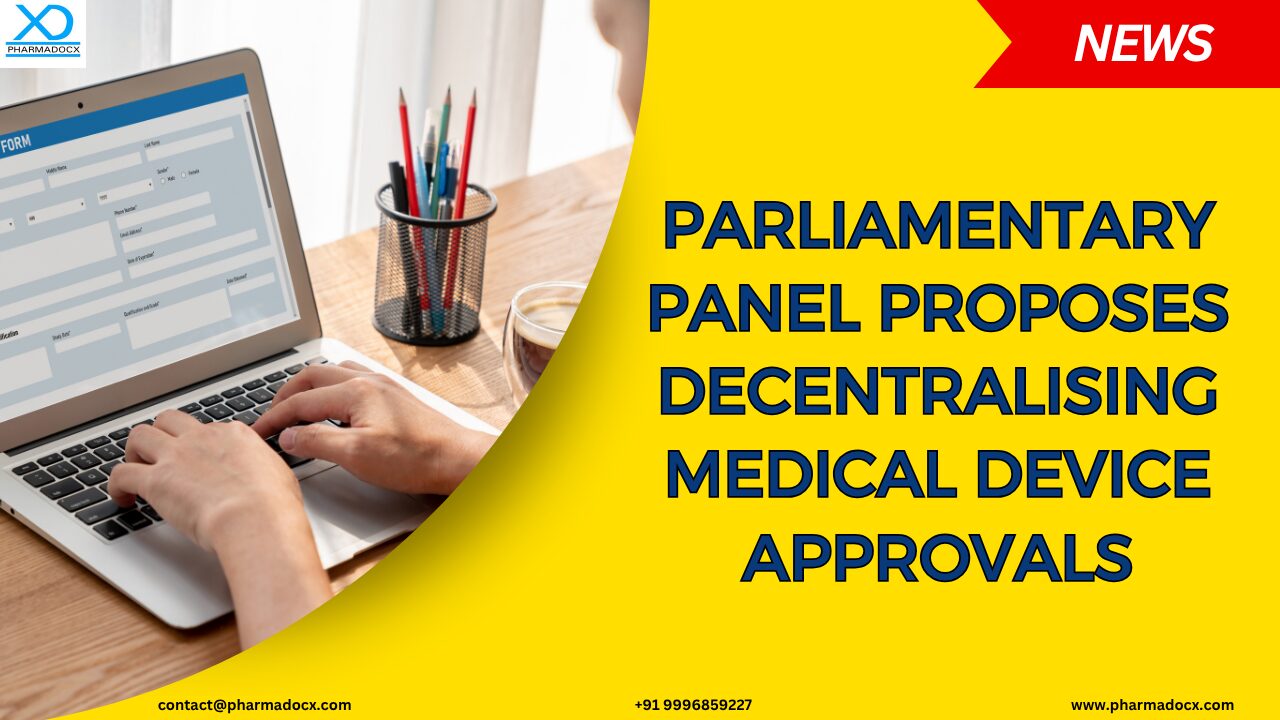
India’s parliamentary panel has recommended decentralising medical device approvals to State Licensing Authorities. The aim is to reduce delays, improve efficiency, and strengthen competitiveness. The reforms target bottlenecks in CDSCO processes, especially for imports and high-risk Class C/D devices. The panel has proposed AI-driven validation, a unified dashboard, and self-financing regulatory systems.
CDSCO medical device classification
Based on certain parameters, such as risk level and intended use, medical devices are grouped into specific classes. The CDSCO medical device classification helps determine the regulatory pathway and requirements for market authorization of medical devices in a country. The manufacturer can fill in the registration and licensing paper work depending on the medical device class.
Medical devices are divided into four classes, A, B, C, and D. The classification system is sorted from the lowest to the highest risk.
- Class A: Low-risk medical devices are grouped as class A. Examples: gloves, elastic bandages, hot water bags, sphygmomanometer, and walking aids. State licensing authority issues a CDSCO MD 5 license to manufacture Class A medical devices.
- Class B: Low to moderate-risk medical devices are grouped as class B. Examples: syringes, surgical instruments, blood glucose monitoring devices, nebulizers, and other diagnostic equipment. State licensing authority issues a CDSCO MD 5 license to manufacture Class B medical devices.
- Class C: Moderate to high-risk medical devices are grouped as class C. Examples: cardiac stents, implantable devices, X-Ray machines, infusion pumps, MRI machines, and ventilators. Central licensing authority issues a CDSCO MD 9 license to manufacture Class C medical devices.
- Class D: High-risk medical devices are grouped as class D. Examples: drug-eluting stents, implanted pacemakers, artificial joints, and heart valves. Central licensing authority issues a CDSCO MD 9 license to manufacture Class D medical devices.
Current CDSCO medical device approval system
The current CDSCO medical device approval system in India is centralized. Central Drugs Standard Control Organisation (CDSCO) oversees the licensing for medium- to high-risk devices (Class C and D), import permissions, and clinical investigations, while State Drug Authorities handle lower-risk devices (Class A and B). Applications are submitted online via the SUGAM portal. Manufacturers and importers must provide detailed technical documentation, risk classification, and compliance with Medical Device Rules (MDR) 2017.
- Class A and B (low to moderate risk) devices are licensed by State Licensing authorities.
- Class C and D (moderate to high risk) devices are licensed by CDSCO.
- Import approvals for all classes are handled centrally by CDSCO.
Parliamentary panel proposes decentralising medical device approvals
India’s Parliamentary committee has recommended decentralising medical device approvals by empowering State Drug Authorities to handle all categories, including imports and high‑risk Class C/D devices, which are currently overseen by CDSCO. The move aims to reduce bottlenecks, as nearly two‑thirds of applications face repeated queries and hundreds of import requests remain pending beyond 90 days. To streamline processes, the panel suggests AI‑assisted validation in the Online portal, a unified national regulatory dashboard, and a single‑query system to cut delays. It also proposes making CDSCO self‑financing through licensing revenue to fund digital infrastructure, capacity building, and real‑time compliance monitoring. The reforms promise faster approvals, transparency, and competitiveness for manufacturers. However, they also raise concerns about consistency across states and the readiness of local authorities to manage complex regulatory responsibilities.
Current challenges
CDSCO license approval system is facing challenges that have warranted decentralising medical device approvals. The challenges faced are as follows:
- Excessive query cycles: Around 62% of applications face repeated queries, prolonging approval timelines.
- Pending import applications: More than 250 import requests have been stuck for over 90 days, creating bottlenecks for global manufacturers.
- Delays despite global approvals: Even devices already approved in other regulated markets encounter long waits due to unclear requirements and inefficient review processes.
- Centralized bottlenecks: CDSCO’s heavy workload, especially for Class C/D devices and imports, slows down the system.
- Digital inefficiencies: The current MD Online/SUGAM portal lacks AI-driven validation and streamlined query handling, thereby leading to fragmented communication.
- Limited state involvement: State Licensing Authorities only manage low-risk devices, leaving CDSCO overburdened with high-risk and import approvals.
Thus, the system suffers from delays, repeated queries, and centralization bottlenecks, which hinder device approval and timely patient access to medical devices.
Decentralising medical device approvals
Decentralising medical device approvals refers to shifting the responsibility for granting licenses and approvals away from the central authority (CDSCO) to state licensing authorities. State authorities would handle all medical device approvals, including imports and high-risk Class C/D devices. CDSCO would retain an oversight role, focusing on policy, harmonisation, and digital infrastructure. The aim is to:
- Reduce bottlenecks: Avoid delays caused by CDSCO’s heavy workload.
- Improve efficiency: Faster approvals by distributing responsibilities across states.
- Enhance competitiveness: Help manufacturers bring devices to market more quickly.
- Strengthen transparency: Localised decision‑making with unified dashboards for monitoring.
Panel’s recommendation
- AI-assisted validation: Introduce AI-driven pre-submission checks in the Online portal to reduce errors and incomplete applications.
- Single-query system: Replace multiple rounds of queries with one comprehensive query to streamline communication and cut delays.
- Facilitation cell: Establish a dedicated support unit to guide manufacturers and importers through MDR 2017 requirements.
- Unified National Regulatory Dashboard: Integrate central and state systems into one platform for real-time monitoring, transparency, and efficiency.
- Self-financing model for CDSCO: Allow CDSCO to reinvest licensing revenue into digital infrastructure, training, and compliance monitoring, thereby reducing reliance on government funding. The funds are to be reinvested into digital infrastructure upgrades, capacity building at central and state levels, and real-time compliance monitoring systems.
Thus, the panel is pushing for digital modernization, decentralisation, and financial autonomy to make India’s medical device approval system faster, more transparent, and globally competitive.
How can Pharmadocx Consultants help?
CDSCO regulatory guidelines are constantly evolving. It is not feasible to stay abreast of the changing regulatory guidelines. Guidance from our team of experts will help you stay compliant and have a smooth regulatory journey. Our service covers:
- Choosing the right regulatory pathway: Different CDSCO medical device classes have different CDSCO medical device license requirements. Our team will help you choose the correct CDSCO medical device license regulatory pathway for your medical device.
- MDR 2017 compliance: We provide end-to-end assistance in meeting Indian medical device regulatory requirements.
- Regulatory strategy planning: Our team will help you align your business models with proposed decentralised approval pathways.
- Documentation and submission support: Our team will help you prepare and compile the necessary supporting documentation per CDSCO guidelines. We will ensure error-free applications to reduce query cycles.
- Portal and process navigation: We will help manufacturers efficiently navigate through the license approval portal.
- Accelerated market entry: Our service will minimise delays and regulatory hurdles as well as speed up market entry time.
Therefore, the panel’s push for decentralising medical device approvals marks a pivotal moment for India’s regulatory landscape. By empowering State Licensing Authorities, introducing AI-driven validation, and creating a unified national dashboard, the reforms aim to clear bottlenecks that have long slowed down approvals and imports. Coupled with a self-financing model for CDSCO, these measures promise faster market access, greater transparency, and improved competitiveness for manufacturers. However, the success of this proposal will depend on the readiness of state regulators, consistent enforcement across regions, and robust digital infrastructure. Email at [email protected] or call/Whatsapp on 9996859227 to hire our team of experts.