India has granted a customs duty waiver on 40 petrochemical inputs until June 30, 2026. The aim is to ease the burden on pharmaceutical and medical device manufacturers facing raw material price hikes due to the West Asia conflict. The waiver covers critical materials, such as polypropylene, PVC resin, ABS, and polycarbonate, which are essential for producing syringes, IV sets, catheters, and diagnostic equipment. It also helps mitigate shortages of helium gas used in MRI scanners. Notably, this move provides short-term relief and ensures affordability of medical consumables. However, industry bodies, such as AiMeD and the Indian Pharmaceutical Alliance, stress that structural issues, such as the inverted GST structure, must be addressed to strengthen domestic competitiveness and ensure long-term supply chain resilience.
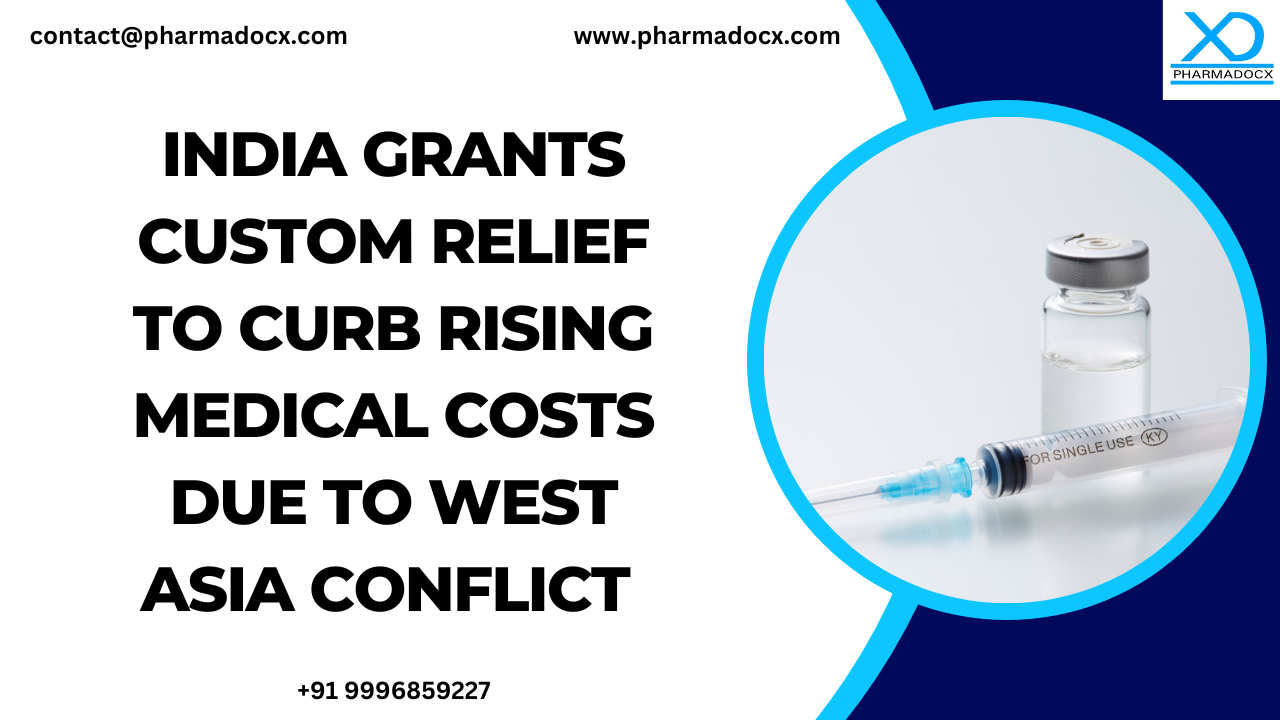
India grants custom relief to curb rising medical costs due to West Asia conflict
Recently, India has announced a customs duty exemption on 40 petrochemical inputs until June 30, 2026. The aim is to support the pharmaceutical and medical device sectors. This move is designed to offset raw material price hikes caused by the West Asia conflict, ensuring affordability of essential medical consumables, such as syringes, IV sets, and catheters.
Key highlights
- Reason: Raw material costs surged by 50% due to the West Asia conflict.
- Goal: Stabilize domestic manufacturing costs and prevent shortages of essential medicines and devices.
- Coverage: Applies to 40 petrochemical inputs, such as Polypropylene, PVC resin, ABS, and Polycarbonate, used in syringes, IV sets, catheters, and diagnostic equipment housings. These petrochemical inputs are critical for pharmaceutical and medical device manufacturing.
- Objective: To offset raw material price hikes (up to 50%) caused by the West Asia conflict and ensure affordability of essential medical consumables.
- Diagnostic relief: Helps mitigate shortages of helium gas, vital for MRI scanner.
- Industry support: Policy aligns with requests from the Association of Indian Medical Device Industry (AiMeD) to counter higher freight costs due to shipping blockades.
- Duration: The customs duty exemption on petrochemical inputs is valid until June 30, 2026.
Thus, the customs duty exemption is a critical short-term cushion for India’s pharma and medical device manufacturing sector.
Impact of customs duty waiver on pharma and medical device industry
We have highlighted the impact of this new customs relief policy on pharma and medical device industry.
- Lower manufacturing costs: By waiving duties on 40 petrochemical inputs, manufacturers of syringes, IV sets, catheters, and diagnostic equipment can stabilize production costs despite global price hikes.
- Supply chain relief: Critical materials, such as polypropylene, PVC resin, ABS, and polycarbonate, will become more affordable, thereby reducing the risk of shortages in essential consumables.
- Diagnostic equipment support: The exemption also helps mitigate shortages of helium gas, which is vital for MRI scanner assembly, thereby ensuring continuity in diagnostic services.
- Patient affordability: With reduced input costs, hospitals and clinics can keep consumables and diagnostic tools affordable for patients, even during global supply disruptions.
- Industry confidence: The move directly addresses concerns raised by the Association of Indian Medical Device Industry (AiMeD), thereby boosting confidence in domestic manufacturing resilience.
- Competitiveness challenge: Despite the relief, the inverted GST structure (inputs taxed at 18% vs lower rates on finished goods) continues to disadvantage Indian manufacturers compared to importers.
Therefore, the customs exemption provides immediate cost relief and supply stability.
GST and structural challenges
Inverted GST structure
- Inputs taxed higher than outputs: Raw materials, like polypropylene, PVC resin, ABS, and polycarbonate, attract 18% GST, while finished medical devices, such as syringes, IV sets, and catheters, are taxed at 5–12%.
- Result: Manufacturers cannot fully claim input tax credits, leading to higher effective costs despite the duty waiver.
- Impact: Domestic producers are disadvantaged compared to importers, who often bring in finished goods at lower tax rates.
Structural challenges
- Competitiveness gap: Indian manufacturers face higher costs, making “Made in India” products less competitive against imports.
- Policy misalignment: While customs duty exemption reduces raw material costs, GST inversion neutralizes much of the benefit, creating a policy contradiction.
- Supply chain vulnerability: Continued reliance on imported petrochemical inputs exposes India to global price volatility and geopolitical risks.
Industry demands
- GST rationalization: Industry bodies, such as AiMeD and the Indian Pharmaceutical Alliance (IPA), are urging reduction of input GST to 5%, aligning it with finished goods.
- Empowered committee: IPA has called for a multi-stakeholder committee of secretaries to coordinate policy, ensure uninterrupted supply of life-saving goods, and address systemic bottlenecks.
- Holistic reform: Beyond tax relief, the industry seeks structural measures to strengthen domestic manufacturing resilience and reduce dependency on imports.
Strategic outlook of the customs duty waiver
- Immediate relief: The exemption cushions manufacturers against raw material price hikes caused by the West Asia conflict. Ensures uninterrupted supply of critical consumables (syringes, IV sets, catheters) and diagnostic tools (MRI scanners). Builds short-term confidence in domestic production capacity.
- Medium-term needs: Align input GST (currently 18%) with finished goods (5–12%) to unlock competitiveness. Faster refunds of input tax credits to ease cash flow for SMEs. Establish an empowered committee of secretaries to monitor supply chains and harmonize customs, GST, and manufacturing policies.
- Long-term strategy: Reduce dependency on imported petrochemical inputs by incentivizing local production. Strengthen “Made in India” medical devices through tax reforms, R&D incentives, and infrastructure support. Use this exemption as a stepping stone to position India as a competitive hub for affordable medical devices and pharmaceuticals. Integrate AI-driven supply chain monitoring and predictive analytics to anticipate disruptions.
- Trade-offs: The exemption is temporary (expires June 2026). Hence, without structural reforms, costs may rebound. Reliance on imports keeps India vulnerable to geopolitical shocks. GST inversion undermines the full benefit of the customs relief.
Conclusions
Therefore, India’s customs duty waiver on 40 petrochemical inputs provides a much-needed buffer for the pharma and medical device sectors. It ensures affordability and supply stability of critical consumables and diagnostic tools amid global disruptions. However, this relief is temporary and cannot fully offset the structural challenges posed by the inverted GST regime and continued reliance on imports. To secure long-term resilience and competitiveness, India must move beyond short-term waivers towards comprehensive reforms, such as rationalizing GST, incentivizing local input production, and strengthening coordinated governance. Then only can the country truly position itself as a self-reliant hub for affordable, high-quality medical devices and pharmaceuticals.