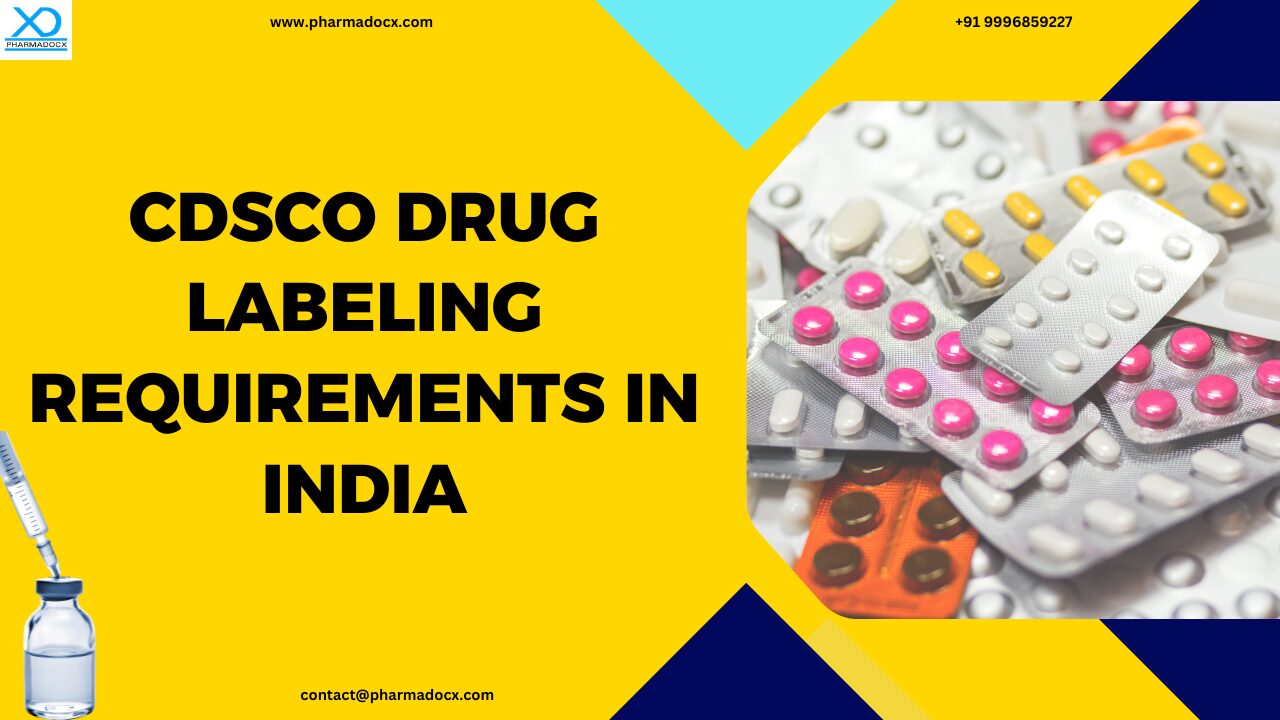
CDSCO drug labeling requirements in India are governed by the Drugs & Cosmetics Act. These labelling requirements ensure that healthcare providers and patients can use medicines correctly and safely. Moreover, they also help prevent misuse of controlled substances, curb substandard drugs, and align India’s pharmaceutical practices with international norms. Thus, they are a critical safeguard for patient safety. Furthermore, digital submission and approval of labels via the SUGAM portal strengthens transparency and traceability. This reduces errors and enables swift regulatory oversight. Therefore, CDSCO labeling requirements protect consumers, uphold ethical standards, and reinforce trust in India’s healthcare system.
Mandatory CDSCO drug labeling requirements
We have presented the mandatory CDSCO drug labeling requirements.
1. Generic name rule
The generic name of the drug must be displayed more prominently than the brand name. This ensures prescribers and patients recognize the active ingredient clearly, reducing dependency on brand recognition. The generic name of a drug must be printed in a font at least two sizes larger than the brand name. Furthermore, the generic name must use the same font type as the brand name, which must be placed after or below it. This rule promotes rational prescribing and prevents misleading branding practices.
2. Batch number and manufacturing details
Every drug label must include the batch or lot number, manufacturing date, and expiry date. These details are critical for traceability in case of recalls or adverse events. The manufacturer’s name and complete address must also be printed to establish accountability. This transparency helps regulators and consumers identify the source of the product quickly.
3. Drug content
CDSCO drug labeling requirements require labels to specify the exact composition of the drug, including the strength of each active ingredient. This ensures healthcare professionals can prescribe and dispense the correct dosage. It also helps patients understand what they are consuming, especially in cases of combination drugs. Accurate content disclosure prevents misuse and supports pharmacovigilance.
4. Storage instructions
Clear storage directions must be provided, such as “Store below 25°C” or “Protect from light.” These instructions preserve the drug’s stability and efficacy throughout its shelf life. Improper storage can degrade active ingredients, making the medicine unsafe or ineffective. By following these guidelines, patients and pharmacists maintain product quality until use.
5. Warnings and schedule indicators
Drugs under Schedule H, H1, or X require specific warnings and symbols on the label. For example, Schedule H/H1 drugs must carry a red line and “Rx” symbol with cautionary text. Schedule X drugs demand stricter warnings due to their potential for abuse. These indicators guide pharmacists and patients, ensuring controlled substances are dispensed responsibly.
6. Imported drugs
Imported drugs must display the importer’s name, address, and CDSCO registration number. This ensures accountability for foreign manufacturers and local distributors. It also helps customs and regulators verify compliance with Indian standards. Without these details, imported drugs cannot legally enter the Indian market.
Digital artwork and SUGAM portal requirements
The CDSCO drug labeling requirements have specified the need for digital artwork submission to the CDSCO SUGAM portal.
- Digital artwork submission: Drug labels must be uploaded as digital artwork files to the CDSCO SUGAM portal before approval. This ensures regulators can verify the design against statutory requirements without relying solely on physical samples. The digital submission acts as the master reference for compliance audits. Any mismatch between digital artwork and printed packaging can trigger regulatory scrutiny or rejection.
- Approval and verification: Once submitted, the artwork undergoes review by CDSCO officials for accuracy, completeness, and adherence to labeling rules. Approval is mandatory before the product can be marketed or imported. Regulators cross‑check the approved digital version with the physical packaging during inspections. This process guarantees consistency and prevents unauthorized label modifications.
- Traceability and transparency: The SUGAM portal maintains a digital record of all approved labels, creating a transparent compliance trail. Manufacturers and importers can track the status of submissions in real time. This digital archive supports quick retrieval during audits or recalls. It also enhances accountability by linking each label to its batch and registration details.
- Compliance risks: Failure to align physical packaging with approved digital artwork can result in penalties, recalls, or import bans. Even minor deviations, such as font size or missing warnings, are treated as violations. CDSCO uses the portal to enforce uniformity across India, thereby reducing regional inconsistencies. Strict adherence protects patient safety and strengthens trust in the regulatory system.
Recent updates to CDSCO drug labeling requirements (2026 notifications)
We have highlighted the changes made to the CDSCO drug labeling requirements in 2026.
- Pregabalin added to Schedule H1 (May 2026): Pregabalin was officially classified under Schedule H1, requiring stricter labeling and dispensing controls. Labels must now carry the red line, “Rx” symbol, and cautionary text specific to Schedule H1 drugs. This change aims to curb misuse and ensure tighter monitoring of prescriptions.
- Removal of syrup exemption under Schedule K (June 2026): Earlier, certain syrups were exempt from full CDSCO drug labeling requirements under Schedule K. This exemption has now been removed, thereby meaning syrups must comply with complete CDSCO labeling standards. Manufacturers must update packaging to include all mandatory components, thereby avoiding regulatory penalties.
- Amendment in Schedule V for folic acid (June 2026): The unit of measurement for folic acid labeling has been revised under Schedule V. Labels must now reflect the updated format to ensure dosage clarity and consistency. This amendment aligns Indian labeling with international pharmacopoeia standards, thereby reducing confusion in global trade.
CDSCO drug labeling requirements non-compliance risks
- Product recalls: If labels fail to meet CDSCO requirements, regulators can mandate immediate product recalls. This disrupts supply chains and damages patient trust. Recalls also create significant financial losses due to wasted inventory and logistics costs. Companies risk long‑term reputational harm that can affect future market access.
- Import restrictions: Non‑compliant imported drugs may be blocked at customs, preventing entry into India. This delays product launches and disrupts distribution agreements. Importers face penalties and may lose their CDSCO registration.
- Legal penalties: Violations of labeling rules can lead to civil fines and criminal prosecution under the Drugs & Cosmetics Act. Penalties may include imprisonment for responsible officers in severe cases. Legal battles drain resources and distract management from core operations. Persistent non‑compliance can result in suspension of manufacturing or marketing licenses.
- Reputational damage: Failure to comply signals poor governance and weak quality systems. Healthcare providers and patients lose confidence in the company’s products. Competitors gain advantage by highlighting their stronger compliance record. Over time, reputational damage erodes brand equity and reduces market competitiveness.
CDSCO drug labeling requirements compliance checklist
- Generic name prominence: The generic name must be displayed more prominently than the brand name to promote rational prescribing. CDSCO requires the generic name of a drug be printed in a font at least two sizes larger than the brand name.
- Batch and manufacturing details: Labels must include batch/lot number, manufacturing date, and expiry date for traceability. The manufacturer’s full name and address must be printed to establish accountability.
- Drug content disclosure: Active ingredients and their exact strengths must be listed clearly. This ensures prescribers and patients understand the formulation and dosage.
- Storage instructions: Labels must specify proper storage conditions, such as temperature or protection from light.
- Warnings and schedule indicators: Schedule H/H1 drugs require a red line, “Rx” symbol, and cautionary text. Schedule X drugs demand stricter warnings due to higher abuse potential.
- Imported drug requirements: Imported drugs must display the importer’s name, address, and CDSCO registration number.
- Digital artwork submission: Manufacturers must upload digital artwork to the SUGAM portal for approval before printing.
In this blog, we have detailed the CDSCO drug labeling requirements. For any queries on drug labelling guidelines or assistance with securing the CDSCO drug manufacturing license, email at [email protected] or call/Whatsapp on 9996859227.