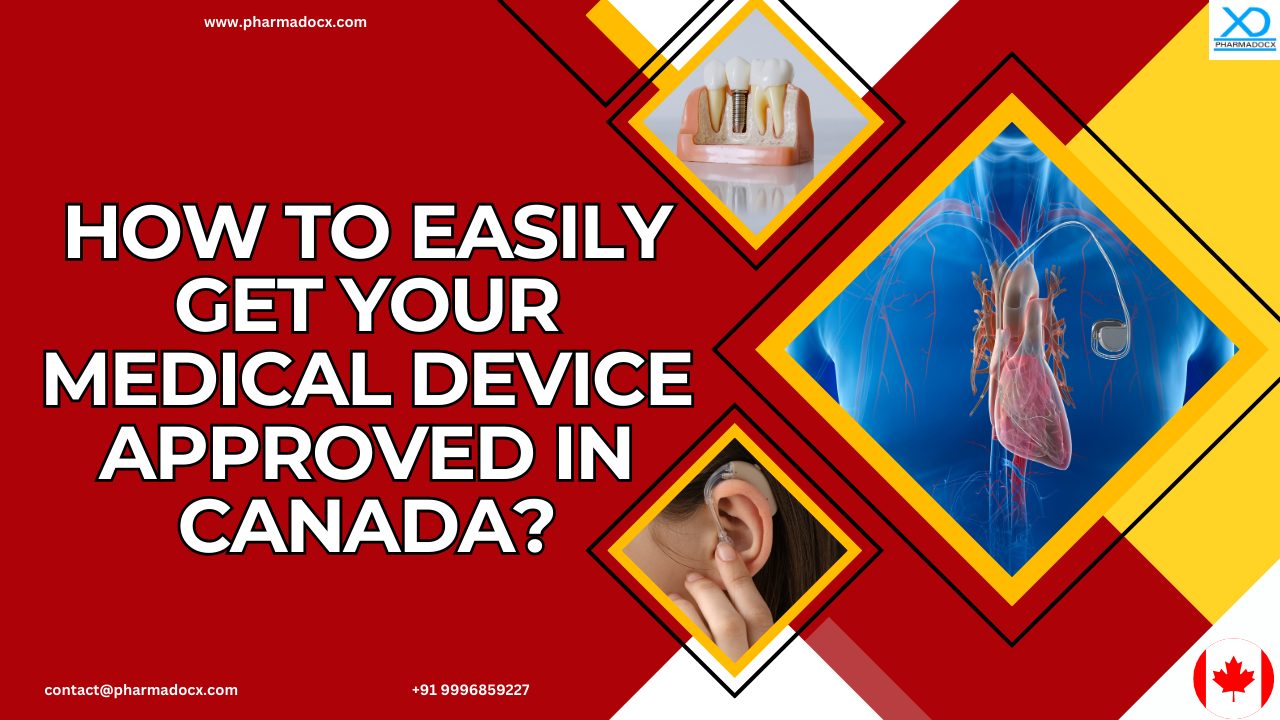

Navigating Canada’s medical device approval pathway can feel overwhelming. The process of obtaining medical device approval in Canada is complex and requires strict adherence to Health Canada’s regulatory framework. For organizations seeking market entry, comprehensive knowledge of the approval requirements is essential to ensure compliance and facilitate successful authorization. In this blog, we have prepared a detailed guide to help you easily get your medical device approved in Canada. We have discussed in detail the Health Canada classification system, license types, quality system requirements, labelling requirements, and post-market obligations.
Health Canada medical device classification system
To get your medical device approved in Canada, you need to understand the medical device classification system. The class of medical device will determine the type of license required. Hence, for registering medical devices in Canada, the first step is to identify the device class.
Health Canada has established a risk-based medical device classification system. The classification of medical devices is based on the hazard/risk a particular device presents. Risk indicators used to categorise the medical devices are degree of invasiveness, duration of contact, body system affected, and local versus systemic effects. Based on these risk parameters, medical devices are broadly classified into four classes. The classes in increasing order of risk level are as follows.
- Class I: Low risk medical devices are classified as Class I. Examples: Bandages, examination gloves, tongue depressors, thermometers, manual brushes, crutches, etc.
- Class II: Low to moderate risk medical devices are classified as Class II. Examples: Contact lenses, infusion pumps, hearing aid, powered toothbrush, etc.
- Class III: Moderate to high-risk devices are classified as Class III. Examples: Ventilators, orthopaedic implants, respirators, etc.
- Class IV: High-risk devices are classified as Class IV. Examples: Pacemakers, heart valves, artificial hearts, etc.
Applicable license types to get your medical device approved in Canada
The class of medical device will determine the type of license required. Hence, to get your medical device approved in Canada, the first and vital step is identifying the device class. The two major license types to get your medical device approved in Canada are as follows:
- Class I medical devices require the medical device establishment licence (MDEL).
- Class II to IV medical devices require the medical device licence (MDL).
MDEL vs MDL license requirements
MDEL and MDL have slightly different license requirements.
What are the requirements for MDEL application?
- Establishment details
- Manufacturer details
- Classification of devices to be imported or distributed
- Attestation signed by a senior official confirming the establishment possesses the required documented procedures
What are the requirements for MDL application?
- MDL application form
- Fee form
- The private labellers are permitted to apply for the MDL only after the original medical device manufacturer is granted the MDL. The MDL application form for the private labellers is different from that for the original medical device manufacturers.
- Medical device labelling requirements: Medical device labelling guidelines cover the label attached to the medical device and the Directions for Use. Both labels should include the name and identifier of the device, namely model number of the device. The “Directions for Use” should mention all the required instructions for the user to safely and effectively use the device. Additionally, the label should include a “control number’”, which is the serial, lot, or batch number.
- Quality management system certificate requirements: The quality management system (QMS) certificate accepted by Health Canada is the medical device single audit program (MDSAP) certificate. The MDSAP certification requires compliance with ISO 13485 requirements. Additionally, the QMS has to fulfil the regulatory requirements of the participating countries of MDSAP.
- Premarket review document: The premarket review document includes information demonstrating the safety and effectiveness of the medical device. For a Class II medical device, this document is mainly an attestation that evidence to support the compliance with applicable safety and effectiveness requirements is available. However, for a Class III and Class IV medical device, evidence to support compliance with the applicable safety and effectiveness requirements has to be submitted.
Compliance with bilingual labelling requirements is mandatory to get your medical device approved in Canada
Health Canada guidelines require all medical devices sold in Canada meet bilingual medical device labelling requirements. The devices should be labelled in English and French. The label must contain:
- Device name
- Intended use
- Model number of the device
- Serial, lot, or batch number
- Manufacturer information
- Directions for use
- Warnings and precautions
Notably, it is vital to comply with all the Health Canada medical device labelling guidelines to get your medical device approved in Canada.
Responsibilities of manufacturers, importers, and distributors
Different entities have different roles in the Canadian medical device regulatory environment. Medical device manufacturers, importers, and distributors all have their own roles and responsibilities. Hence, the medical device class and whether the entity is a manufacturer, importer, or distributor will determine whether MDEL or MDL is required.
- Manufacturer: A manufacturer sells a medical device under their own name, or under a trademark, design, trade name or other name or mark owned or controlled by the person. Additionally, the manufacturer is responsible for designing, manufacturing, assembling, processing, labelling, packaging, refurbishing, or modifying the device.
- Importers: An importer is a Canada-based company (other than the manufacturer) who is responsible for bringing the medical devices into Canada for sale.
- Distributor: A distributor is a company (other than the manufacturer or importer) either within or outside of Canada that sells devices in Canada for the purpose of resale or use.
The specific roles of the entities along with the medical device class will determine whether an MDEL or MDL is required. For instance, a distributor located outside Canada planning to sell medical devices in Canada, without their name on the label, will require an MDEL.
Post-market obligations
Once you get your medical device approved in Canada, you need to adhere to the post market obligations. Manufacturers and license holders are required to adhere to stringent post-market reporting requirements to ensure ongoing compliance and safeguard patient safety.
- Death of a patient, user, or other individual: Any incident resulting in death must be reported to Health Canada within 10 calendar days.
- Serious deterioration of health: If an incident causes a serious deterioration in the health of a patient, user, or other individual, it must be reported within 10 calendar days.
- Potential for death or serious deterioration (near incidents): Situations that, if repeated, could lead to death or serious deterioration in health must be reported within 30 calendar days.
Pharmadocx Consultants: Your trusted Health Canada medical device regulatory consultant
Securing medical device approval in Canada is a critical step towards entering the Canadian market and launching your product in Canada. Moreover, it builds trust with healthcare providers, patients, and regulators. By thoroughly understanding Health Canada’s requirements, preparing complete and compliant submissions, and maintaining robust post-market vigilance, manufacturers can navigate the process with confidence. Whether you are entering the market for the first time or expanding your medical device business, our team of experts will be more than happy to help you easily navigate the Health Canada regulatory requirements.
For manufacturers planning to get their medical device approved in Canada, email at [email protected] or call/Whatsapp on 9996859227. Our expert consultants will help you correctly classify your device, choose the correct regulatory pathway, prepare technical documentation, and file your application. Additionally, we will help you comply with Health Canada medical device labelling guidelines. Moreover, our support does not end with application filling. We will provide support and guidance till you successfully secure your Health Canada medical device license.