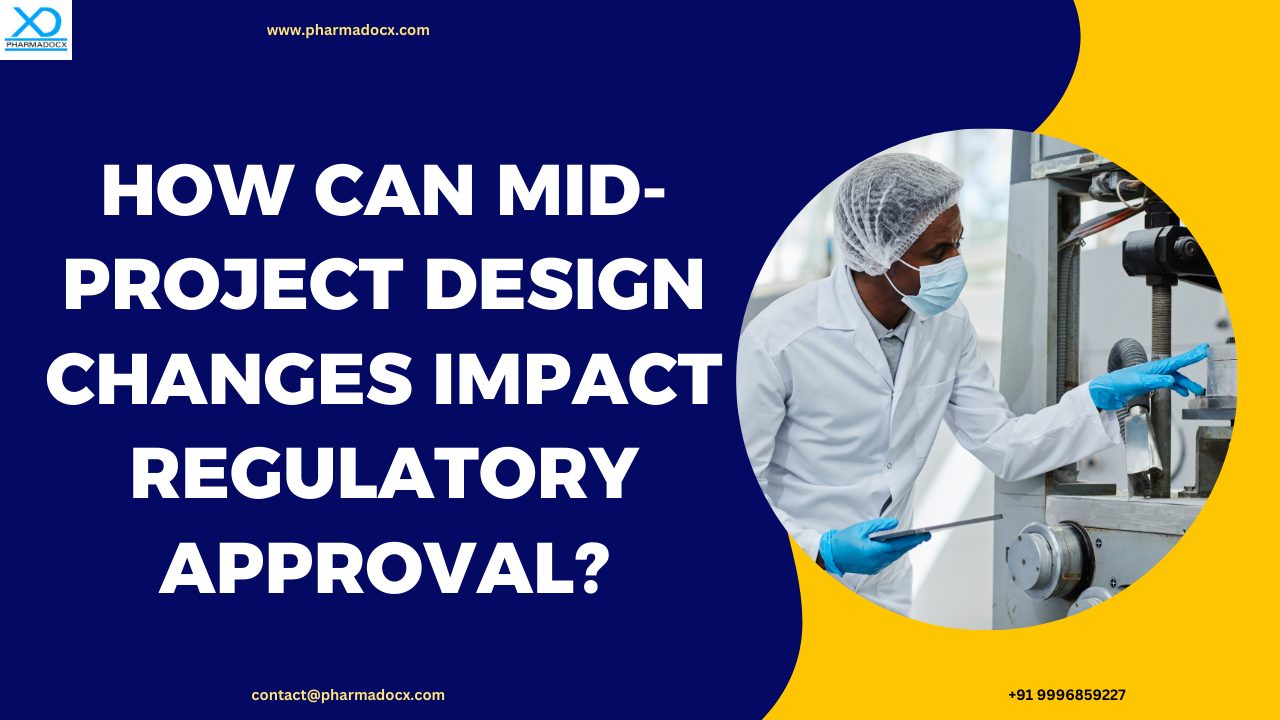

Mid-project design changes can significantly delay or derail regulatory approvals. This is because they alter the validated product definition, thereby requiring new risk assessments, verification/validation, and updates to technical documentation. Hence, they often trigger new testing and sometimes resubmissions to authorities. Even small technical tweaks, like material substitutions or software logic changes, can reset timelines if not managed under strict control. These tweaks can trigger regulatory scrutiny, delay submission timelines, or necessitate resubmission to authorities. Without robust change control and regulator engagement, these changes risk extending approval cycles, creating audit findings, and jeopardizing market entry.
For companies, design changes mid-project are not just engineering decisions they are regulatory events. Treat every change as potentially submission-impacting, and build a proactive change control system aligned with regulatory expectations. This minimizes delays, avoids audit findings, and keeps launch timelines intact.
What is considered a design change in regulatory terms?
In regulatory terms, a “design change” is any modification to the medical device’s design, materials, functionality, or intended use that could affect its safety, performance, or compliance. Even seemingly minor adjustments, such as a material substitution or software update, are considered design changes if they alter the validated product definition.
Common mid-project design changes
- Material substitution: Supplier discontinues a polymer or alloy, forcing a switch. This requires new biocompatibility and performance testing
- Software update: Adding cybersecurity patches or new functionality. This triggers revalidation, may require FDA pre-submission.
- Component redesign: Engineering team modifies catheter tip geometry for usability. This triggers new verification/validation, risk analysis, and possible resubmission.
- Supplier change: Switching to a new vendor for pacemaker batteries. This needs supplier qualification, updated technical documentation, possible regulator notification.
- Labeling/intended use change: Expanding device indication to a new patient group. This often requires fresh regulatory submission (FDA 510(k), CDSCO re-approval, EU MDR review)
- Manufacturing process tweak: Changing sterilization method from EtO to gamma. This requires full validation of new process and regulatory notification.
- Packaging redesign: New sterile barrier system for logistics efficiency. This requires packaging validation and stability testing.
Why are mid-project design changes risky?
Mid-project design changes are risky because they disrupt the regulatory pathway by altering the product’s validated definition, which regulators treat as legally binding. Any modification whether a material swap, software update, or process tweak can trigger new verification/validation, risk assessments, and documentation updates. This often delays submissions or requires resubmission. These changes also expose companies to audit findings if not properly controlled under ISO 13485 or FDA design control requirements. Beyond compliance, they create timeline uncertainty, increase costs, and jeopardize market entry. Thus, mid-project design changes introduce regulatory, operational, and commercial risks that can compound quickly if not managed with disciplined change control. These changes trigger:
- Timeline disruption: Even small changes can add 3–6 months to approval cycles.
- Audit exposure: ISO 13485 audits frequently flag undocumented design changes.
- Market delays: In India’s CDSCO framework, certain changes (like intended use or material substitution) can force a new registration cycle.
Minor vs significant design changes
We have highlighted the differences between minor and significant design changes.
Minor design changes
- Do not affect intended use or performance: Cosmetic updates, small dimensional adjustments within tolerance.
- Internal documentation only: Must be recorded in the Design History File (DHF) and controlled under ISO 13485/FDA design control but usually no regulator notification is required.
- Low regulatory risk: Auditors expect traceability but approvals remain valid.
- Examples: Color change of housing, non-critical packaging artwork updates, minor UI layout tweaks in software without functional impact.
Significant design changes
- Alter safety, performance, or intended use: Material substitution, new sterilization method, expanded indications.
- Trigger regulatory submissions: May require FDA 510(k) supplement, EU MDR notified body review, or CDSCO amendment.
- High compliance risk: If not properly managed, can invalidate approvals and cause audit findings.
- Examples: Switching catheter material, adding new software functionality, changing battery supplier in pacemakers, modifying labeling to include new patient population.
Areas impacted as a result of mid-project design changes
We have highlighted some of the areas in medical device development and regulatory submission that get affected as a result of mid-project design changes.
- Verification and validation: New testing protocols may be required for safety/performance. This leads to delays in project milestones.
- Submission content: Updated technical files, risk assessments, and labeling. This leads to possible resubmission or additional queries from FDA/CDSCO.
- Supplier changes: New supplier qualifications and audits. This can trigger regulatory notifications or amendments.
- Software updates: Revalidation of code logic and cybersecurity risk. This may require fresh FDA pre-submission or CDSCO review.
- Material substitution: Biocompatibility and performance testing to be repeated. This leads to potential rejection if not justified with data.
Common mistakes manufacturers make
Here are some common mistakes manufacturers make when handling design changes mid-project.
- Underestimating regulatory impact: Treating design tweaks as “engineering-only” decisions without assessing their effect on safety, performance, or intended use.
- Poor change control documentation: Failing to update the Design History File (DHF), risk management files, or technical documentation, leading to audit findings under ISO 13485 or FDA 21 CFR 820.
- Late regulatory engagement: Not consulting regulators early (e.g., FDA Pre-Sub, CDSCO queries), which results in unexpected submission delays or rejection.
- Ignoring supplier changes: Switching suppliers for critical components without proper qualification or regulatory notification.
- Inadequate risk assessment: Overlooking how small changes (like material substitutions or software patches) can alter biocompatibility, cybersecurity, or usability.
- Fragmented team communication: Engineering, quality, and regulatory teams working in silos, causing misalignment and missed compliance steps.
- Labeling and claims oversight: Updating product design but forgetting to revise labeling, IFUs, or marketing claims, which can invalidate approvals.
10 tips to manage mid-project design changes
Managing design changes effectively requires a structured, risk-based approach that balances engineering flexibility with regulatory compliance.
- Establish a change control board (CCB): A cross-functional team ensures that design changes are reviewed from regulatory, quality, engineering, and clinical perspectives. This prevents siloed decisions that overlook compliance risks. A CCB provides accountability and structured approvals before implementation.
- Document every change thoroughly: All changes must be recorded in the Design History File (DHF), Device Master Record (DMR), and risk management files. Documentation ensures traceability and audit readiness under ISO 13485 and FDA design control. Regulators expect clear evidence of how changes were evaluated and justified.
- Perform risk-based assessments: Evaluate whether the change impacts intended use, safety, or performance. Minor changes may only require internal documentation, while significant ones demand regulator notification. This classification helps avoid unnecessary delays while maintaining compliance.
- Update verification and validation: Changes often require new testing to confirm safety and performance. Biocompatibility, software validation, packaging integrity, or sterilization processes may need re-verification. Proper verification and validation ensures the modified design still meets regulatory requirements.
- Engage regulators early: Consult FDA through Pre-Sub meetings, EU MDR notified bodies, or CDSCO queries before implementing significant changes. Early engagement clarifies submission expectations and prevents surprises during review. This proactive step saves time and reduces risk of rejection.
- Revise technical documentation promptly: Update labeling, Instructions for Use (IFUs), and marketing claims to reflect the new design. Inconsistent documentation can invalidate approvals and trigger audit findings. Keeping files current ensures regulatory alignment and market readiness.
- Qualify suppliers and manufacturing processes: If a change involves new suppliers or altered processes, conduct audits and validations. Supplier qualification is critical for components that affect safety or performance. Regulators expect proof that supply chain changes are controlled and compliant.
- Train teams on change awareness: Educate staff to recognize when engineering tweaks become regulatory events. Training reduces the risk of undocumented changes slipping through. A culture of compliance ensures everyone understands the impact of design modifications.
- Maintain strong cross-functional communication: Engineering, quality, and regulatory teams must collaborate closely during change management. Miscommunication often leads to missed compliance steps or duplicated work. Clear communication channels prevent delays and ensure alignment.
- Monitor market and timeline impact: Assess how changes affect launch schedules, competitive positioning, and multi-region submissions. Strategic planning ensures design changes do not derail commercialization goals.
Pharmadocx Consultants: Your trusted regulatory support
Thus, mid-project design changes can adversely impact regulatory approvals. For a smooth and hassle-free regulatory journey, email at [email protected] or call/Whatsapp on 9996859227. Our service covers multiple regulatory frameworks, namely CDSCO, EU MDR, US FDA, SFDA, Health Canada etc.