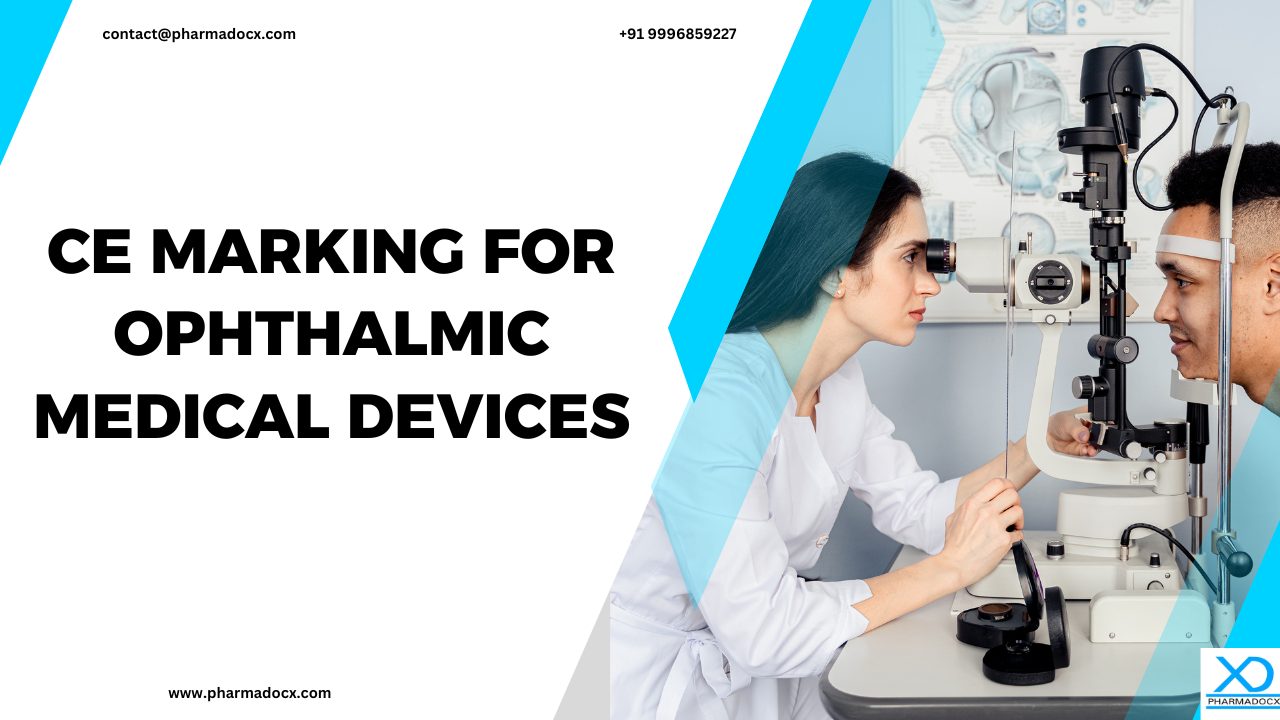

Ophthalmic medical devices are specialized instruments and equipment used to diagnose, monitor, and treat eye conditions. These devices range from simple diagnostic tools to advanced therapeutic and surgical products. CE marking is critical for ophthalmic medical devices because it is the legal gateway to the European market. It serves as the official certification that these products meet the stringent safety, performance, and quality requirements of EU MDR. CE marking assures patients and clinicians of the reliability, biocompatibility, and clinical effectiveness of medical devices. It also enables free trade within Europe, strengthens brand credibility, and often facilitates entry into other global markets that recognize EU standards. Beyond initial approval, CE marking requires ongoing post‑market surveillance, ensuring that ophthalmic devices remain safe and effective throughout their lifecycle. In this blog, we will highlight the importance of CE marking for ophthalmic medical devices.
Ophthalmic medical devices play a critical role in managing eye-related conditions and diseases. These devices range from simple diagnostic tools, such as the Amsler grid and anomaloscope, which detect visual field irregularities and color vision defects, to advanced therapeutic and surgical products, such as contact lenses, intraocular lenses, glaucoma stents, lasers, and vitreous replacement kits. Their purpose is to support eye health by enabling accurate assessment of ocular function, facilitating surgical interventions, and improving or restoring vision in patients with refractive errors, cataracts, glaucoma, or other eye diseases. Demand for ophthalmic medical devices is high in Europe. CE marking is a necessary requirement for launching your ophthalmic medical devices in Europe. Avail our comprehensive CE marking service to easily obtain CE marking for ophthalmic medical devices.
Demand for ophthalmic medical devices in EU
The demand for ophthalmic medical devices in the EU is rising steadily, driven by aging populations, increasing prevalence of eye disorders, and technological advancement. The European ophthalmology devices market was valued at USD 10.48 billion in 2025 and is projected to reach USD 16.13 billion by 2033, growing at a compound annual growth rate (CAGR) of 5.6%.
- Drivers of the demand
- Aging population: Higher incidence of cataracts, glaucoma, and age-related macular degeneration.
- Vision correction needs: Rising demand for contact lenses, intraocular lenses, and refractive surgery devices.
- Technological innovation: AI-enabled diagnostic tools, optical coherence tomography (OCT), and minimally invasive surgical devices.
- Healthcare access: Expanding insurance coverage and government support for ophthalmic care in EU countries.
- Regional Leaders
- Germany is a key hub, leading with strong research and development and adoption of innovative ophthalmic technologies.
- Other major markets include France, Italy, Spain, and the UK, each contributing significantly to EU demand.
- Segment breakdown
- Diagnostics and monitoring devices: OCT scanners, slit lamps, fundus cameras.
- Surgical devices: Ophthalmic microscopes, lasers, intraocular lenses.
- Vision care devices: Contact lenses, spectacles, and refractive surgery systems.
The EU ophthalmic device market is expected to remain robust, with sustained demand for advanced diagnostic and surgical technologies and growing adoption of digital health solutions. Companies investing in AI-driven diagnostics, minimally invasive surgery, and patient-centric vision care are likely to capture significant market share. Has the demand for ophthalmic devices in EU got you interested in launching your devices in EU? You will be required to comply with EU MDR and secure CE marking for your device. Our team will be more than happy to help you secure CE marking and comply with EU MDR.
CE marking for ophthalmic medical devices
CE marking for ophthalmic medical devices in the EU demonstrates that the product complies with the European Medical Device Regulation (EU MDR 2017/745) and can be legally marketed across the EU and EEA. It demonstrates conformity with essential safety, performance, and quality requirements. Moreover, it is mandatory for all ophthalmic devices, such as intraocular lenses, contact lenses, diagnostic instruments, and surgical equipment, intended for EU market.
Importance of CE marking for ophthalmic medical devices
CE marking is critically important for ophthalmic medical devices because it is the legal gateway to the European market. It ensures these devices meet stringent safety, performance, and quality standards under EU MDR. Without CE marking, ophthalmic devices cannot be sold or distributed in the EU or EEA, thereby making it a non‑negotiable requirement for manufacturers. We have explained why CE marking for ophthalmic medical devices matters.
- Market access: CE marking is mandatory for ophthalmic devices, such as intraocular lenses, contact lenses, diagnostic instruments, and surgical tools, intended for the EU market. It allows free circulation of products across all EU and EEA countries, thereby eliminating trade barriers.
- Patient safety and clinical trust: Ophthalmic devices directly affect vision and eye health. Hence, regulators demand robust evidence of safety, biocompatibility, and clinical performance. CE marking assures clinicians and patients that the device has undergone rigorous conformity assessment and meets EU MDR standards.
- Regulatory compliance: As per EUMDR 2017, ophthalmic devices must demonstrate compliance with essential requirements, namely risk management (ISO 14971), quality management (ISO 13485), and clinical evaluation. Higher‑risk devices (e.g., intraocular implants) require notified body review, while lower‑risk devices may follow self‑certification.
- Competitive advantage: CE marking enhances credibility and brand reputation, signaling that a manufacturer adheres to global best practices. It often serves as a prerequisite for entry into non‑EU markets that recognize or align with EU MDR standards.
- Post‑market obligations: CE marking is not a one‑time approval; it requires ongoing vigilance. Manufacturers must conduct post‑market surveillance, report adverse events, and maintain updated technical documentation. This continuous oversight strengthens patient protection and ensures device reliability throughout its lifecycle.
Ophthalmic implants and surgical devices are often Class IIb or III, thereby requiring extensive clinical data and risk analysis. Having a CE mark demonstrates the device complies with all the strict EU MDR regulations for ophthalmic medical devices. CE marking for ophthalmic medical devices is a symbol of safety, performance, and trust that enables manufacturers to compete in Europe’s high‑demand market while protecting patients’ vision and health. Notably, advanced ophthalmic technologies (AI‑enabled diagnostics, minimally invasive surgical devices) must secure CE marking before clinical use. Furthermore, CE marking aligns with international regulatory expectations, easing pathways to markets, such as the Middle East, Asia, and Latin America.
CE marking process for ophthalmic medical devices: 7 Steps
- Device classification: Ophthalmic devices are classified based on risk. Class I are low-risk (basic diagnostic tools). Class IIa/IIb are moderate-risk (contact lenses, surgical lasers). Class III are high-risk (intraocular lenses, implants). Notably, higher classes require notified body assessment and extensive clinical evidence.
- Quality management system (QMS): Manufacturers must implement ISO 13485-compliant QMS.
- Technical documentation: Technical documentation should include device description, intended use, risk management (ISO 14971), clinical evaluation, and performance data.
- Conformity assessment: Conducted by a notified body for medium/high-risk devices. Low-risk devices may follow self-declaration.
- Declaration of conformity: Manufacturer issues a formal statement of compliance.
- Affixing the CE Mark: Once conformity is confirmed, the CE mark is placed on the device and packaging.
- Post-market surveillance: Ongoing vigilance, reporting of adverse events, and periodic safety updates is required as part of CE mark post-market surveillance requirements.
Challenges for ophthalmic device manufacturers
- Limited availability of notified bodies can cause delays in certification.
- Increased emphasis on clinical evidence for ophthalmic implants and innovative devices.
- Stricter requirements for post-market surveillance and Unique Device Identification (UDI) labeling.
Therefore, CE marking for ophthalmic medical devices is essential for market access in Europe. It assures patients, clinicians, and regulators that ophthalmic devices meet high safety and performance standards. Without CE marking, ophthalmic devices cannot be legally sold or distributed in the EU. CE marking for ophthalmic devices is a structured process under EU MDR that requires robust technical documentation, clinical validation, and ongoing compliance monitoring. Support of an experienced consultant can make the CE marking process a cakewalk. Email at [email protected] or call/Whatsapp on 9996859227 to partner with us.