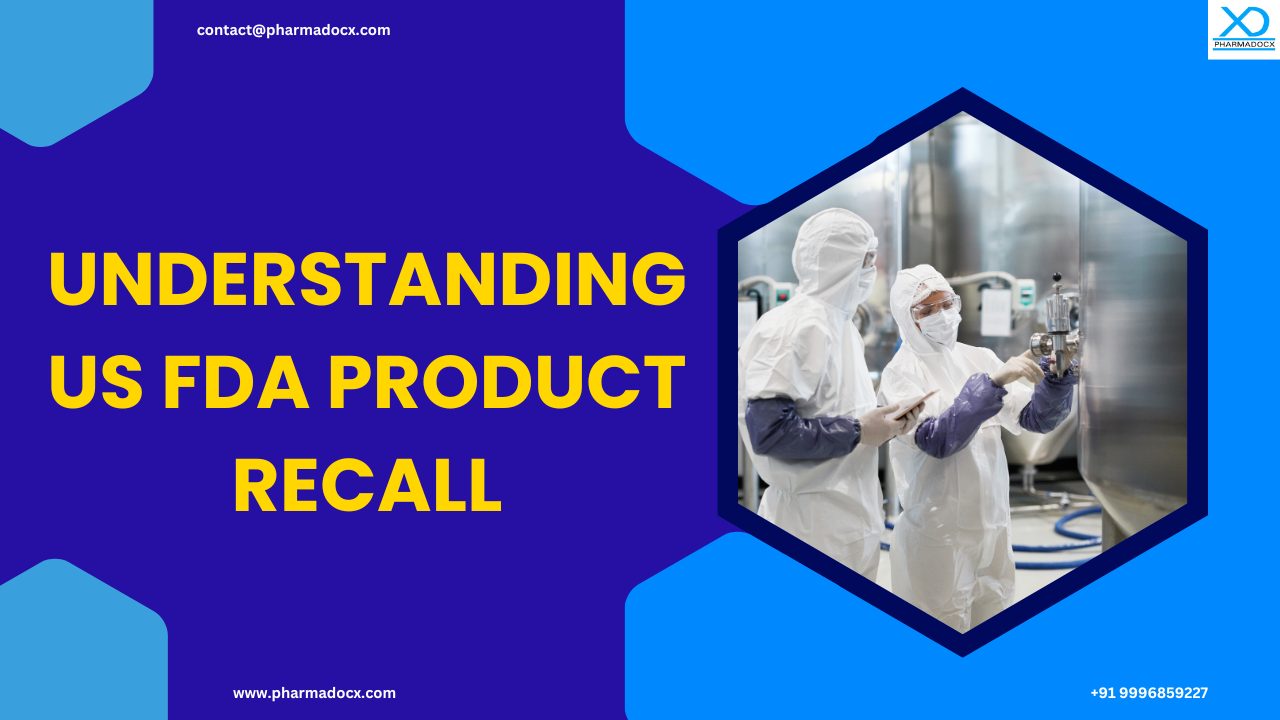
With increasing complexity of FDA regulated products and critical nature of patient safety, proper management of product recalls is essential. Hence, understanding US FDA product recalls is of vital importance to remain compliant. A US FDA product recall is an official action to remove or correct FDA‑regulated items that violate laws or pose health risks. Most recalls are voluntary, initiated by manufacturers or distributors. However, the FDA can request or mandate them when necessary. Recalls are classified into three levels, namely Class I, Class II, and Class III. The goal is to protect public health, ensure compliance, and maintain consumer trust by preventing unsafe or defective products from reaching the public.
What is a US FDA product recall?
A US FDA product recall is an action taken to remove or correct FDA-regulated products (drugs, medical devices, food, cosmetics, biologics etc.) that are in violation of U.S. laws. The aim is to protect public health by preventing exposure to unsafe, defective, or misbranded products. Most recalls are initiated by the manufacturer or distributor. In cases of serious risk, the FDA can request or mandate a recall under statutory authority. Notably, not all recalls mean products are physically removed. Sometimes issues are corrected on-site (e.g., fixing medical equipment in hospitals).
US FDA product recall classifications
The FDA categorizes product recalls into three classes based on risk severity.
- Class I: Reasonable probability of serious adverse health consequences or death. Examples: Contaminated drugs, defective heart devices
- Class II: Temporary or medically reversible adverse health effects; probability of serious harm is remote. Examples: Mislabeling of medication strength, faulty medical test kits
- Class III: Use of product not likely to cause adverse health consequences. Examples: Minor labeling errors, packaging defects
Why does recall matter?
Recalls matter because they are one of the FDA’s strongest tools to protect public health and maintain trust in the marketplace. By removing unsafe, defective, or misbranded products before they cause widespread harm, recalls prevent injuries, illnesses, and even fatalities. They also reinforce accountability demonstrating that manufacturers and regulators are actively safeguarding consumers. Beyond safety, recalls uphold compliance with federal law, reduce liability for companies, and preserve confidence in the integrity of regulated industries. Thus, they serve as both a protective shield for the public and a corrective mechanism for the regulated industry.
Regulatory framework governing product recalls in the US
In the US, product recalls are governed by the Federal Food, Drug, and Cosmetic Act (FD&C Act) and detailed regulations in Title 21 of the Code of Federal Regulations (CFR), particularly Part 7 Subpart C. These rules establish FDA’s authority, industry responsibilities, and procedures for voluntary and mandatory recalls across regulated products, such as drugs, medical devices, cosmetics, and biologics.
- FD&C Act: Provides the statutory basis for recalls, prohibiting distribution of adulterated or misbranded products. Grants FDA authority to order product recalls when there is a reasonable probability that a product could cause serious adverse health consequences or death.
- 21 CFR Part 7, Subpart C: Outlines recall policy, procedures, and industry responsibilities. Recalls are considered an effective method of removing or correcting products that violate FDA laws.
- 21 CFR Part 806 (Medical devices): Requires manufacturers to report corrections and removals of devices to FDA. Provides the procedural framework for how recalls are initiated, classified, and executed.
- Section 518(e) of FD&C Act: Grants FDA authority to order mandatory recalls for medical devices when there is a reasonable probability of serious adverse health consequences or death.
8-step guide to US FDA product recall process
A detailed breakdown of the US FDA product recall process.
- Identification of the problem: A recall begins when a product is found to be adulterated, misbranded, defective, or unsafe. Sources of detection include manufacturer’s internal quality checks, consumer complaints, FDA inspections or post-market surveillance, and adverse event reports.
- Decision to recall: Most recalls are initiated by the manufacturer or distributor. However, FDA may request a recall if the company does not act promptly. For medical devices, biologics, and certain foods, FDA can order a recall under statutory authority (e.g., FD&C Act Section 518I).
- Recall classification: FDA assigns a risk-based classification for the US FDA product recall process. Class I recall is for reasonable probability of serious adverse health consequences or death. Class II recall is for temporary or reversible health effects, wherein serious harm is unlikely. Class III recall is for cases not likely to cause adverse health consequences (e.g., labelling errors).
- Recall strategy development: The recalling firm must design a recall strategy that includes, depth of recall, communication plan, and effectiveness checks. Depth of recall determines whether the recall should be at consumer level, retail level, or wholesale level. Communication plan focuses on how affected parties will be notified (letters, press releases, direct outreach).Effectiveness checks focus on methods to verify that consignees have received and acted on recall instructions.
- Notification: The company informs distributors, retailers, healthcare providers, and sometimes patients. Firms submit recall information to FDA, including product details, reason for recall, and corrective actions. FDA posts recalls in its weekly Enforcement Report and may issue press releases for Class I recalls.
- Implementation: Correction focuses on fixing the product in the field (e.g., software updates, re-labeling).Removal focusses on physically withdrawing the product from distribution or use. In case of, disposal/repair, depending on product type, recalled items may be destroyed, repaired, or returned.
- Monitoring and effectiveness checks: FDA monitors the recall’s progress through periodic status reports. The firm must demonstrate that the recall effectively removed or corrected the product. FDA may conduct audits or inspections to verify compliance.
- Termination of recall: Once FDA determines that all reasonable efforts have been made to remove or correct the product, the recall is officially terminated. FDA publishes recall termination notices to close the process.
6 Best practices for effective recall management
We have provided a detailed set of best practices for effective recall management that regulatory teams and manufacturers should follow to ensure compliance, minimize risk, and protect public health.
- Preparation and planning: Maintain clear, documented procedures aligned with 21 CFR Part 7 and Part 806 (for devices).Designate a cross-functional team (QA, regulatory, legal, communications, supply chain) trained to act immediately. Conduct periodic simulations to test responsiveness and identify gaps.
- Risk assessment and decision-making: Assess severity, scope, and potential health impact to determine recall classification (Class I, II, or III).Identify underlying issues (manufacturing defect, labeling error, contamination) to prevent recurrence. Engage FDA early to align on recall scope and communication strategy.
- Communication and transparency: Issue recall letters or alerts that are concise, factual, and actionable. For Class I recalls, prepare press releases and ensure FDA Enforcement Report listings are accurate. Inform distributors, healthcare providers, and patients promptly with tailored instructions.
- Execution and logistics: Decide whether to recall at consumer, retail, or wholesale level. Determine if the product can be corrected in the field (e.g., relabeling, software update) or must be removed. Use lot/batch numbers, barcodes, or digital dashboards to ensure complete product recovery.
- Monitoring and effectiveness: Verify that consignees received and acted on the US FDA product recall instructions. Submit regular updates to FDA on recall status. Maintain documentation for regulatory inspections and potential litigation.
- Post-recall actions: Implement CAPA (Corrective and Preventive Actions) to address systemic issues. Strengthen supplier audits and quality agreements to reduce recurrence. Communicate corrective actions to rebuild trust with customers and regulators.
US FDA product recall system is vital for public health protection
Therefore, the US FDA product recall system is a cornerstone of public health protection, designed to swiftly remove or correct unsafe, defective, or misbranded regulated products, such as drugs, medical devices, cosmetics, and biologics. The product recall framework ensures that recalls are risk‑based, transparent, and enforceable. By requiring clear communication, thorough corrective actions, and rigorous effectiveness checks, the FDA not only safeguards consumers but also reinforces industry accountability and compliance. Thus, recalls serve as both a protective measure for patients and consumers and a vital mechanism for maintaining trust in the integrity of the US healthcare and consumer product system. Email at [email protected] or call/Whatsapp on 9996859227 for any US FDA regulatory support.