Medical Device Single Audit Program (MDSAP) aims to reduce audit duplication and ensure consistent product quality oversight. It is recognized by several major regulators worldwide. MDSAP is not just another certification. It is a regulatory audit program that can open doors to multiple markets simultaneously but demands preparedness and operational discipline. Although MDSAP is a single unform QMS audit process, participating countries have some of their own requirements. Medical device manufacturers often overlook the MDSAP country-specific requirements. In this blog, we have detailed the country-specific nuances in MDSAP.
What is MDSAP?
The Medical Device Single Audit Program (MDSAP) allows medical device manufacturers to undergo a single, comprehensive audit of their QMS to meet the regulatory requirements of multiple jurisdictions simultaneously. MDSAP is an international initiative developed by the International Medical Device Regulators Forum (IMDRF). Built on the foundation of ISO 13485:2016, MDSAP audits evaluate processes, such as management responsibility, design and development, production controls, and post-market surveillance, while also incorporating country-specific regulatory requirements. One MDSAP audit report can be used across these markets.
For manufacturers, MDSAP reduces the burden of multiple audits, enhances global market access, and ensures consistent compliance. However, it is often more rigorous than single-country audits and requires robust preparation and documentation. Key benefits of MDSAP are efficiency, global market access, consistency, and reduced audit fatigue due to multiple audits.
Purpose and vision of MDSAP
- Efficiency: Reduces audit duplication and regulatory burden.
- Safety: Enhances global oversight and product safety.
- Transparency: Promotes consistent audit standards and outcomes.
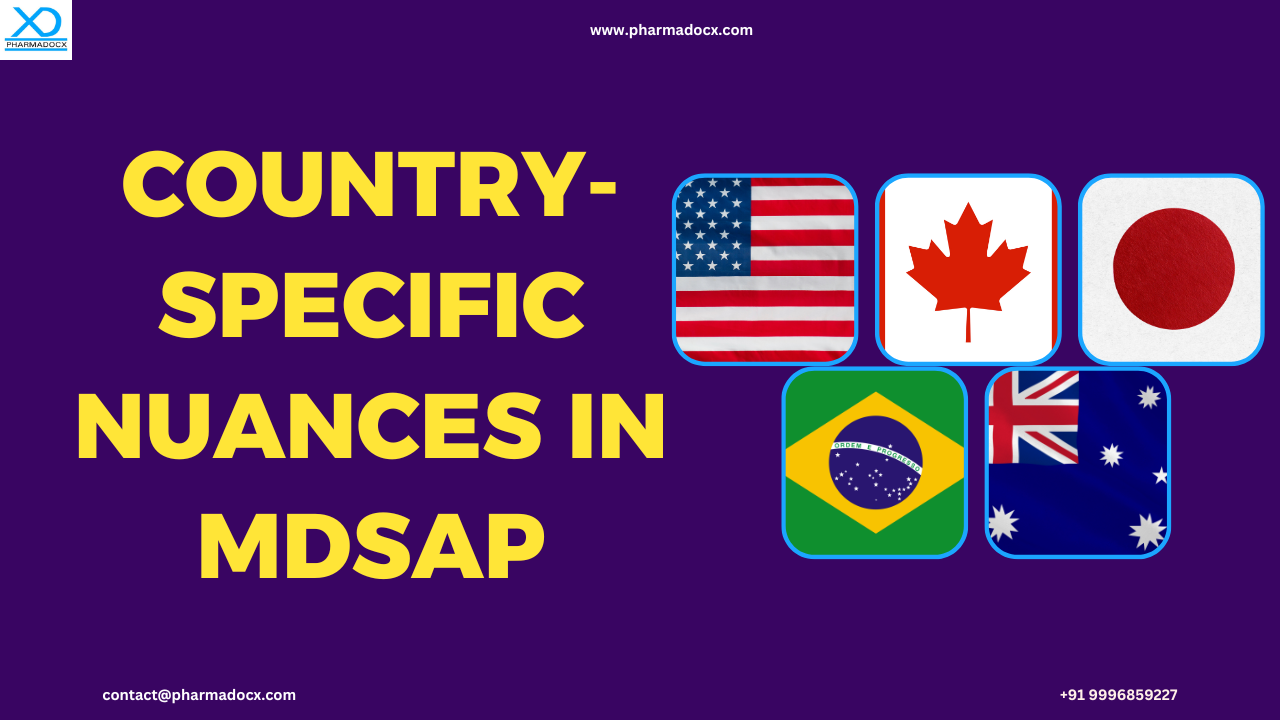
MDSAP participating countries
- Canada: Health Canada
- United States: FDA (Food and Drug Administration)
- Brazil: ANVISA (National Health Surveillance Agency)
- Australia: TGA (Therapeutic Goods Administration)
- Japan: PMDA (Pharmaceuticals and Medical Devices Agency)/MHLW (Ministry of Health, Labour and Welfare of Japan)
Country-specific nuances in MDSAP audits
We have highlighted in details the different country-specific nuances in MDSAP audits.
United States (FDA)
The FDA requires manufacturers to align their QMS with the new Quality Management System Regulation (QMSR), which harmonizes ISO 13485:2016 with U.S. expectations. Moreover, auditors pay close attention to complaint handling, CAPA effectiveness, and adverse event reporting. These are critical for patient safety. For AI-enabled or adaptive devices, the FDA now mandates Postmarket Change Control Plans (PCCPs) to ensure transparency in algorithm modifications. Establishment registration and device listing must also be verified during audits, thereby making documentation accuracy essential.
Canada (Health Canada)
Canada is unique in mandating MDSAP certification for Class II–IV devices. Thus, MDSAP compliance is a non-negotiable requirement for market entry. Health Canada auditors emphasize compliance with the Canadian Medical Device Regulations (SOR/98-282), which differ in structure from FDA rules. Vigilance reporting timelines are shorter, requiring serious incidents to be reported within 10 days. Thus, this demands strong internal escalation processes. Additionally, proof of device licensing must be presented, and auditors often cross-check QMS records against licensing data.
Brazil (ANVISA)
Brazil’s ANVISA requires manufacturers to obtain Good Manufacturing Practices (GMP) certification, which is a prerequisite for device registration. Auditors focus heavily on facility licensing and production controls, ensuring that manufacturing sites meet ANVISA’s standards. Notably, documentation must be prepared in Portuguese. Moreover, translation errors can lead to delays or nonconformities. Marketing authorization references are also verified during audits, making regulatory alignment with ANVISA’s submission requirements critical. Hence, Brazil has multiple country-specific nuances in MDSAP.
Japan (PMDA/MHLW)
Japan’s Pharmaceutical and Medical Device Act requires pre-market approval for higher-risk devices, which auditors confirm during MDSAP reviews. This is one of the unique country-specific nuances in MDSAP. Vigilance reporting follows strict timelines and formats, and companies must demonstrate readiness to comply with Japanese adverse event protocols. Additionally, auditors place strong emphasis on design and development controls, ensuring risk management is integrated throughout the product lifecycle. Moreover, documentation must align with PMDA expectations, and gaps in design history files are often flagged as major findings.
Australia (TGA)
Australia’s TGA requires devices to be listed in the ARTG (Australian Register of Therapeutic Goods). Notably, auditors verify this inclusion. The country has introduced updated vigilance protocols, including the PRAC framework, which requires structured adverse event reporting. Supplier management is a major focus, with auditors checking for dynamic evaluation of supply chains and supplier qualification processes. Furthermore, post-market surveillance obligations are strictly enforced, and failure to demonstrate ongoing monitoring can lead to compliance risks.
Country-specific nuances in MDSAP audits at a glance
We have presented the MDSAP country-specific requirements at a glance.
| Country | Regulatory Body | Key Audit Nuances |
| USA | FDA | QMSR alignment, PCCPs, complaint handling |
| Canada | Health Canada | Mandatory for Class II–IV, short vigilance timelines |
| Brazil | ANVISA | GMP certification, Portuguese documentation |
| Japan | PMDA/MHLW | Pre-market approval, design controls |
| Australia | TGA | PRAC vigilance protocol, supplier management |
Key areas affected by country-specific nuances in MDSAP audits
- Audit scope and depth: Each regulator defines which clauses of ISO 13485 and local law must be emphasized. For example, FDA auditors scrutinize complaint handling and CAPA, while ANVISA focuses on GMP certification. This means the same audit can feel broader or narrower depending on the jurisdiction. Manufacturers must prepare tailored documentation sets to satisfy these varying scopes.
- Market authorization and licensing: Differences affect whether a device can legally enter the market after audit completion. Canada requires mandatory MDSAP certification for Class II–IV devices as a precondition for licensing, while Japan demands pre-market approval for higher-risk devices. Brazil ties GMP certification directly to device registration, making audit outcomes decisive for market entry. Thus, these country-specific nuances in MDSAP audits mean audit findings can delay or accelerate product launches depending on the country.
- Post-market surveillance and vigilance: Reporting timelines and formats vary significantly across countries. Canada requires serious incident reporting within 10 days, while Australia enforces structured PRAC vigilance protocols. Japan has strict adverse event reporting formats, and FDA requires PCCPs for AI-enabled devices. These differences affect how quickly companies must detect, escalate, and report safety issues.
- Supplier and documentation requirements: Countries like Australia and Brazil emphasize supplier management and dynamic supply chain evaluation. Moreover, documentation language requirements (e.g., Portuguese in Brazil, Japanese formats for PMDA) add complexity. Additionally, gaps in supplier qualification records or translation errors can trigger nonconformities. This impacts operational discipline.
Pro tips to comply with country-specific nuances in MDSAP audits
- Documentation and QMS alignment: Map ISO 13485 clauses to each country’s requirements (FDA QMSR, Health Canada MDR, ANVISA GMP, PMDA/MHLW, TGA). This ensures no gaps when auditors cross-check. Maintain a compliance matrix that highlights differences in vigilance timelines, licensing prerequisites, and supplier governance. Prepare region-specific SOPs for vigilance reporting (e.g., Canada’s 10-day rule, Australia’s PRAC protocol).Translate and validate documentation where required (Portuguese for Brazil, Japanese formats for PMDA) to avoid nonconformities.
- Audit readiness and risk management: Conduct mock audits simulating each country’s emphasis (FDA on CAPA, ANVISA on GMP, Japan on design controls).Use risk-based thinking to prioritize areas most likely to trigger findings (e.g., supplier qualification in Australia, PCCPs in the U.S.).Train teams on country-specific expectations. Hence, staff will be confidently able to answer auditor questions without hesitation.
- Vigilance and post-market surveillance: Establish a central vigilance dashboard that tracks adverse event reporting timelines per jurisdiction. Automate escalation workflows to meet strict deadlines (Canada’s 10 days, Japan’s immediate reporting, FDA’s PCCPs). Ensure post-market surveillance reports are updated and aligned with TGA and Health Canada protocols.
- Supplier and global operations: Audit suppliers proactively, especially in regions where supply chain oversight is emphasized (Australia, Brazil). Maintain supplier qualification records and risk assessments ready for auditor review.
An MDSAP expert can help you easily handle the country-specific nuances in MDSAP audits. Drop an email at [email protected] or call/Whatsapp on 9996859227 to hire our MDSAP experts.