A new sterilisation labelling rule has been introduced under the Medical Devices (Second Amendment) Rules, 2026. Effective from February 2027, the rule requires manufacturers outsourcing sterilisation to print the licence number of the sterilisation facility on product labels. This move is aimed at improving traceability and accountability. Hence, the amendment removes the need for a separate loan licence when outsourcing sterilisation. However, industry players argue that mandatory labelling will increase packaging costs and operational burdens, particularly for SMEs. The amendment also introduces a Ninth Schedule that standardises testing fees for devices, such as implants, sutures, and condoms. Additionally, an automatic 5% annual increase further adds to cost pressures. Furthermore, manufacturers now face a tight six‑month compliance window to redesign labels and adjust processes before the rule comes into force. Thus, India’s medical device manufacturers have raised concerns over the new sterilisation labelling rule.
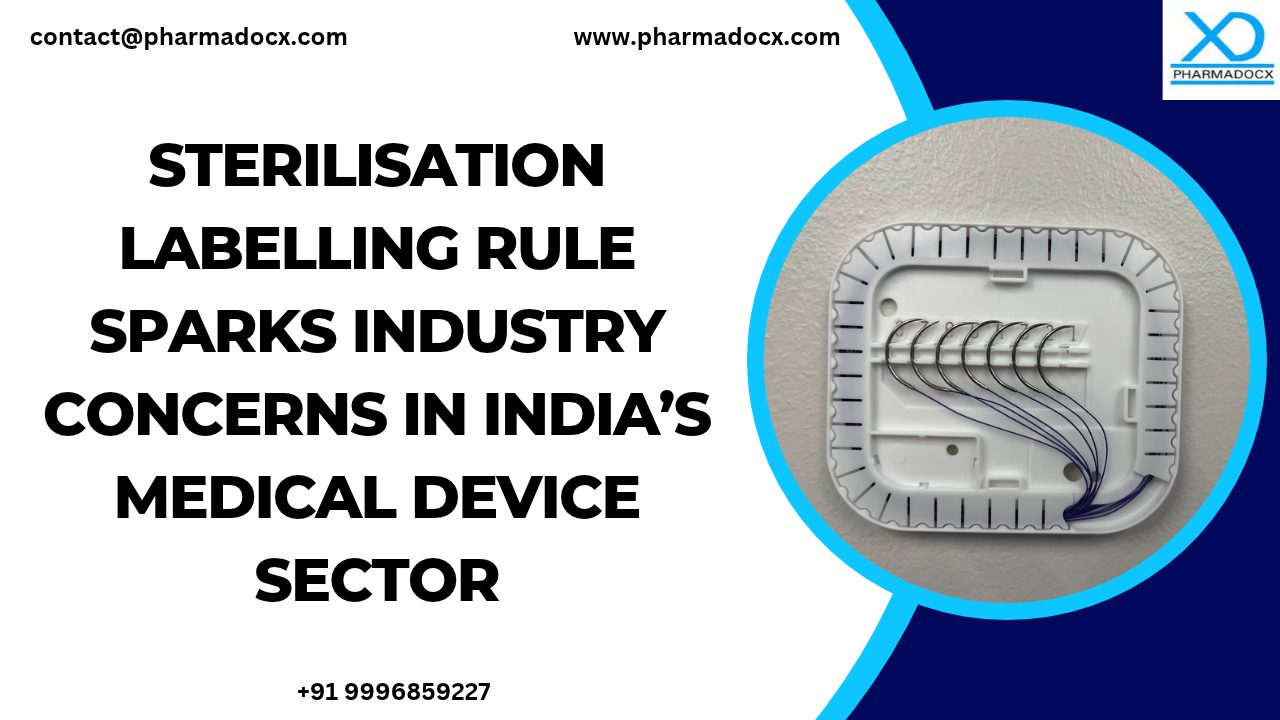
Indian medical device industry has raised concern over the new sterilisation labelling rule
India’s medical device industry is raising concerns over the new sterilisation labelling rule. It requires manufacturers outsourcing sterilisation to print the licence number of the sterilisation facility on product labels. The rule, part of the Medical Devices (Second Amendment) Rules, 2026, takes effect in February 2027 and is seen as adding compliance burdens despite easing loan licence requirements.
Key highlights
- Sterilisation labelling requirement: Manufacturers outsourcing sterilisation must now print the licence number of the sterilisation facility directly on product labels. This rule is intended to strengthen traceability and accountability in outsourced sterilisation processes. Accepted formats include “Sterilization sites Manufacturing License Number,” “Ster. Mfg. Lic. No.,” or “S.M.L.” Industry stakeholders argue this will increase packaging redesign costs and add operational burdens, especially for small and medium enterprises.
- Loan licence simplification: Previously, manufacturers had to obtain a separate loan licence when outsourcing sterilisation. Under the new amendment, if the sterilisation facility already holds a valid licence, no additional loan licence is required. This change reduces duplication and simplifies compliance procedures. However, the benefit is offset by the new labelling requirement, which shifts the compliance burden to packaging and documentation.
- Ninth Schedule (Standardised Testing Fees): The amendment introduces a Ninth Schedule that prescribes fixed fees for medical device testing. For example, implantation tests cost Rs. 5,000, sterility tests Rs. 2,000, and surgical sutures Rs. 3,000. Fees not listed will be determined by the testing laboratory, ensuring flexibility for unlisted devices. Importantly, all prescribed fees will automatically increase by 5% annually, thereby adding long-term cost pressure.
- Compliance timeline: The notification was issued on 14 August 2026, with a six‑month compliance window ending in February 2027. As per the sterilisation labelling rule, manufacturers must redesign labels, update packaging, and align documentation within this short timeframe. Industry associations warn that SMEs may struggle to meet the deadline due to limited resources and high packaging costs. While regulators aim to improve oversight, stakeholders fear the rule could slow domestic competitiveness in a market already heavily dependent on imports.
Industry impact
- Loan licence removal: The removal of the requirement for a separate loan licence simplifies compliance for manufacturers outsourcing sterilisation. This reduces duplication of paperwork and accelerates approval timelines. It also lowers administrative costs, freeing resources for production and innovation. Industry stakeholders see this as a welcome step toward regulatory streamlining.
- Standardised testing fees: The Ninth Schedule introduces fixed fees for device testing, bringing transparency and predictability. Manufacturers can now plan budgets more accurately without facing arbitrary charges. This standardisation improves trust in regulatory processes and ensures consistency across laboratories. Over time, it may encourage more structured investment in testing infrastructure.
- Labelling costs: Mandatory inclusion of sterilisation facility licence numbers on labels increases packaging redesign expenses. SMEs, which often rely on third-party sterilisation, will be disproportionately affected. The need to coordinate with sterilisation partners adds complexity to supply chains. This could slow down production cycles and reduce competitiveness.
- Escalating compliance costs: The automatic 5% annual increase in testing fees creates a steady rise in long-term compliance costs. While manageable for large players, smaller manufacturers may struggle to absorb these expenses. This escalation could discourage new entrants into the market. Ultimately, it risks widening the gap between multinational corporations and domestic SMEs.
- Six-month compliance window: The six-month transition period provides a clear timeline for manufacturers to adapt. Larger firms with established compliance teams may manage the shift smoothly. However, SMEs with limited resources may find the deadline challenging. The short window could lead to rushed implementations, thereby increasing the risk of errors or penalties.
Industry concerns
- Packaging redesign costs: Manufacturers will need to redesign product labels to include sterilisation facility licence numbers. This adds printing and packaging expenses, which are especially burdensome for SMEs with limited budgets. Industry players fear these costs will erode margins in an already price-sensitive market.
- Operational burden: The sterilisation labelling rule requires coordination with third-party sterilisation facilities to obtain and verify licence details. This creates additional administrative work and slows down production timelines. Companies worry that compliance will divert resources from innovation and market expansion.
- Tight compliance window: The six-month transition period ending in February 2027 is seen as too short for manufacturers with large inventories. Updating labels, packaging, and documentation across product lines is a complex process. Many firms fear they may not meet the deadline, risking regulatory penalties.
- Escalating testing fees: The Ninth Schedule introduces fixed testing fees with an automatic 5% annual increase. While this provides transparency, it steadily raises long-term compliance costs. Industry stakeholders argue that fee escalation will disproportionately affect smaller manufacturers.
- Impact on competitiveness: India already imports 80–85% of its medical devices, making domestic manufacturers vulnerable. Added compliance costs and operational hurdles could further weaken local competitiveness. Stakeholders warn this may discourage investment in indigenous manufacturing.
Conclusions
Therefore, the new sterilisation labelling rule under the Medical Devices (Second Amendment) Rules, 2026 aims to strengthen traceability and regulatory oversight. However, it has sparked significant concern among manufacturers. The removal of loan licence requirements is a welcome simplification. However, the mandatory inclusion of sterilisation facility licence numbers on labels introduces added costs and operational challenges, particularly for SMEs. Coupled with the Ninth Schedule’s escalating testing fees and a tight six‑month compliance window, the industry fears these changes could strain resources and weaken domestic competitiveness in a market already dominated by imports. Thus, the coming months will be critical for balancing regulatory intent with practical implementation. For guidance and support with medical device labelling, drop an email at [email protected] or call/Whatsapp on 9996859227. Additionally, we provide comprehensive CDSCO medical device licensing service.