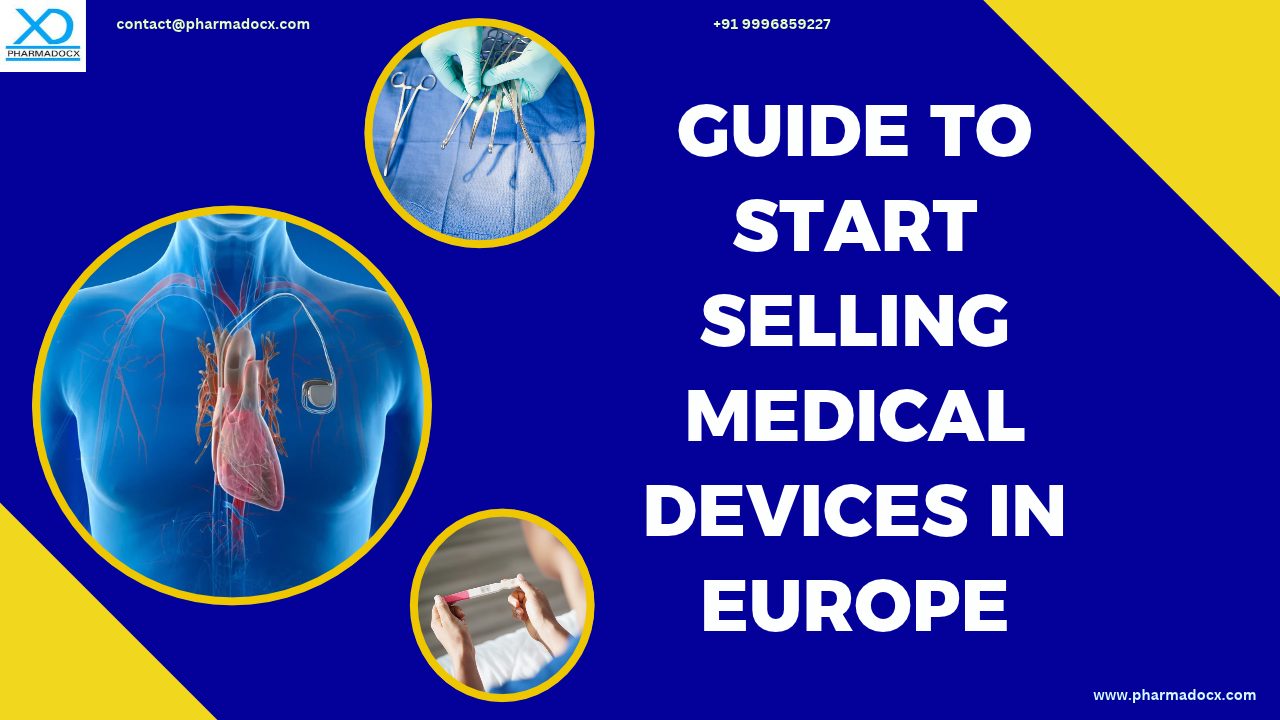
Selling medical devices in Europe is strategically valuable because the EU market is one of the largest and most regulated healthcare markets in the world. Achieving CE marking under the EU MDR or IVDR not only allows entry into Europe but also signals global credibility. The rigorous regulatory framework ensures patient safety and product quality, which builds trust with healthcare providers and strengthens brand reputation. Moreover, Europe’s emphasis on innovation and advanced healthcare infrastructure creates strong demand for high‑quality devices. The demand is mainly focused in diagnostics, imaging, and digital health. Entering this market can therefore accelerate international growth, attract partnerships, and establish long‑term competitiveness in the global medical device industry. In this blog, we have prepared a detailed guide to help you start selling medical devices in Europe.
European Union Medical Device Regulation (EU MDR) 2017/745 is a framework governing safety and performance of medical devices in EU. It came into full effect on May 26, 2021, replacing the previous Medical Device Directive (MDD). It aims to address gaps in oversight and improve patient safety. EU MDR introduces stricter requirements for clinical evaluation, post-market surveillance, traceability through (UDI), and transparency via the EUDAMED database. Manufacturers must comply with detailed safety and performance standards mentioned in the regulation. They must work with designated Notified Bodies for conformity assessment. Additionally, they must appoint a Person Responsible for Regulatory Compliance (PRRC) to ensure ongoing adherence to EU Medical Device Regulation.
Step-by-step guide to start selling medical devices in Europe
We have prepared a step-by-step guide to help you start selling medical devices in Europe
1. Determine regulatory scope
First, confirm whether your product qualifies as a medical device or an in vitro diagnostic (IVD) under EU law. The EU MDR (2017/745) and IVDR (2017/746) are appliable on medical devices and IVDs, respectively. Misidentification at this stage can cause major delays. Hence, carefully review Annex VIII of MDR for classification rules. If your product is borderline (e.g., wellness apps, cosmetic devices), consult guidance documents or seek expert regulatory advice. This step ensures you are working under the correct framework from the start.
2. Identify applicable regulation
Medical devices fall under MDR, while IVDs are regulated by IVDR. Additionally, other EU laws may apply, such as GDPR for patient data, RoHS for hazardous substances, and directives on electronic instructions for use. Overlooking these parallel requirements can lead to compliance gaps during audits. Manufacturers should map all applicable regulations early in their planning process. This holistic approach prevents surprises when authorities review your submissions.
3. Classify your device
Classification determines the level of regulatory scrutiny. This is a very important step for selling medical devices in Europe per regulatory guidelines. Devices are categorized into Class I (low risk), Class IIa (medium risk), Class IIb (higher risk), and Class III (highest risk). The higher the class, the more stringent the conformity assessment and clinical evidence requirements. Misclassification can result in rejection by Notified Bodies and wasted resources. Hence, always document your classification rationale clearly in your technical file.
4. Appoint an EU Authorized Representative (AR)
Non‑EU manufacturers must appoint an AR established in the EU. The AR acts as your legal contact point with regulators and is responsible for ensuring compliance. Their details must appear on product labeling and EUDAMED registration. Choosing a reliable AR is critical, as they will handle vigilance reporting and communication with authorities. A weak AR relationship can jeopardize your market access and delay incident responses.
5. Conformity assessment
Class I devices (non‑sterile, non‑measuring) may be self‑certified. However, higher classes require assessment by a Notified Body. The Notified Body reviews your technical documentation, quality system, and clinical evaluation. This process can take months, depending on device complexity and backlog. Early engagement with a Notified Body is recommended to secure slots and avoid delays. Their approval is essential before CE marking can be affixed.
6. Technical documentation and quality system
Manufacturers must compile technical documentation as per Annex II MDR. This includes device description, design, risk management, clinical evaluation, and labeling. A certified ISO 13485 quality management system is expected to support compliance. Moreover, documentation must be kept up to date and available for inspection at any time. Notably, weak or incomplete files are a common cause of regulatory rejection.
7. Labelling and UDI requirements
Manufacturers must ensure that device labelling complies with EU MDR Annex I, which requires clear, legible, and durable information in the official languages of the member states where the device is marketed. Labels must include essential details, such as manufacturer name, address, CE mark, device description, warnings, and instructions for use. A Unique Device Identifier (UDI) must be assigned to each device and packaging level, thereby enabling traceability throughout the supply chain. The UDI information must be uploaded into EUDAMED, linking the device to its regulatory and safety records. Proper labelling and UDI compliance are critical, as incorrect or incomplete labelling can result in enforcement actions, recalls, or denial of market access.
8. Obtain CE marking
Once conformity is demonstrated, the CE mark can be affixed to the device and packaging. This symbol indicates compliance with EU safety and performance standards. A Declaration of Conformity signed by the manufacturer must accompany the CE mark. Without CE marking, devices cannot legally be sold in the EU. It is a regulatory requirement to start selling medical devices in Europe.
9. Register in EUDAMED
Manufacturers, ARs, and devices must be registered in the European Database on Medical Devices (EUDAMED). This ensures transparency and traceability across the EU market. Registration requires submission of unique device identifiers (UDI) and supporting documentation. Authorities and the public can access certain data for oversight and safety monitoring. Failure to register can block your product from entering the market.
10. Post‑Market Surveillance (PMS)
Manufacturers must establish a PMS plan to monitor device performance after they start selling medical devices in Europe. This includes collecting feedback, analyzing complaints, and reporting incidents through the vigilance system. Higher‑risk devices require periodic safety update reports (PSURs). Notably, PMS is not optional. It is a legal obligation under MDR/IVDR. A strong PMS system builds trust with regulators and customers while reducing liability risks.
Can a non-EU medical device company start selling medical devices in Europe?
Yes, a non‑EU medical device company can sell medical devices in Europe but only if it complies fully with the EU MDR (2017/745) regulations. Such companies must appoint an EU Authorized Representative (AR) based in a member state, who acts as their legal contact point with regulators. The manufacturer must also undergo the appropriate conformity assessment, prepare complete technical documentation, and implement an ISO 13485‑certified quality management system. Once compliance is demonstrated, the device must carry the CE mark and be registered in EUDAMED, ensuring transparency and traceability. Without these steps, non‑EU manufacturers cannot legally place their devices on the European market, regardless of product quality or demand.
How can Pharmadocx Consultants help you start selling medical devices in Europe?
To start selling medical devices in Europe, you need to comply with multiple regulatory guidelines under EU MDR and secure the CE mark. This can be cumbersome and a tedious task. Our team of experts can help you understand the applicable requirements and develop a practical regulatory pathway for entering the European market. We can provide the following support:
- EU market entry strategy
- EU MDR and IVDR regulatory consulting
- Medical device classification
- Technical documentation
- ISO 13485 implementation
- Risk management support
- Regulatory documentation and compliance support
- CE Marking support
To easily start selling medical devices in Europe in a hassle-free manner, drop an email at [email protected] or call/Whatsapp on 9996859227.