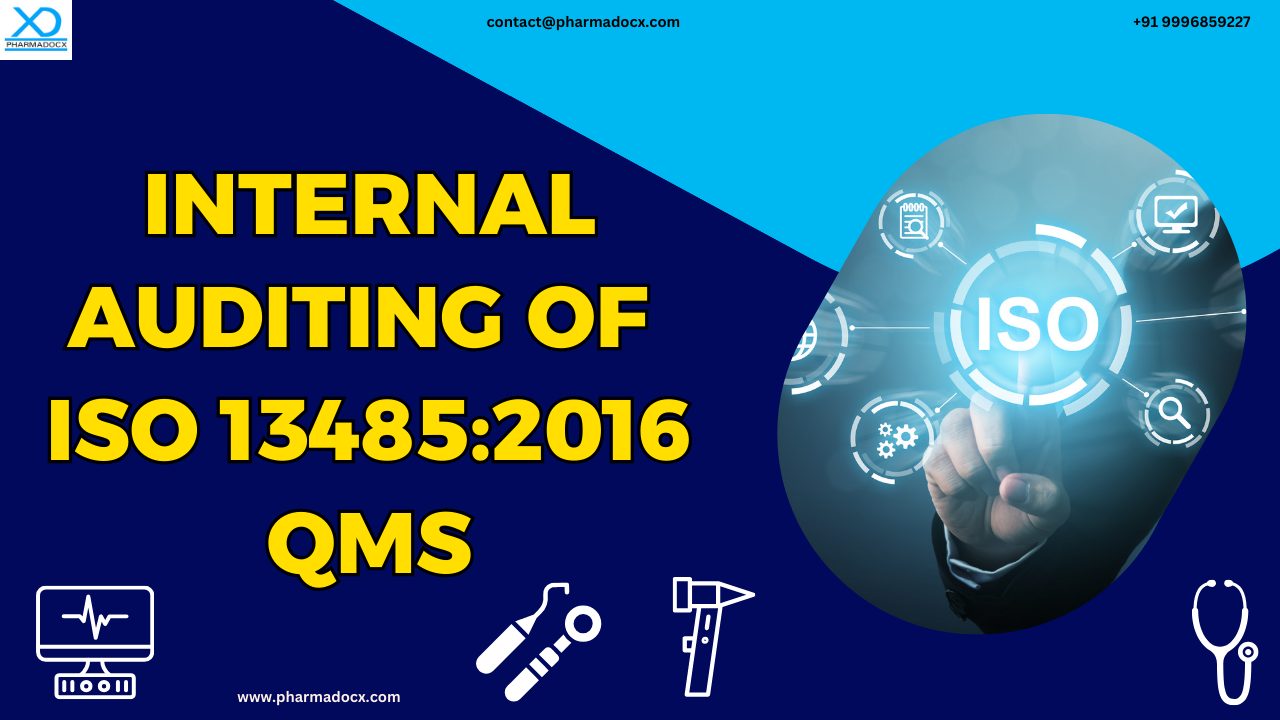
Internal auditing of ISO 13485:2016 QMS aims to verify compliance, identify nonconformities, and strengthen the medical device quality system. This structured process ensures audit readiness, regulatory alignment, and continuous improvement. Internal auditing of QMS is vital because it ensures that the QMS consistently complies with international standards and regulatory requirements. Additionally, it should be able to safeguard product safety and efficacy. By systematically evaluating processes, documentation, and risk controls, internal audits help identify nonconformities early, verify the effectiveness of CAPA, and drive continuous improvement across the organization. They also strengthen audit readiness, build customer and regulator confidence, and foster a culture of accountability and quality. Hence, it enables companies to maintain regulatory compliance, gain market access, and protect patient safety.
What is internal auditing of ISO 13485:2016 QMS?
Internal auditing of ISO 13485:2016 QMS is a systematic, independent, and documented process used by medical device companies to evaluate whether their quality management system complies with ISO 13485 requirements and applicable regulatory standards. It involves planned inspections of processes, records, and practices to verify effectiveness, identify nonconformities, and ensure corrective actions are implemented and sustained. Thus, internal audits strengthen risk management, foster continuous improvement, and prepare organizations for external regulatory inspections. Hence, internal audits safeguard product quality, patient safety, and market trust.
The purpose of conducting internal audits
We have presented the purpose of conducting internal auditing of ISO 13485:2016 QMS.
- Verify compliance: The aim is to confirm that the QMS aligns with ISO 13485:2016 requirements and applicable regulatory frameworks (FDA 21 CFR 820, EU MDR, Health Canada, CDSCO, etc.). Ensures processes are consistently implemented as documented in SOPs, work instructions, and quality manuals.
- Identify nonconformities early: Detects deviations, gaps, or weaknesses before regulators or notified bodies find them. Internal audits will prevent escalation from turning into major findings, recalls, or enforcement actions.
- Strengthen risk management: Evaluates whether risk-based processes (ISO 14971 integration, supplier controls, CAPA) are effective. Helps ensure patient safety by verifying that hazards are mitigated and controls are functioning.
- Drive continuous improvement: Internal audits will provide insights into inefficiencies, redundancies, or outdated practices. Additionally, it encourages proactive corrective and preventive actions (CAPA) to enhance system maturity.
- Prepare for external audits: Builds confidence and readiness for regulatory inspections or certification audits. Internal audits act as a “mock audit,” thereby reducing unexpected findings during external reviews.
- Ensure documentation integrity: Internal audits confirm that records (design history files, device master records, complaint logs, and supplier approvals) are complete, accurate, and traceable. Additionally, it supports regulatory submissions and product registrations globally.
- Enhance organizational accountability: Finally, internal audits promote a culture of quality and compliance across departments. Additionally, it ensures management reviews are based on reliable audit data, thereby strengthening leadership oversight.
Why internal audit matters in ISO 13485 context?
ISO 13485:2016 explicitly requires internal audits at planned intervals to:
- Verify QMS effectiveness.
- Confirm conformity to both ISO clauses and regulatory requirements.
- Ensure corrective actions are implemented and effective.
Without robust internal auditing of ISO 13485:2016 QMS, a company risks regulatory noncompliance, product quality failures, and reputational damage.
Best practices for internal auditing of ISO 13485:2016 QMS
- Establish a risk-based audit program: Prioritize processes that directly impact patient safety and regulatory compliance (e.g., sterilization, complaint handling, supplier controls).Use ISO 14971 risk management principles to determine audit frequency and depth.
- Define clear audit objectives and scope: Align objectives with ISO 13485:2016 clauses and regulatory requirements (FDA 21 CFR 820, EU MDR, Health Canada). Scope should cover design, production, supplier management, CAPA, and post-market surveillance.
- Develop comprehensive audit checklists: Map checklist items to ISO 13485 clauses and company SOPs. Include risk-based questions (e.g., “How is supplier risk monitored?”). Ensure traceability between audit findings and regulatory requirements.
- Ensure auditor competence and independence: Auditors must be trained in ISO 13485 and regulatory frameworks. They should not audit their own work to maintain objectivity. Cross-functional auditors bring diverse perspectives.
- Plan and communicate audit schedules: Create an annual master audit plan with flexibility for ad-hoc audits. Communicate schedules early to reduce resistance and ensure preparedness. Balance frequency: startups may need quarterly audits whereas mature firms can have annual audits.
- Conduct systematic audit execution: Use structured methods for conducting systematic audits. Opening meeting, evidence collection, followed by interviews, and finally, closing meeting. Verify records, such as design history file (DHF), device master record (DMR), CAPA logs, and supplier approvals. Document objective evidence for every finding.
- Focus on CAPA effectiveness: Do not just check whether corrective actions are closed instead evaluate their effectiveness. Verify root cause analysis, recurrence prevention, and long-term monitoring. Check CAPA data trends to identify systemic issues.
- Document findings with precision: Classify findings into four categories major nonconformity, minor nonconformity, observation, opportunity for improvement. Link each finding to specific ISO 13485 clauses or regulatory requirements. Ensure audit reports are clear, actionable, and traceable.
- Perform follow-up and re-audits: Track corrective actions until closure. Conduct re-audits to verify effectiveness of implemented measures. Escalate unresolved issues to management review.
- Leverage digital QMS tools: Automate audit scheduling, evidence collection, and CAPA tracking. Use dashboards for real-time visibility of audit status and trends. Enable global harmonization by integrating multi-market regulatory requirements.
Why do these practices matter?
- Regulatory resilience: Best practices for internal auditing of ISO 13485:2016 QMS minimizes risk of FDA warning letters, CE certificate suspension, or Health Canada MDL/MDEL rejection.
- Operational discipline: Best practices for internal auditing builds a culture of compliance and accountability.
- Audit readiness: Best practices for internal auditing ensures smooth external audits by notified bodies and regulators.
- Continuous improvement: It transforms audits from a compliance exercise into a strategic advantage, which fuels an environment of continuous improvement.
5 benefits of internal auditing of ISO 13485:2016 QMS
- Enhanced risk management: By auditing risk-based processes (ISO 14971 integration, supplier governance, CAPA), companies can proactively mitigate hazards. This directly safeguards patient safety and product reliability.
- Continuous improvement culture: Audits highlight inefficiencies and opportunities for process optimization. They drive corrective and preventive actions (CAPA) that improve system maturity and operational discipline.
- Regulatory resilience: Internal audits ensure early detection of nonconformities, thereby reducing the risk of FDA warning letters, EU MDR noncompliance, or Health Canada MDL/MDEL rejections. They strengthen preparedness for external inspections and certification audits.
- Strengthened market trust and access: Demonstrating robust internal audit practices builds confidence with regulators, customers, and notified bodies. It supports global market entry by proving compliance readiness across jurisdictions.
- Data-driven decision making: Audit findings provide management with objective evidence for reviews. Trend analysis of audit results helps identify systemic issues, thereby enabling strategic resource allocation and long-term improvement.
Therefore, internal auditing of ISO 13485:2016 QMS strengthens organizational resilience, safeguards patient safety, and ensures regulatory confidence. By systematically evaluating processes, documentation, and risk-based controls, internal audits uncover gaps, verify the effectiveness of corrective actions, and drive continuous improvement across the quality system. When executed with discipline and foresight, they not only prepare companies for external inspections but also embed a culture of accountability and excellence. Thus, ISO 13485:2016 QMS internal auditing is crucial for medical device organizations to thrive in a highly regulated and competitive global market. We at Pharmadocx Consultants provide end-to-end consulting services to support your ISO 13485:2016 QMS internal audit needs. Drop an email at [email protected] or call/Whatsapp on 9996859227 to avail our ISO 13485:2016 QMS internal audit services.