
Starting a medical device startup involves blending innovation with regulatory discipline. Entrepreneurs must begin by identifying unmet clinical needs and designing solutions that are both technically feasible and commercially viable. Moreover, they must simultaneously embed a quality management system aligned with ISO 13485 to ensure compliance. Early engagement with regulatory pathways is critical to avoid costly redesigns and delays. Beyond compliance, startups should focus on supplier governance, risk management, and clinical validation to establish credibility. Finally, scaling requires a dual focus on post-market vigilance and global market strategies. This ensures that innovation is supported by operational discipline and a roadmap for sustainable growth.
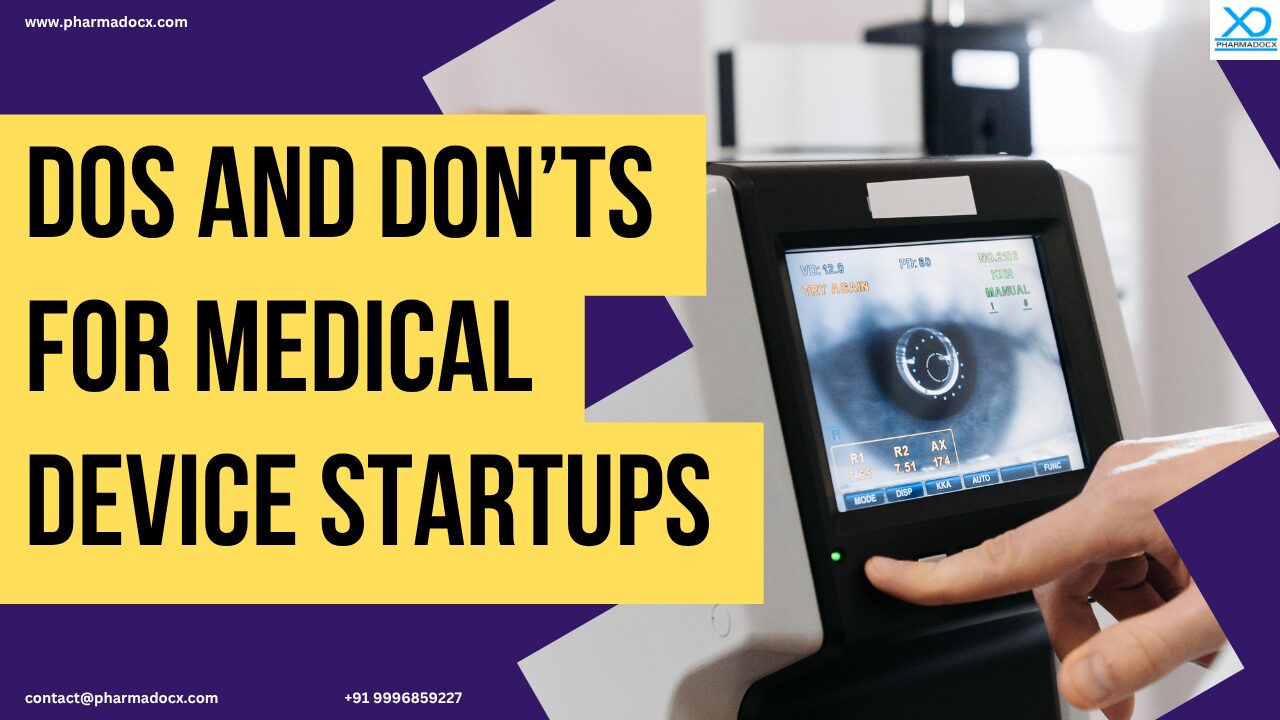
Medical device startups thrive when they treat regulatory compliance not as a hurdle but as a foundation for innovation. Success comes from balancing speed-to-market with rigorous quality systems. They must ensure that design, risk management, and documentation are seamlessly integrated into daily operations rather than added later under audit pressure. Thus, to succeed, medical device startups must embed compliance into operations early, balance innovation with regulatory discipline, and maintain robust documentation and supplier oversight. The biggest pitfalls are treating regulations as afterthoughts and underestimating post-market vigilance. In this blog, we have provided a detailed list of dos and don’ts for medical device startups.
Dos for medical device startups
1. Implement QMS early
A robust Quality Management System (QMS) aligned with ISO 13485 should be established at the very beginning, even before prototypes are finalized. Basically, this ensures that design, development, and manufacturing processes are consistently documented and controlled. Early adoption prevents chaos during audits and builds investor and regulator confidence in your operational discipline.
2. Prioritize regulatory intelligence
Understanding the regulatory landscape across regions (CDSCO, US FDA, EU MDR) is critical before product development begins. Mapping requirements early helps avoid costly redesigns and delays in submissions. Moreover, it also positions the startup to pursue multi-market approvals, thereby expanding growth potential.
3. Invest in risk management
Risk-based thinking under ISO 14971 should guide design, supplier qualification, and manufacturing decisions. Identifying hazards and implementing controls early reduces the likelihood of recalls or compliance failures. A proactive risk management culture also reassures regulators and healthcare providers of product safety.
4. Build supplier governance
Suppliers must be vetted, audited, and monitored to ensure raw materials and components meet stringent quality standards. Weak supplier oversight is a common cause of non-conformities and regulatory sanctions. Thus, strong governance creates resilience in the supply chain and protects against compliance risks.
5. Document everything
Traceability through Device Master Records, technical files, and controlled documentation is non-negotiable. Regulators expect complete, accurate, and accessible records during inspections. Proper documentation also supports internal efficiency and accelerates submission processes.
6. Train your medical device start up team
Competence in QMS, regulatory requirements, and device-specific processes must be built and maintained across the team. Training records should be updated regularly to demonstrate compliance readiness. A well-trained workforce reduces errors and strengthens audit resilience.
7. Engage regulators and industry bodies
Active participation in regulatory consultations, industry associations, and conferences keeps startups ahead of evolving requirements. This engagement also builds credibility and networks that can support smoother approvals. Thus, staying connected ensures your compliance strategy remains future-proof.
8. Hire a regulatory consultant
Regulatory consultants have expertise and knowledge in medical device industry regulatory guidelines and standards. Hence, hiring a regulatory consultant will give you expert insights. Moreover, as a medical device startup it is not possible to stay abreast of the evolving regulatory guidelines. A regulatory consultant will help you comply with the latest regulatory guidelines for medical devices and help you easily secure all the necessary licenses.
Don’ts for medical device startups
1. Don’t treat regulatory compliance as paperwork
Superficial SOPs or “checklist compliance” will not withstand regulatory scrutiny. Regulators expect operational discipline and evidence that procedures are actively followed and not just documented. Treating compliance as a checklist exercise undermines credibility and increases audit risk. Hence, embed regulatory compliance into your daily activity.
2. Don’t ignore post-market vigilance
Neglecting complaint handling, adverse event reporting, and CAPA systems can lead to penalties, recalls, and reputational damage. Regulators closely monitor how companies respond to real-world product issues. A weak vigilance system signals poor risk management and erodes trust with healthcare providers.
3. Don’t overlook clinical evidence
Skipping validation studies or performance evaluations delays approvals and weakens product credibility. Regulators require robust data to prove safety and effectiveness before granting market clearance. Without clinical evidence, even innovative devices struggle to gain acceptance.
4. Don’t depend on one market
Relying solely on India or a single geography limits growth and exposes the company to regulatory or economic shifts. Multi-region submission strategies diversify risk and expand commercial opportunities. Thus, a global mindset ensures resilience and scalability.
5. Don’t cut corners on documentation
Missing, uncontrolled, or inconsistent records are the fastest way to fail audits. Regulators demand complete traceability across design, manufacturing, and post-market processes. Cutting corners here creates compliance gaps that are difficult to recover from.
6. Don’t underestimate supplier risks
Weak oversight of suppliers can result in non-conformities, recalls, and regulatory sanctions. Components or raw materials that fail quality standards compromise the entire device. Strong supplier governance is essential to protect product integrity and compliance.
7. Don’t delay QMS implementation
Waiting until scale-up to introduce quality systems creates chaos under audit pressure. Regulators expect QMS to be embedded from the start and not introduced later. Delayed implementation often leads to costly remediation and lost investor confidence.
Hire a consultant to deal with all the regulatory headaches
Hiring a regulatory consultant can be a game-changer for medical device startups because they bring specialized expertise in navigating complex approval pathways, such as CDSCO in India, FDA in the U.S., and EU MDR in Europe. Consultants help startups avoid costly mistakes by ensuring documentation, testing, and submissions are aligned with regulator expectations, which accelerates approvals and reduces the risk of rejection. Beyond compliance, they also provide strategic guidance on market entry, clinical evidence requirements, and audit readiness. Hence, hiring a regulatory consultant allows founders to focus on innovation while building a strong foundation for global growth.
Hiring a regulatory consultant also helps startups interpret complex and evolving regulations, translating them into actionable steps that fit the company’s stage of growth. They can identify gaps in documentation, testing, or quality systems before regulators do, thereby saving both time and money. Consultants often bring experience from multiple markets, which allows startups to design products and submissions with global scalability in mind. They also act as a bridge between technical teams and regulators, thereby ensuring communication is clear, structured, and aligned with expectations. Finally, their involvement reassures investors and partners that compliance risks are being managed professionally, thereby strengthening confidence in the startup’s long-term viability.
Pharmadocx Consultants: Your trusted aid for setting up a medical device startup
Planning to transform your medical device startup idea into a successful business? We at Pharmadocx Consultants offer comprehensive regulatory services. Our team specializes in simplifying the complex process of establishing a medical devices business. From regulatory guidance to cost-effective manufacturing and strategic planning, our team provides a holistic support guiding you at every step of establishing a medical device business.
Our regulatory service covers major markets worldwide, namely CDSCO (India), US FDA (USA), Health Canada (Canada), CE mark (EU), and SFDA (Saudi Arabia). We can help you easily obtain the necessary medical device licenses and comply with the applicable regulatory guidelines of your target market. While you take care of innovation let us take care of the necessary regulatory requirements. Drop an email at [email protected] or call/Whatsapp on 9996859227 to let us help you establish your medical device startup per applicable regulatory requirements.