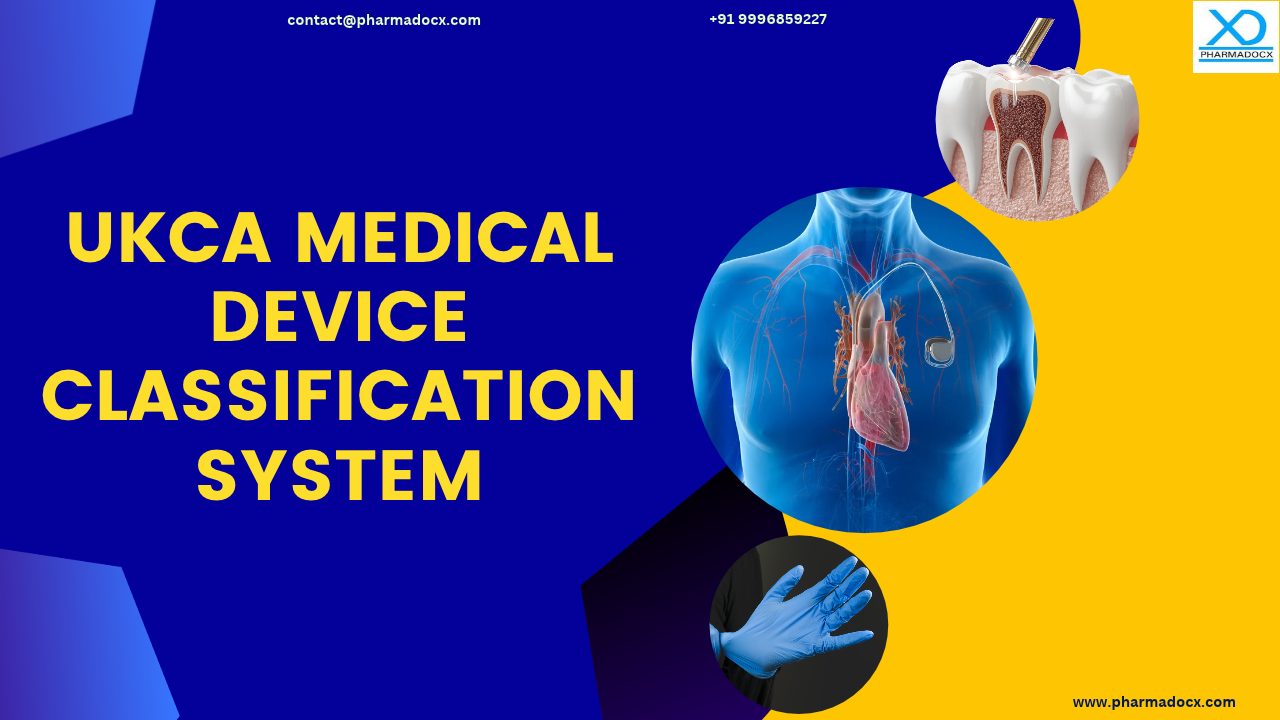

UKCA classification rules for medical devices follow the UK Medical Devices Regulations 2002 (UK MDR 2002). It mirrors EU MDR principles but apply specifically to Great Britain. UKCA medical device classification determines the conformity route. Thus, higher the risk the more rigorous the assessment. In this blog, we have presented the UKCA medical device classification system.
By categorizing devices into risk-based classes (I, IIa, IIb, and III), regulators can apply stricter conformity assessments to higher-risk products, like implants or diagnostic tests, for life-threatening diseases, while allowing lighter oversight for low-risk devices. Basically, the UKCA regulatory standards are proportionate to the risks they pose. This tiered system protects patients, maintains public trust, and aligns manufacturers with internationally recognized standards. Moreover, it also gives regulators a structured framework to monitor compliance and intervene when necessary.
What is the UKCA medical device classification system?
The UKCA medical device classification system is a risk-based framework that categorizes devices into four main classes. It is structured around risk-based rules embedded in the UK Medical Devices Regulations 2002 (UK MDR 2002). The system uses a set of 21 classification rules (mirroring EU MDR Annex IX) that consider factors, such as whether a device is invasive, implantable, active, or intended for long-term use. These rules determine the class by evaluating the intended purpose, duration of contact with the body, invasiveness, and whether the device interacts with vital organs or delivers medicinal substances. For example, a non-invasive device used for monitoring may fall under a lower class, while an implantable device that sustains life is automatically pushed into higher class. This structured rule-based approach ensures consistency, prevents under-classification, and provides manufacturers with a clear pathway to determine conformity requirements under UKCA marking.
Hence, based on their potential impact on patient safety and health, medical devices have been categorised into four classes, Class I, II, III, and IV. Class I covers low-risk devices, like bandages. Whereas, Class IIa and IIb include medium- to higher-risk devices, such as infusion pumps or orthopedic implants, require progressively stricter conformity assessments. Class III represents the highest-risk devices, such as heart valves or implantable defibrillators, which undergo the most rigorous review and clinical evaluation. This system ensures that oversight is proportionate to risk. Notably, UK Approved Bodies conduct independent assessments for higher-risk categories, thereby safeguarding public health while streamlining compliance for lower-risk products.
Key factors that determine classification
The UKCA medical device classification system is determined by a set of risk-based factors rather than just product type. The key factors include:
- Intended purpose of the device: What the manufacturer claims it is designed to do (diagnosis, therapy, monitoring, etc.).
- Duration of contact with the body: Transient (<60 minutes), short-term (up to 30 days), or long-term (>30 days).
- Degree of invasiveness: Whether the device penetrates the body surface, is surgically invasive, or implantable.
- Active vs. non-active: Whether the device relies on an external energy source (electrical, mechanical, etc.) to function.
- Interaction with critical systems: If the device comes into contact with or affects the central circulatory system, central nervous system, or vital organs.
- Delivery of medicinal substances or biological materials: Whether the device administers drugs, blood, or other substances into the body.
- Special categories: Contraceptive devices, disinfectants, sterilizers, and devices with measuring functions have specific rules.
Hence, together these factors form the classification rules that assign a device to Class I, IIa, IIb, or III under UKCA. The principle is simple: the greater the risk to patient safety, the higher the class and the stricter the conformity assessment required.
UKCA medical device classification
General medical device classes
- Class I (low risk): Class I medical devices are considered the lowest risk and typically involve simple, non-invasive products. Manufacturers can self-declare conformity without needing a UK Approved Body, unless the device is sterile or has a measuring function. These devices must still meet essential safety and performance requirements under UK MDR 2002. Documentation must include a technical file and declaration of conformity. Examples: Bandages, stethoscopes, surgical gloves (sterile), and thermometers with measuring functions.
- Class IIa (medium risk): Class IIa medical devices pose a moderate risk and require involvement of a UK Approved Body for conformity assessment. These devices are often invasive but short-term or active devices with limited impact on vital organs. Manufacturers must provide detailed technical documentation and undergo audits. Additionally, clinical evaluation is required to demonstrate safety and performance. Examples: Dental fillings, hearing aids, infusion pumps, and ultrasound scanners for diagnostic use.
- Class IIb (higher risk): Class IIb medical devices carry a higher risk and undergo more rigorous conformity assessments. They often involve long-term invasive use or active devices that directly affect physiological processes. UK Approved Bodies must review design, manufacturing processes, and clinical evidence. Post-market surveillance requirements are stricter compared to lower classes. Examples: Orthopedic implants, ventilators, anesthesia machines, and radiotherapy equipment.
- Class III (highest risk): Class III devices represent the highest risk and require the most stringent regulatory scrutiny. These devices are often implantable, life-sustaining, or critical to patient survival. Manufacturers must submit a design dossier for review by a UK Approved Body, including comprehensive clinical data. Approval involves detailed audits, clinical evaluations, and ongoing monitoring. Examples: Heart valves, implantable defibrillators, pacemakers, and drug-eluting stents.
Active implantable medical devices
Active Implantable Medical Devices (AIMDs) are a special category under the UKCA framework. They are defined as devices intended to be totally or partially introduced into the human body by surgical or medical intervention and designed to remain there after the procedure, relying on an external energy source to function. As they sustain or support life, prevent serious health impairment, or pose significant risk if they fail, AIMDs are automatically placed in the highest risk category and require the most stringent conformity assessment. Manufacturers must undergo full design dossier review, clinical evaluation, and continuous post-market surveillance by a UK Approved Body.
Examples: Pacemakers, implantable cardioverter defibrillators, cochlear implants, neurostimulators, drug infusion pumps
Therefore, AIMDs are treated with the same rigor as Class III devices but with additional requirements due to their implantable and active nature.
Key points for compliance with UKCA medical device classification
- Accurate classification: Devices must be classified according to risk-based rules in UK MDR 2002. Classification depends on invasiveness, duration of use, active vs. passive function, and interaction with vital organs. Misclassification can lead to regulatory rejection or penalties. Always document the rationale for classification decisions.
- Conformity assessment: The route depends on the device class: self-declaration for Class I, UK Approved Body involvement for higher classes. Class IIa, IIb, and III require audits, technical documentation review, and clinical evaluation. Active Implantable Medical Devices (AIMDs) always need full design dossier review. Manufacturers must maintain evidence of compliance throughout the product lifecycle.
- Technical documentation: The documentation must include design, manufacturing processes, risk analysis, and performance data. Clinical evaluation reports are mandatory for higher-risk devices. Documentation must be kept up to date and available for inspection. Post-market surveillance data should be integrated into the technical file.
- UK declaration of conformity: A formal statement by the manufacturer that the device meets UK MDR requirements. Must reference UK regulations and designated standards. Required for all classes before affixing the UKCA mark.
- Post-market surveillance and vigilance: Manufacturers must monitor medical device performance once on the market. Adverse events must be reported to the MHRA promptly. Continuous risk management and corrective actions are required. Surveillance plans must be proportionate to device risk class.
For any queries on UKCA medical device classification system, email at [email protected] or call/Whatsapp on 9996859227.