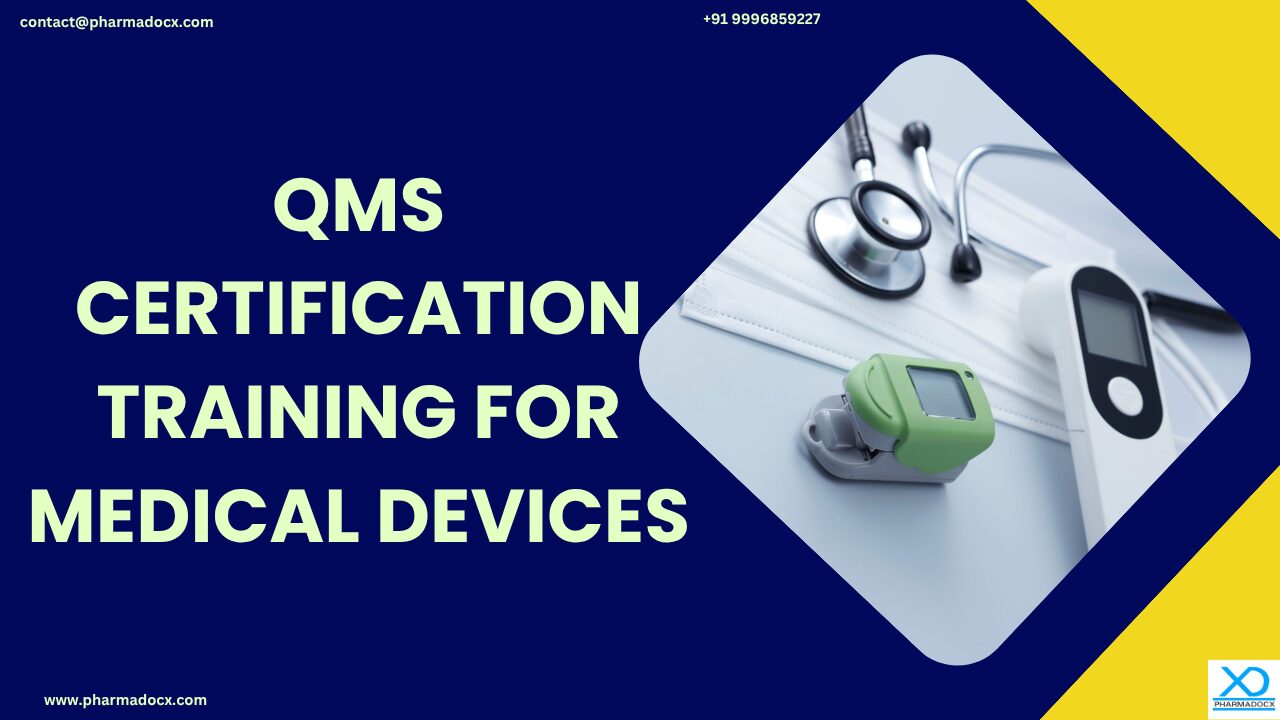
QMS certification training for medical devices is a professional course that teaches participants how to understand, implement, and audit QMS. The training typically covers regulatory requirements, risk-based thinking, documentation practices, and internal/external audit techniques. It ensures that medical device companies can demonstrate compliance with global regulations while maintaining product safety and effectiveness. It is designed for quality managers, regulatory professionals, and auditors who need formal certification to validate their competence.
What is QMS?
A Quality Management System (QMS) is a structured framework of policies, processes, and procedures that ensures medical devices are consistently designed, manufactured, and delivered to meet regulatory requirements and patient safety standards. It provides a documented system that governs quality across the entire device lifecycle. It covers design and development to production, distribution, installation, servicing, and post-market surveillance. Globally, ISO 13485:2016 is the benchmark standard for medical device QMS. It focuses on risk management, regulatory compliance, and continual improvement. Thus, QMS builds trust, reduces risk, and enables market access for medical device companies.
What is QMS certification training?
QMS certification training for medical devices is a structured program designed to equip professionals with the knowledge and skills required to implement, audit, and maintain a Quality Management System in compliance with ISO 13485:2016 standards. It covers regulatory requirements, risk-based thinking, documentation practices, and audit techniques. Thus, QMS certification training ensures that participants can demonstrate competence in establishing and evaluating QMS processes that meet global medical device regulations and support both compliance and strategic business goals.
To get certified in medical device quality management systems (QMS), you will typically follow ISO 13485:2016 training programs that prepare you for either implementation or lead auditor roles. These courses are offered by accredited providers. The certification is recognized globally for regulatory compliance.
3 Key training options for QMS certification in medical devices
- ISO 13485:2016 implementation training: This training focuses on understanding and applying the requirements of ISO 13485:2016, the international standard for medical device quality management systems. Participants learn how to establish processes, manage documentation, and integrate risk-based thinking into everyday operations. It is ideal for professionals responsible for setting up or maintaining QMS within medical device companies.
- ISO 13485:2016 internal auditor training: This course prepares participants to conduct internal audits of their organization’s QMS to ensure compliance with ISO 13485. It covers audit planning, execution, reporting, and corrective action follow-up. The training is suited for quality managers and team members tasked with maintaining continuous compliance through internal checks.
- ISO 13485:2016 lead auditor training: This advanced program trains professionals to lead external audits of medical device QMS, including supplier and certification audits. It emphasizes audit principles, leadership skills, and adherence to ISO requirements for certification bodies. Successful completion provides globally recognized auditor certification, opening opportunities to work with notified bodies and regulatory agencies.
Step-by-step pathway to QMS certification training for medical devices
1. Check eligibility requirements
Ensure you have prior knowledge of ISO 13485 basics or medical device operations before enrolling in the QMS certification training program.
2. Understand ISO 13485 requirements
Begin by familiarizing yourself with ISO 13485:2016, the global standard for medical device QMS. This includes understanding clauses on documentation, risk management, and regulatory compliance. Reading the standard thoroughly ensures you know what certification entails. It sets the foundation for all subsequent QMS certification training steps.
3. Choose the right QMS certification training program
Select between Implementation, Internal Auditor, or Lead Auditor training depending on your role and career goals. Implementation training suits those building QMS systems, while auditor training suits compliance professionals. Accredited providers offer globally recognized courses. Moreover, choosing the right program ensures alignment with your responsibilities.
4. Complete structured training sessions
Enroll in the chosen program and attend sessions that cover QMS principles, documentation, and audit techniques. These sessions often include case studies, role-play audits, and practical exercises. Duration varies from 2 days for implementation to 5 days for lead auditor courses. Completing training builds both theoretical knowledge and practical competence.
5. Pass the certification assessment
Most programs require participants to pass a written or practical exam to demonstrate competence. The assessment tests knowledge of ISO 13485 requirements, audit planning, and compliance evaluation. Successful completion earns a certificate of achievement or attendance. Basically, this validates your ability to apply QMS principles in real-world scenarios.
6. Apply certification in practice
Use your certification to implement or audit QMS within medical device organizations. Certified professionals often lead compliance projects, supplier audits, or regulatory submissions. Applying training ensures organizations meet CDSCO, FDA, and EU MDR requirements. Furthermore, it also strengthens career prospects in regulatory and quality management roles.
7. Maintain and update certification
Certification validity typically lasts several years, requiring renewal or continuing education. Lead auditors, for example, must maintain CQI/IRCA recognition through periodic updates. Staying current with regulatory changes ensures ongoing compliance. Moreover, continuous learning keeps your certification relevant and valuable.
Why should you opt for QMS certification training program?
- Regulatory compliance: QMS certification training ensures that professionals understand and apply ISO 13485:2016 standards, which are globally recognized for medical device quality management. This knowledge helps organizations meet regulatory requirements set by authorities, such as the FDA, CDSCO, and EU MDR. Without proper training, companies risk non-compliance, which can lead to penalties, product recalls, or loss of market access. Certification provides confidence that processes align with international expectations.
- Enhanced career opportunities: Completing QMS training opens doors to roles, such as quality manager, regulatory affairs specialist, or lead auditor in the medical device industry. Employers value certified professionals because they bring credibility and proven competence in managing compliance. This QMS certification training is often a prerequisite for senior positions or consulting opportunities with notified bodies and regulatory agencies. It strengthens your professional profile and increases employability worldwide.
- Improved quality and risk management: Training equips participants with tools to implement risk-based thinking and continuous improvement in medical device manufacturing. By applying structured QMS practices, organizations can reduce defects, improve product safety, and enhance customer satisfaction. This proactive approach minimizes risks of regulatory violations and patient harm. Thus, it builds resilience and trust in the company’s operations.
- Global recognition and market access: ISO 13485 certification is recognized across international markets, thereby making it essential for companies aiming to expand globally. Training ensures that professionals can guide organizations through certification audits and maintain compliance across regions. This recognition facilitates smoother entry into regulated markets, such as the EU, US, and India. It positions the company as a reliable manufacturer with globally accepted standards.
Pharmadocx Consultants: Your trusted ally for robust QMS implementation
QMS certification training for medical devices is a strategic investment in quality, safety, and global market readiness. By equipping professionals with the skills to implement, audit, and maintain ISO 13485:2016 standards, the training ensures that organizations can consistently meet regulatory requirements while fostering a culture of continuous improvement. Certified professionals not only strengthen their career prospects but also help their companies build credibility, reduce risks, and achieve smoother access to international markets. Therefore, QMS certification training bridges the gap between regulatory obligation and business excellence, thereby making it a cornerstone for sustainable success in the medical device industry. We at Pharmadocx Consultants specialise in robust QMS implementation. Our team of experts will take note of your requirements and prepare the QMS suited to your product and company. Drop an email at [email protected] or call/Whatsapp on 9996859227 to have your QMS implemented per applicable regulatory requirements.