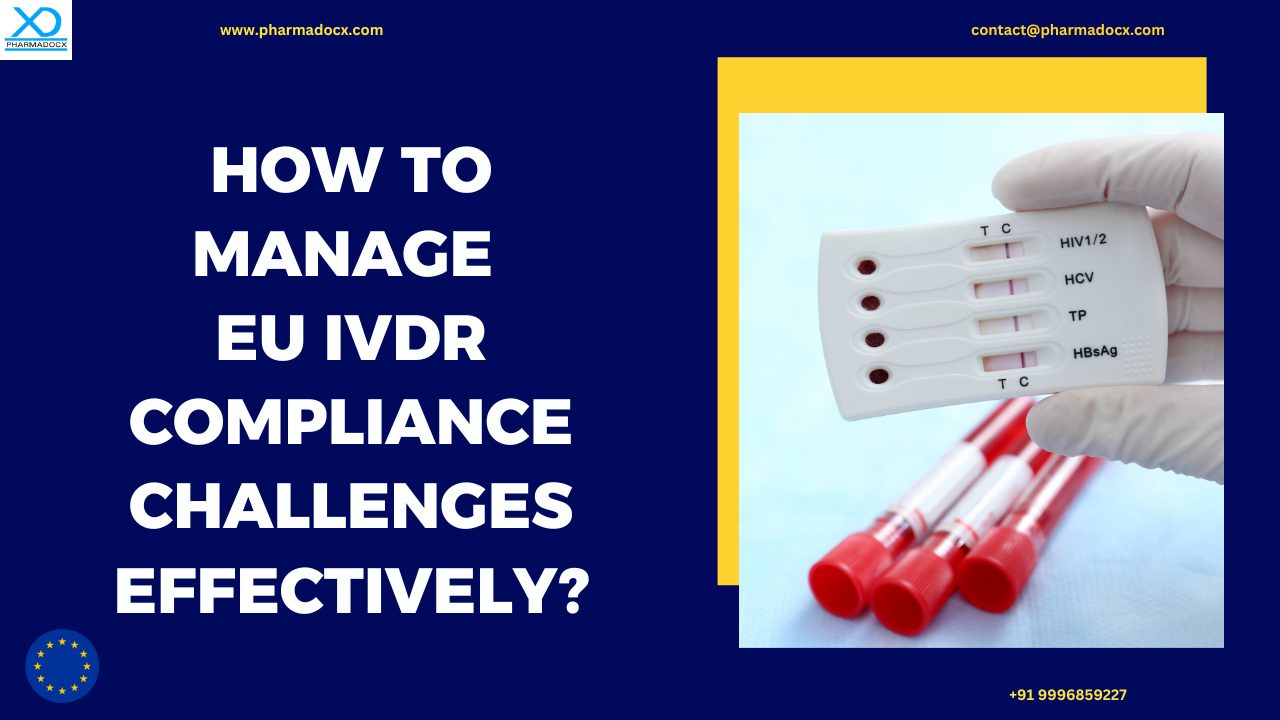
EU IVDR governs invitro diagnostic devices (IVDs) placed in the EU market. It aims to strengthen patient safety, ensure higher quality standards, and improve transparency compared to the previous directive. Hence, EU IVDR is a major regulatory overhaul that raises the bar for IVDs in Europe. In this blog, we have presented the common EU IVDR compliance challenges and how to effectively manage them.
What is EU IVDR?
The EU In Vitro Diagnostic Regulation (EU IVDR) is the European Union’s regulatory framework governing in vitro diagnostic devices. It has replaced the older IVDD and introduced a risk-based classification system. Devices are now classified into four risk classes (A, B, C, D), with stricter requirements for higher-risk categories (e.g., HIV tests, genetic tests). Additionally, most IVDs are required to undergo assessment by notified bodies rather than self-certification. Moreover, the regulation emphasizes stronger clinical evidence, performance evaluation, and post-market surveillance to ensure patient safety and device reliability. Manufacturers must provide robust clinical evidence demonstrating scientific validity, analytical performance, and clinical performance. Additionally, EU IVDR has enhanced post-market surveillance requirements for monitoring device performance and safety once placed in the market. Furthermore, it also mandates transparency through unique device identification and stricter oversight of manufacturers, importers, and distributors.
Key changes from IVDD to IVDR
The IVDR is far stricter than IVDD. IVDR shifts from a largely self-regulated system under IVDD to one with risk-based classification, mandatory notified body involvement, stronger evidence requirements, and robust post-market oversight. This ensures higher patient safety and market transparency but also significantly increases compliance burdens for manufacturers. This regulatory transition has introduced EU IVDR compliance challenges. We have provided an overview of the key changes from IVDD to IVDR.
- Classification system: IVDD used a simple list-based approach. IVDR introduces a risk-based classification (Classes A–D). Hence, most devices now fall under higher scrutiny, especially infectious disease and genetic tests.
- Notified body involvement: Under IVDD, approximately 80–90% of IVDs were self-certified. Under IVDR, the majority now require Notified Body review, drastically increasing oversight.
- Clinical evidence and performance evaluation: IVDD had limited requirements. IVDR mandates scientific validity, analytical performance, and clinical performance data to demonstrate safety and effectiveness.
- Post-market surveillance: IVDD requirements were minimal. IVDR requires continuous monitoring, reporting, and vigilance systems to track device performance and safety.
- Transparency and traceability: IVDR has introduced Unique Device Identification (UDI), EUDAMED database registration, and stricter obligations for manufacturers, importers, and distributors.
5 common EU IVDR compliance challenges
We have presented the common compliance challenges under the EU IVDR that manufacturers, importers, and distributors face.
- Notified body capacity: Limited availability of notified bodies has created bottlenecks, thereby delaying conformity assessments and CE marking.
- Risk-based classification shift: Many devices that were self-certified under IVDD now require notified body review, thereby increasing workload and costs.
- Clinical evidence requirements: Generating robust data on scientific validity, analytical performance, and clinical performance is resource-intensive, especially for SMEs. Hence, generating robust clinical evidence is one of the major EU IVDR compliance challenges
- Post-market surveillance and vigilance: Continuous monitoring, reporting, and corrective action systems demand new infrastructure and expertise.
- Operational and financial burden: Compliance costs, documentation demands, and regulatory uncertainty are straining innovation and market access, particularly for smaller companies.
10 tips to manage EU IVDR compliance challenges effectively
- Early engagement with notified bodies: Secure notified body slots well in advance, as capacity is limited and demand is high. Establish strong communication channels to clarify expectations and timelines. Submitting complete and well-prepared documentation reduces review delays. Treat notified bodies as strategic partners rather than transactional reviewers.
- Robust gap analysis: Conduct a detailed comparison of IVDD vs IVDR requirements for each product. Identify reclassification impacts and new obligations early. Use this analysis to prioritize resources for high-risk devices. A structured roadmap ensures smoother compliance transitions.
- Strengthening clinical evidence: Develop comprehensive performance evaluation plans covering scientific validity, analytical performance, and clinical performance. Collaborate with external labs or research institutions to generate credible data. Leverage real-world evidence to supplement clinical studies. Document methodologies transparently to withstand audits.
- Digital QMS modernization: Implement digital quality management systems to streamline documentation, traceability, and reporting. Automate workflows for CAPA, supplier audits, and vigilance reporting. Cloud-based dashboards improve oversight and audit readiness. A modern QMS reduces manual errors and helps manage EU IVDR compliance challenges.
- Post-market surveillance systems: Establish proactive monitoring systems for complaints, adverse events, and performance trends. Train staff to identify early warning signals and escalate issues quickly. Integrate surveillance with risk management for timely corrective actions. Regular updates to regulators build trust and transparency.
- Supplier governance: Audit suppliers rigorously to ensure compliance with IVDR standards. Use risk-based assessments to evaluate reliability. Require documented evidence of quality and regulatory alignment. Strong supplier oversight prevents downstream EU IVDR compliance challenges.
- Resource and cost management: Adopt phased compliance strategies to spread costs over time. Outsource specialized regulatory tasks to reduce internal strain. Align compliance investments with business priorities to maximize ROI. Treat compliance as a competitive differentiator rather than a burden.
- Training and competence building: Develop targeted training modules for regulatory, clinical, and operational teams. Conduct mock audits to build resilience under regulatory pressure. Encourage cross-functional collaboration to break silos. Competence building ensures teams can adapt to evolving requirements.
- Transparency and traceability: Implement Unique Device Identification (UDI) and register products in EUDAMED promptly. Ensure documentation is audit-ready and accessible. Use digital dashboards for real-time traceability across product lifecycles. Transparency strengthens regulatory confidence and market credibility.
- Strategic regulatory intelligence: Monitor evolving EU guidance, MDCG documents, and notified body interpretations. Benchmark against industry peers to identify best practices. Adapt compliance strategies dynamically to stay ahead of regulatory shifts and avoid EU IVDR compliance challenges. Regulatory intelligence transforms compliance into a strategic advantage.
Strong documentation forms the back bone of EU IVDR compliance
Strong documentation is absolutely vital for EU IVDR compliance because it underpins every stage of regulatory oversight and audit readiness.
- Evidence of compliance: Documentation provides the tangible proof that a manufacturer has met IVDR requirements, from risk classification to performance evaluation. Without clear records, regulators and notified bodies cannot verify conformity.
- Audit readiness: During inspections, auditors rely on technical files, performance evaluation reports, and post-market surveillance records. Well-structured documentation ensures smooth audits and reduces the risk of findings or penalties.
- Traceability and transparency: IVDR requires Unique Device Identification (UDI) and registration in EUDAMED. Strong documentation guarantees traceability across the product lifecycle, building trust with regulators and customers.
- Operational efficiency: Clear, modular, and well-maintained documents reduce duplication of effort, streamline submissions, and support faster responses to regulatory queries. This efficiency is critical in a resource-heavy compliance environment.
Therefore, documentation is not just paperwork. It is the backbone of compliance, risk management, and market access under IVDR.
Thus, navigating EU IVDR compliance challenges requires foresight, discipline, and adaptability. The EU IVDR has raised the bar for evidence, oversight, and transparency. Hence, manufacturers must move beyond minimal compliance towards building resilient systems that can withstand scrutiny. Success lies in early engagement with notified bodies, robust documentation practices, and digital modernization of quality systems to handle the increased demands. By treating compliance as a strategic enabler rather than a burden, organizations can not only meet regulatory expectations but also strengthen market credibility, patient trust, and long-term competitiveness. We at Pharmadocx Consultants have the regulatory expertise to help you comply with EU IVDR requirements. Drop an email at [email protected] or call/Whatsapp on 9996859227 to partner with us.