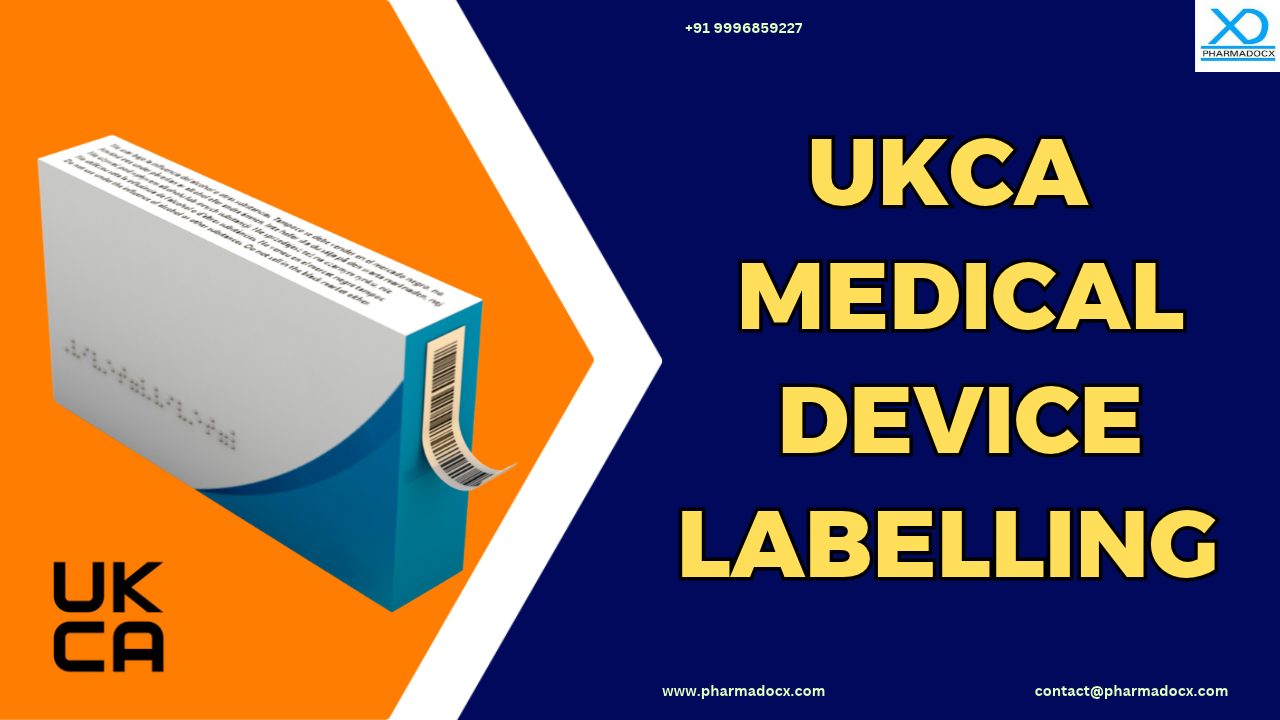

UKCA medical device labelling requirements are comprehensive and designed to ensure traceability, safety, and regulatory compliance. The label must contain identifiers, regulatory marks, manufacturer/UKRP details, usage/expiry information, sterility/single‑use status, and warnings. Notably, all important information should be in English. These requirements align with MHRA guidance for medical devices. They will become fully mandatory after the CE acceptance transition deadlines (June 2028 for medical devices, June 2030 for IVDs).
UKCA medical device labelling
UKCA medical device labelling refers to the regulatory framework that governs how medical devices must be marked and presented when placed on the market in Great Britain. The focus is not just about the physical symbols or text printed on packaging. However, it is about demonstrating compliance with UK law through clear, standardized information that ensures patient safety, traceability, and accountability. Labelling under UKCA is the mechanism by which manufacturers communicate essential details, such as regulatory conformity, responsible parties, and safe usage, directly to users, healthcare professionals, and regulators. It serves as a legally binding declaration that the device meets UK Medical Device Regulations, aligns with designated standards, and has undergone the appropriate conformity assessment.
Thus, UKCA labelling is the visible proof of regulatory compliance and a critical safeguard in the post‑Brexit UK market. Hence, UKCA medical device labelling ensures that medical devices are identifiable, safe, and properly regulated throughout their lifecycle.
Need for UKCA medical device labelling requirements
- Patient safety: UKCA medical device labelling ensures that patients and healthcare professionals have clear, standardized information about the device’s identity, usage, and limitations. This reduces risks of misuse, misinterpretation, or unsafe application in clinical settings. By mandating English language and specific warnings, it guarantees that critical safety information is accessible and unambiguous in Great Britain.
- Regulatory compliance: Labelling acts as the visible proof that a device meets UK Medical Device Regulations and has undergone the required conformity assessment. It provides regulators with a quick way to verify compliance during inspections or audits. Without proper labelling, even technically compliant devices cannot legally be marketed in Great Britain.
- Traceability and accountability: UKCA labelling requires identifiers, such as batch/lot numbers, serial numbers, and manufacturer/UK Responsible Person details. These elements enable authorities and users to trace devices back to their source in case of recalls, adverse events, or quality issues. This strengthens accountability across the supply chain and supports post‑market surveillance.
- Market access: Proper UKCA labelling is a prerequisite for placing medical devices on the GB market after the CE transition deadlines. It ensures manufacturers can legally sell and distribute their products without interruption. In practice, labelling compliance is as critical as technical performance for maintaining market presence.
- Audit and inspection readiness: Labelling requirements are closely tied to audit processes conducted by UK Approved Bodies and MHRA. Clear, compliant labels reduce audit findings and demonstrate operational discipline in quality management systems. They also serve as a frontline indicator of whether a company is prepared for regulatory scrutiny.
Key UKCA medical device labelling requirements
1. Manufacturer and UK Responsible Person (UKRP)
Every UKCA medical device label must clearly state the manufacturer’s name and address to establish accountability. If the manufacturer is based outside the UK, the details of the UK Responsible Person (UKRP) must also be included. This ensures that regulators and users know who is legally responsible for the device in Great Britain. It also provides a direct point of contact for safety issues, recalls, or regulatory queries.
2. Device identification
As per UKCA medical device labelling requirements, the label must include the device’s trade name, catalogue/reference number, and either a batch/lot number or serial number. These identifiers allow precise tracking of each device unit across production, distribution, and usage. In case of adverse events or recalls, they enable authorities to pinpoint affected batches quickly. This traceability is a cornerstone of post‑market surveillance and quality assurance.
3. UKCA mark
The UKCA mark must be visible, legible, indelible, and at least 5 mm in height. If a conformity assessment was conducted by a UK Approved Body, its identification number must appear alongside the mark. This mark is the official declaration that the device complies with UK Medical Device Regulations. Placement can be on the product, packaging, or documentation. However, it must remain permanent and accessible.
4. Dates
Labels must show the “use by” date for sterile devices and IVDs, thereby ensuring users know the safe timeframe for application. Where relevant, the date of manufacture must also be indicated. These dates are critical for maintaining device integrity and preventing unsafe usage beyond validated lifespans. They also support inventory management and regulatory audits.
5. Sterility and single‑use
Sterile devices must carry the word “STERILE” or the appropriate ISO symbol, along with the sterilisation method if applicable. Single‑use devices must be labelled with “Do not re‑use” or the corresponding symbol. These designations prevent unsafe reuse or mishandling of devices designed for one‑time application. They also align with infection control standards in healthcare settings.
6. Implant and warnings
Implantable devices must be explicitly labelled to indicate their intended use. Labels must also include warnings, precautions, and any special storage or handling instructions. This ensures that healthcare professionals are fully informed about risks and safe usage conditions. Such warnings are vital for patient safety and regulatory compliance.
7. Language requirements
All mandatory label information must be provided in English for the GB market. This requirement ensures clarity and accessibility for regulators, healthcare providers, and patients. Using a single language standard reduces misinterpretation and enhances safety. It also aligns with MHRA’s enforcement of uniform communication standards.
Special considerations under UKCA medical device labelling guidelines
- Transition periods: UKCA marking is mandatory to market your medical device in Great Britain. However, CE marking continues to be accepted in Great Britain until June 2028 for general medical devices and June 2030 for IVDs. This dual acceptance means manufacturers must plan for both marks during the transition. Companies should align labelling strategies with product lifecycle timelines to avoid costly re‑labelling later.
- Placement flexibility: The UKCA mark can appear on the device, packaging, or accompanying documentation. However, it must remain visible, legible, and indelible throughout the product’s intended use. Manufacturers must balance regulatory compliance with packaging design and usability. Strategic placement also helps reduce rework when exporting to multiple regions.
- Approved body involvement: If a UK Approved Body is used for conformity assessment, its identification number must be placed next to the UKCA mark. This requirement ensures transparency about third‑party certification. It also adds complexity for manufacturers working with multiple notified/approved bodies across regions. Careful coordination is needed to avoid mislabelling.
- Language and accessibility: All mandatory information must be in English for the GB market, regardless of where the device is manufactured. This ensures clarity for regulators, healthcare professionals, and patients. Multilingual labels may be used for global distribution. However, English must always be present. Additionally, accessibility considerations also extend to symbols and warnings for universal understanding.
- Post‑market surveillance: Labelling is directly tied to traceability and vigilance systems. Batch numbers, serial numbers, and manufacturer/UKRP details enable rapid identification during recalls or adverse event investigations. Inaccurate or incomplete labelling can compromise patient safety and regulatory compliance. This makes labelling a frontline safeguard in post‑market oversight.
UKCA medical device labelling: Ensures safe use of medical devices
UKCA medical device labelling provides the visible assurance of regulatory compliance, patient safety, and market legitimacy in Great Britain. It provides healthcare professionals and patients with clear, standardized information that reduces risks of misuse and ensures safe application of devices. To easily get UKCA mark for your medical device, drop an email at [email protected] or call/Whatsapp on 9996859227.