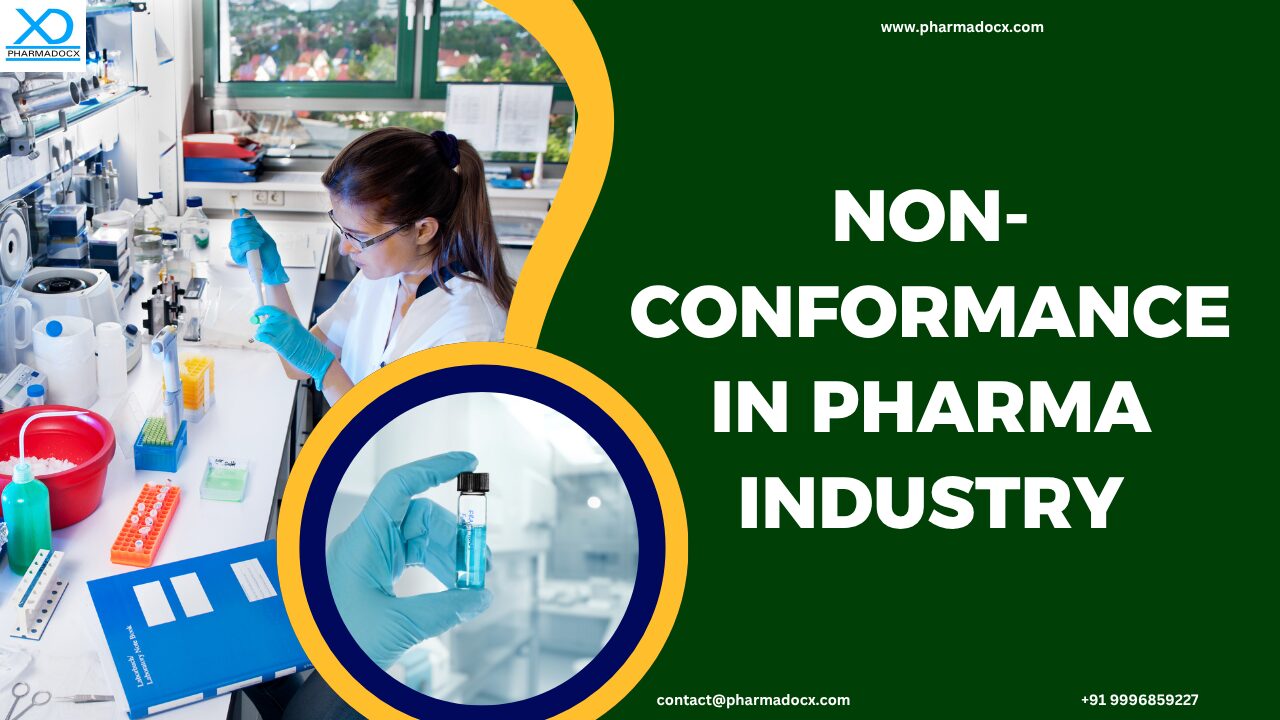
In pharmaceutical industry, a non-conformance is any deviation from approved specifications, procedures, or regulatory requirements. It can affect product quality, safety, efficacy, or compliance. It signals that a process, product, or documentation has failed to meet Good Manufacturing Practice (GMP) standards. Hence, it must be investigated, corrected, and prevented from recurring. Thus, non-conformance in pharma industry is not just a technical issue. It is a compliance and patient safety risk. Effective management requires robust QMS systems, thorough documentation, and proactive CAPA programs. It is necessary to ensure integrity of medicines and maintain trust with regulators and patients.
What is non-conformance in pharma industry?
Non-conformance in pharma industry is a failure to meet predefined quality standards or regulatory requirements during drug manufacturing, testing, packaging, storage, or distribution. It can compromise patient safety, regulatory compliance, and company reputation if not addressed promptly. It may arise from issues in manufacturing processes, equipment, documentation, or raw materials. Non-conformance is typically identified during inspections, audits, or quality checks. Non-conformance is treated seriously because it can compromise patient safety and regulatory compliance, thereby leading to recalls, penalties, or reputational damage. Companies address it through structured investigation, corrective actions, and preventive measures. They ensure that the root cause is eliminated and future risks are minimized.
Types of non-conformances in pharmaceutical industry
We have listed the types of non-conformance in pharma industry.
- Product non-conformance: Product non-conformance occurs when the finished product fails to meet established specifications. Examples are incorrect potency, weight variation, or contamination. It directly impacts patient safety and efficacy, making it the most critical type of deviation. Such issues often lead to batch rejection, recalls, or regulatory scrutiny.
- Process non-conformance: Process non-conformance arises when manufacturing steps deviate from validated procedures, like incorrect mixing times or temperature variations. These deviations can compromise consistency and reproducibility of the product. If not corrected, they undermine GMP compliance and risk producing substandard medicines.
- Documentation non-conformance: This type of non-conformance in pharma industry involves errors or omissions in records, such as missing signatures, incomplete batch records, or data integrity violations. Documentation lapses are serious because regulators view records as proof of compliance and product quality. Even minor errors can trigger audit findings, warning letters, or penalties.
- System non-conformance: System non-conformance reflects weaknesses in the quality management system, such as inadequate training, poor SOP adherence, or ineffective CAPA programs. These systemic gaps create recurring compliance risks across multiple processes. Addressing them requires organizational changes and not just batch-level corrections.
10 Common causes of non-conformance in pharma industry
We have highlighted some of the common causes of non-conformance in pharma industry
- Human error: Operators may skip steps, mislabel materials, or incorrectly record data during manufacturing. Even small mistakes can cascade into significant quality issues. Training and competency checks are critical to minimize this risk.
- Equipment failure: Machines that are poorly maintained, uncalibrated, or malfunctioning can produce inconsistent results. This leads to deviations in batch quality or contamination risks. Preventive maintenance and validation programs are essential safeguards.
- Process deviations: When manufacturing parameters like temperature, pressure, or mixing time are not followed, the process becomes non-compliant. Such deviations compromise reproducibility and product integrity. Strict adherence to validated procedures prevents these lapses.
- Raw material issues: Suppliers may deliver materials that fail to meet specifications or contain impurities. Using such inputs directly impacts product safety and efficacy. Supplier audits and incoming quality checks are vital controls.
- Documentation errors: Incomplete records, missing signatures, or data integrity violations undermine compliance. Regulators treat documentation as proof of product quality. Hence, errors are taken very seriously. Robust SOPs and electronic systems help reduce mistakes.
- Inadequate training: Employees who are not properly trained may misinterpret SOPs or fail to follow GMP requirements. This creates recurring non-conformance across processes. Continuous training and competency assessments build resilience.
- Environmental factors: Uncontrolled humidity, temperature, or particulate levels in cleanrooms can compromise product sterility. These conditions often go unnoticed until deviations are detected. Environmental monitoring systems ensure compliance with GMP standards.
- Supplier non-compliance: External vendors may fail to meet regulatory expectations for quality, testing, or documentation. This introduces risks into the supply chain that affect finished products. Strong supplier qualification and monitoring programs mitigate these issues.
- Poor change management: Uncontrolled changes in processes, equipment, or materials can lead to unintended deviations. Without proper risk assessment, these changes disrupt validated systems. A formal change control system ensures compliance and traceability.
- Weak quality systems: Deficiencies in CAPA, audits, or SOP enforcement create systemic non-conformance. These gaps allow issues to recur instead of being permanently resolved. A robust QMS framework is essential for long-term compliance and patient safety.
Effects of pharmaceutical industry non-conformance
Non-conformance in the pharmaceutical industry has serious effects across multiple dimensions, namely regulatory, operational, and reputational. We have discussed the effects of non-conformance.
- Regulatory consequences: Non-conformance in pharma industry can lead to warning letters, fines, or product recalls. Additionally, it may result in suspension of manufacturing licenses. Moreover, it damages credibility with regulatory authorities.
- Operational impact: Non-conformance causes batch rejections and production delays. Additionally, it increases costs due to rework, investigations, and wasted resources. Furthermore, it disrupts supply chain and delivery commitments.
- Patient safety risks: Unsafe or ineffective medicines may reach patients. Moreover, it can cause adverse health outcomes or treatment failures. Additionally, it erodes public trust in the company’s products.
- Reputational damage: Non-conformance in pharma industry weakens brand image and market confidence. Additionally, it reduces trust among healthcare providers and consumers. Moreover, it makes future regulatory approvals more difficult.
- Financial losses: Non-conformance leads to direct costs from recalls, fines, and wasted batches. Indirect losses occur from litigation, insurance claims, and lost sales. Furthermore, long‑term revenue declines due to damaged reputation.
How do pharma companies handle non-conformance?
Pharma companies handle non-conformance through a structured and disciplined approach to protect patient safety and maintain regulatory compliance.
- Identification: Non-conformance is detected during in-process checks, audits, inspections, or customer complaints. Immediate recognition ensures the issue is contained before escalation. Affected batches or processes are quarantined to prevent further risk.
- Investigation: Root cause analysis is performed. Cross-functional teams (QA, production, engineering) collaborate to assess the deviation. The goal is to understand why the non-conformance occurred and not just what happened.
- Correction: Immediate corrective actions are taken, such as reprocessing, re-labeling, or discarding affected products. These actions contain the problem and prevent unsafe products from reaching patients. Corrections are documented for traceability and audit readiness.
- Corrective and Preventive Action (CAPA): Long-term measures are designed to eliminate root causes and prevent recurrence. Preventive actions may include SOP updates, equipment revalidation, or staff retraining. CAPA effectiveness is monitored to ensure sustainable compliance.
- Documentation and reporting: Every non-conformance is recorded in a Non-Conformance Report (NCR) or deviation log. Documentation provides evidence of compliance and transparency for regulators. Reports are reviewed during audits to demonstrate robust QMS practices.
- Follow-up and monitoring: Effectiveness checks confirm that corrective actions solved the issue. Trend analysis helps identify recurring patterns across batches or processes. Continuous monitoring strengthens the overall quality system.
Non-conformance in pharma industry can impact patient health and operations
Therefore, non-conformance in pharma industry is a critical signal of deviation from quality, safety, or regulatory standards. Its impact can ripple across patient health, compliance, operations, and reputation. While it may arise from human error, equipment failure, or systemic weaknesses, the way a company responds defines its resilience and credibility. By adopting a structured approach, pharma organizations not only resolve immediate issues but also strengthen their quality systems for the future. Thus, managing non-conformance effectively is not just about regulatory survival. It is about safeguarding patients, sustaining trust, and ensuring long-term excellence in pharmaceutical manufacturing. Email at [email protected] or call/Whatsapp on 9996859227 for all your pharmaceutical industry regulatory requirements.