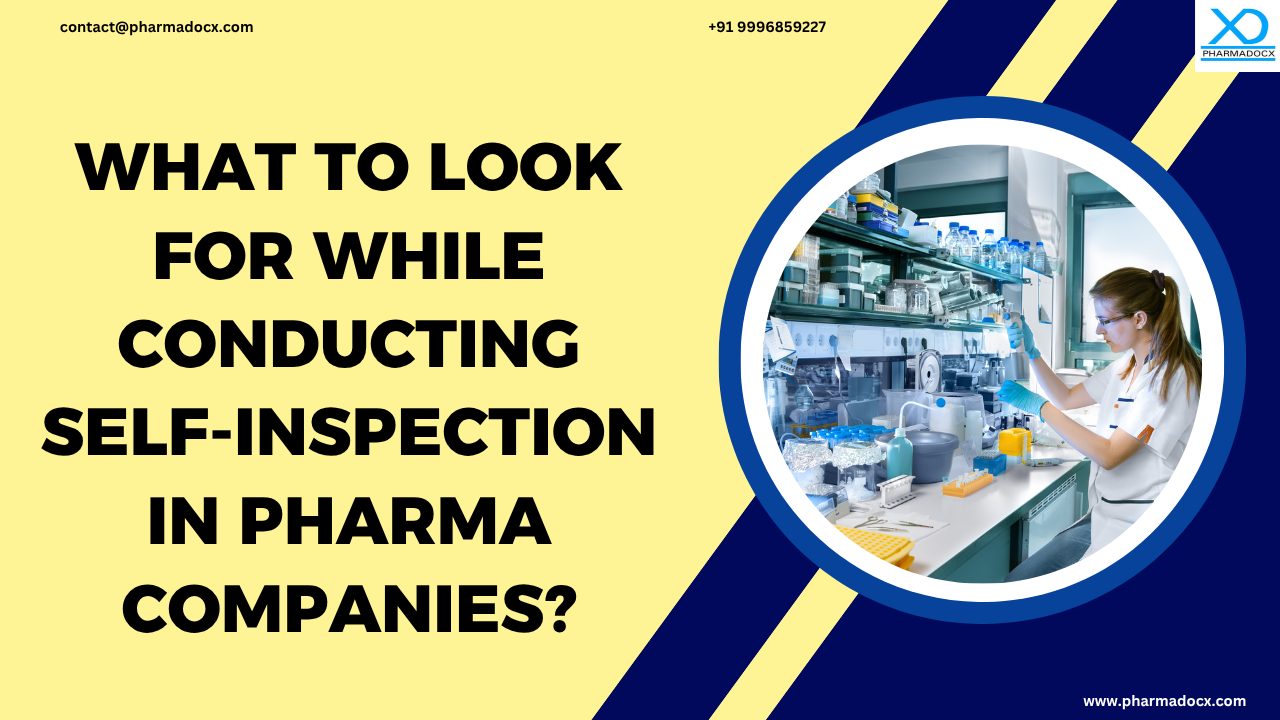
Self-inspection in pharma companies is a planned, systematic internal audit process aimed to evaluate processes, facilities, and systems. It is designed to ensure compliance with Good Manufacturing Practices (GMP), regulatory requirements, and internal quality standards. It helps identify gaps, risks, and non-conformities in production, quality control, and facility operations, thereby enabling corrective and preventive actions. Thus, self-inspection is a strategic tool for pharma companies to strengthen quality systems and reduce regulatory risks. It helps to build a culture of continuous improvement.
What is self-inspection in pharma companies?
Self-inspection in pharma companies is a structured internal audit process carried out by qualified teams, usually led by Quality Assurance, to evaluate compliance with current Good Manufacturing Practices (cGMP) across all departments. It involves scheduled and sometimes unscheduled reviews of operations, such as production, quality control, warehousing, engineering, and HR. Detailed checklists are used to identify deficiencies categorized as minor, major, or critical. The purpose is to ensure adherence to SOPs, regulatory requirements, and quality systems, while driving corrective and preventive actions (CAPA). Thus, self-inspection fosters a culture of compliance and prepares the organization for external regulatory inspections.
5 major objectives
- Ensure GMP compliance: Verify that all operations, documentation, and facilities adhere to current Good Manufacturing Practices and regulatory requirements.
- Identify deficiencies: Detect gaps, deviations, or non-conformities in processes, equipment, and systems before they escalate into compliance issues.
- Promote continuous improvement: Drive corrective and preventive actions (CAPA) to strengthen quality systems and enhance operational efficiency.
- Prepare for external audits: Build audit readiness by simulating regulatory inspections and ensuring teams are aligned with standards.
- Foster a quality culture: Encourage accountability, awareness, and ownership across departments, embedding compliance into daily practices.
What to look for while conducting self-inspection in pharma companies?
- Production (manufacturing and packing): Inspect batch records, equipment cleanliness, and adherence to SOPs. Verify that processes are followed consistently without shortcuts or undocumented changes. Ensure packaging operations prevent mix-ups and labeling errors.
- Quality control (QC): Check laboratory practices, documentation accuracy, and calibration of instruments. Review test methods for compliance with pharmacopeial standards. Confirm that out-of-specification (OOS) results are investigated and closed properly.
- Warehouse operations: Evaluate storage conditions for raw materials and finished goods, including temperature and humidity controls. Confirm segregation of quarantined, released, and rejected materials. Ensure labeling and traceability systems are robust.
- Engineering and utilities: Assess maintenance logs, calibration records, and performance of critical systems, such as HVAC and water purification. Verify that preventive maintenance schedules are followed. Ensure utilities are validated and consistently monitored.
- Human resources and training: Check personnel training records for GMP awareness and role-specific competencies. Confirm that gowning and hygiene practices are followed correctly. Ensure only qualified staff are assigned to critical operations.
- Quality assurance (QA): Review CAPA implementation, change control records, and deviation handling. Findings of self-inspection in pharma companies are documented, categorized (minor, major, critical), and tracked to closure.
- Documentation practices: Review whether records are complete and accurate. Ensure that entries are signed, dated, and free from unauthorized alterations. Confirm that controlled documents (SOPs, batch records, logbooks) are current and properly distributed.
- Validation and qualification: Check that equipment, processes, and analytical methods are validated according to regulatory standards. Verify that revalidation schedules are followed and documented. Ensure facility and utility qualifications (IQ, OQ, PQ) are maintained and updated.
- Safety and environmental controls: Inspect compliance with occupational health and safety requirements, including protective equipment use. Review waste disposal practices for chemical and biological materials. Confirm that environmental monitoring programs are active and deviations are addressed.
- Supplier and material management: Evaluate supplier qualification records and audit reports. Ensure raw materials are sourced from approved vendors and accompanied by valid certificates of analysis. Verify that incoming materials are tested, released, and tracked before use in production.
Importance of self-inspection in pharma companies
Self-inspection holds critical importance in pharmaceutical companies because it acts as a proactive safeguard for compliance and quality. It ensures that operations consistently meet Good Manufacturing Practices (GMP) and regulatory standards, thereby reducing the risk of non-conformities that could compromise patient safety. By identifying gaps early, companies can implement corrective and preventive actions (CAPA), strengthen audit readiness, and build confidence with regulators. Beyond compliance, self-inspection fosters a culture of accountability and continuous improvement, empowering teams to maintain high standards in production, quality control, and overall organizational performance.
Frequency and planning of self-inspections
Frequency and planning of self-inspection in pharma companies are carefully structured to ensure consistent GMP compliance and audit readiness.
- Frequency: Self-inspections are typically conducted twice a year (half-yearly) for each department. However, they may also be scheduled more frequently before client or regulatory inspections, or triggered by specific events such as out-of-specification (OOS) results, product complaints, or batch failures. In addition to scheduled audits, unscheduled surprise inspections can be carried out by QA to strengthen compliance.
- Planning: A detailed yearly self-inspection schedule is prepared by QA. This schedule specifies the audit team, date, time, and department to be inspected and is approved by the QA Head. Controlled copies of the schedule are distributed to all relevant departments, while QA retains the master copy.
- Flexibility: A period of about 15 days is acceptable in the audit schedule to accommodate operational realities. Risk-based planning is also applied. Departments or processes with higher risk scores may be inspected quarterly, while lower-risk areas may be audited annually. This ensures resources are focused where compliance risks are greatest.
Common issues usually identified during self-inspection in pharmaceutical companies
During self-inspection in pharma companies, several issues are typically identified:
- Documentation errors: Incomplete batch records, missing signatures, backdated entries, or uncontrolled SOPs. These lapses compromise data integrity and can trigger regulatory observations.
- Deviation from SOPs: Operators not following written procedures, shortcuts in manufacturing steps, or inconsistent practices. Such deviations often indicate gaps in training or oversight.
- Poor housekeeping and hygiene: Unclean equipment, improper gowning, or inadequate facility cleanliness. These issues raise contamination risks and reflect weak GMP discipline.
- Calibration and maintenance gaps: Instruments not calibrated on time, missing maintenance logs, or unqualified equipment in use. This undermines reliability of test results and production consistency.
- Material handling issues: Improper segregation of quarantined, released, and rejected materials, or incorrect labeling. These errors can lead to mix-ups and product quality failures.
- Training deficiencies: Personnel lacking updated GMP training or competency records. This often results in repeated minor deviations and weak compliance culture.
- CAPA ineffectiveness: Corrective actions not implemented fully, preventive measures delayed, or repeated findings across audits. This signals systemic weaknesses in the quality system.
- Environmental monitoring failures: Missing records, out-of-limit results not investigated, or inadequate controls in cleanrooms. These are critical for sterile product manufacturing.
Pharmadocx Consultants: Your trusted pharma regulatory support
Therefore, self-inspection in pharma companies is a cornerstone of a robust quality system. It is a vital mechanism for safeguarding product quality, patient safety, and regulatory compliance. It is aimed to systematically identifying gaps, enforce GMP compliance, and drive corrective and preventive actions. Self-inspections also strengthen audit readiness, foster a culture of accountability, and encourage continuous improvement across departments. Hence, self-inspection not only minimizes regulatory risks but also enhances operational efficiency and builds trust with regulators, customers, and patients. It drives resilience, credibility, and growth in a highly regulated industry. Thus, self-inspection is an indispensable tool for long-term success in the pharma industry. Need regulatory support to enter the highly regulated pharma industry? Drop an email at [email protected] or call/Whatsapp on 9996859227.