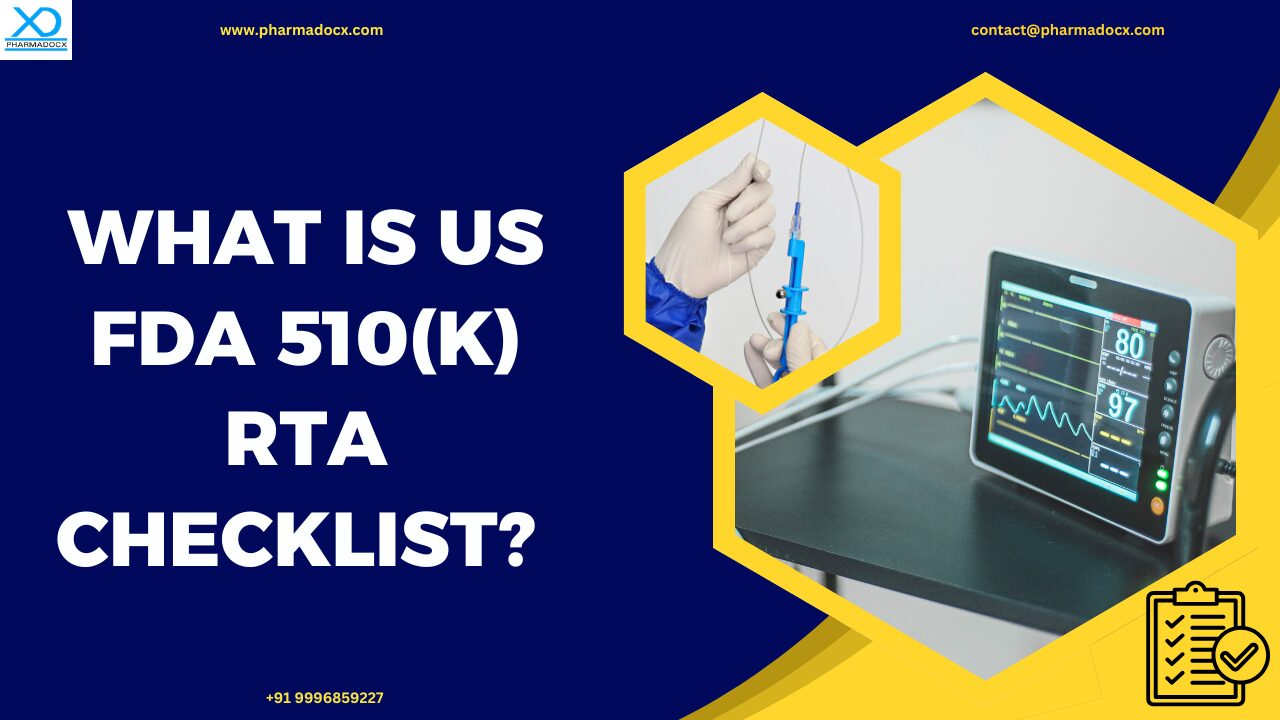
The 510(k) pathway is used for medical device approval in the US when the device has a predicate. A predicate device is an already cleared product with similar intended use and technological characteristics. Manufacturers must demonstrate substantial equivalence by showing that the new device is as safe and effective as the predicate. This pathway is faster and less burdensome. However, this pathway requires careful alignment of claims and technical documentation with the predicate. FDA 510(k) RTA Checklist is a screening tool used to ensure a 510(k) submission is administratively complete before review begins. If a submission fails this checklist, the FDA issues a “Refuse to Accept” letter. The review clock does not start until deficiencies are corrected.
What is FDA 510(k) RTA?
The FDA 510(k) Refuse-to-Accept (RTA) process is the initial screening stage the FDA applies to every 510(k) submission to ensure it is administratively complete before moving into substantive scientific review. Within 15 calendar days of receiving a submission, FDA reviewers use the RTA checklist to verify that all required elements are present and properly organized. If the submission is missing critical information or contains major deficiencies, the FDA issues a Refuse-to-Accept letter. This means the review clock does not start at this point. The applicant must correct the deficiencies within 180 days or the submission will be considered withdrawn.
This process is not about evaluating the safety or effectiveness of the device itself but rather about ensuring the submission package is complete and ready for detailed review. Thus, the RTA is a gatekeeping mechanism that enforces consistency, prevents wasted effort on incomplete submissions, and provides manufacturers with clear expectations for what must be included in a 510(k).
What is the FDA 510(k) RTA Checklist?
The FDA 510(k) RTA Checklist is a standardized screening tool the FDA uses to quickly determine whether a 510(k) submission is administratively complete before beginning substantive review. It is essentially a gatekeeping mechanism. Within 15 calendar days of receiving a submission, FDA reviewers go through this checklist to verify that all required elements, such as forms, device description, labeling, predicate comparison, performance data, and declarations, are present and properly organized. If critical items are missing or incomplete, the FDA issues a “Refuse to Accept” letter. This stops the review clock until the applicant corrects deficiencies. Thus, the FDA 510(k) RTA checklist ensures consistency and prevents wasted effort on incomplete submissions. Moreover, it helps manufacturers understand exactly what baseline documentation is required to move forward in the 510(k) clearance process.
- Purpose: FDA 510(k) RTA checklist ensures completeness of 510(k) submissions before FDA begins detailed review.
- Timeline: FDA conducts the RTA review within 15 calendar days of submission. If deficiencies are found, applicants have 180 days to respond.
- Scope: FDA 510(k) RTA checklist covers administrative and content requirements, such as forms, device description, labeling, predicate comparison, and test data.
- Outcome: Passing the RTA checklist allows the submission to move forward to substantive scientific review.
10 key components of the FDA 510(k) RTA Checklist
1. Administrative information
The FDA 510(k) RTA Checklist requires submission of FDA forms, such as Form 3514, along with a cover letter and contact details. These documents establish the identity of the applicant and the basic administrative framework of the submission. Without them, the FDA cannot properly log or track the 510(k) file.
2. Device description
A clear technical description of the device must be provided, including specifications, engineering drawings, and photos. This ensures FDA reviewers understand the design and intended use of the device. It also sets the foundation for comparing the new device to a predicate.
3. Predicate comparison
Manufacturers must include a side-by-side comparison of the new device with a legally marketed predicate device. This comparison highlights similarities and differences in intended use, design, and performance. It is central to demonstrating substantial equivalence, which is the core of the 510(k) pathway.
4. Labeling
Draft labeling, instructions for use, and patient information must be submitted. These materials show how the device will be presented to users and patients, including warnings and indications. FDA uses this to confirm that labeling aligns with the claimed intended use.
5. Sterilization and packaging information
If the device is supplied sterile, sterilization methods and validation data must be included. Packaging details are also required to ensure sterility is maintained until use. This protects patient safety and ensures compliance with recognized standards.
6. Shelf life and biocompatibility data
Devices with patient contact must include biocompatibility testing results. Shelf life studies are required to demonstrate that performance and safety are maintained over time. These data reassure FDA that the device remains safe and effective throughout its intended use period.
7. Performance testing
Bench, animal, or clinical performance data must be summarized to support safety and effectiveness. The FDA 510(k) RTA Checklist ensures that appropriate testing has been conducted and documented. This evidence is critical for FDA to assess whether the device performs as intended.
8. Software and cybersecurity documentation
For devices with software, documentation, such as software description, validation, and cybersecurity measures, must be included. FDA requires this to confirm that software functions reliably and securely. It also ensures protection against risks, like data breaches or malfunction.
9. Truthful and accurate statement
A signed statement declaring that all information provided is truthful and accurate must be included. This is a legal requirement that holds the applicant accountable for the integrity of the submission. Without it, the FDA cannot proceed with review.
10. Unique Device Identifier (UDI) and SaMD requirements
For software as a medical device (SaMD), additional documentation, such as UDI information and software bill of materials (SBOM), may be required. These components help FDA track devices and assess software dependencies. They are part of modern regulatory expectations for digital health technologies.
Why is the FDA 510(k) RTA Checklist important?
FDA 510(k) RTA checklist is important because it acts as a quality gate for submissions. It ensures that only complete and properly structured applications move forward to substantive review. This prevents FDA reviewers from wasting time on incomplete or poorly prepared submissions, which could otherwise delay the clearance process. For manufacturers, it provides a clear roadmap of expectations, reducing uncertainty and helping them avoid costly delays or rejections.
- Ensures submission completeness: FDA 510(k) RTA checklist verifies that all required administrative, technical, and scientific elements are present before FDA begins substantive review. This prevents incomplete submissions from entering the process and wasting regulatory resources.
- Speeds up review timelines: By filtering out incomplete applications early, the RTA process helps FDA focus only on submissions that are ready for detailed evaluation. This reduces back-and-forth communication and accelerates clearance for well-prepared devices.
- Promotes consistency and fairness: Every applicant is held to the same checklist requirements, ensuring uniformity across submissions. This consistency builds transparency and fairness in regulatory review.
- Reduces risk of delays and withdrawals: If deficiencies are found, applicants receive an RTA letter and have 180 days to correct issues. This structured process minimizes the risk of outright rejection or indefinite delays. It gives manufacturers a clear opportunity to fix problems without losing their submission.
- Strengthens patient safety and regulatory confidence: By requiring critical data upfront, the checklist ensures FDA has the information needed to assess safety and effectiveness. This protects patients and builds confidence in the regulatory system. Thus, it ensures that only well-documented devices move forward.
We at Pharmadocx Consultants provide comprehensive support with FDA 510(k) submissions, including FDA 510(k) RTA Checklist readiness, documentation review, and gap assessments. To easily clear US FDA 510(k) review, email at [email protected] or call/Whatsapp on 9996859227.