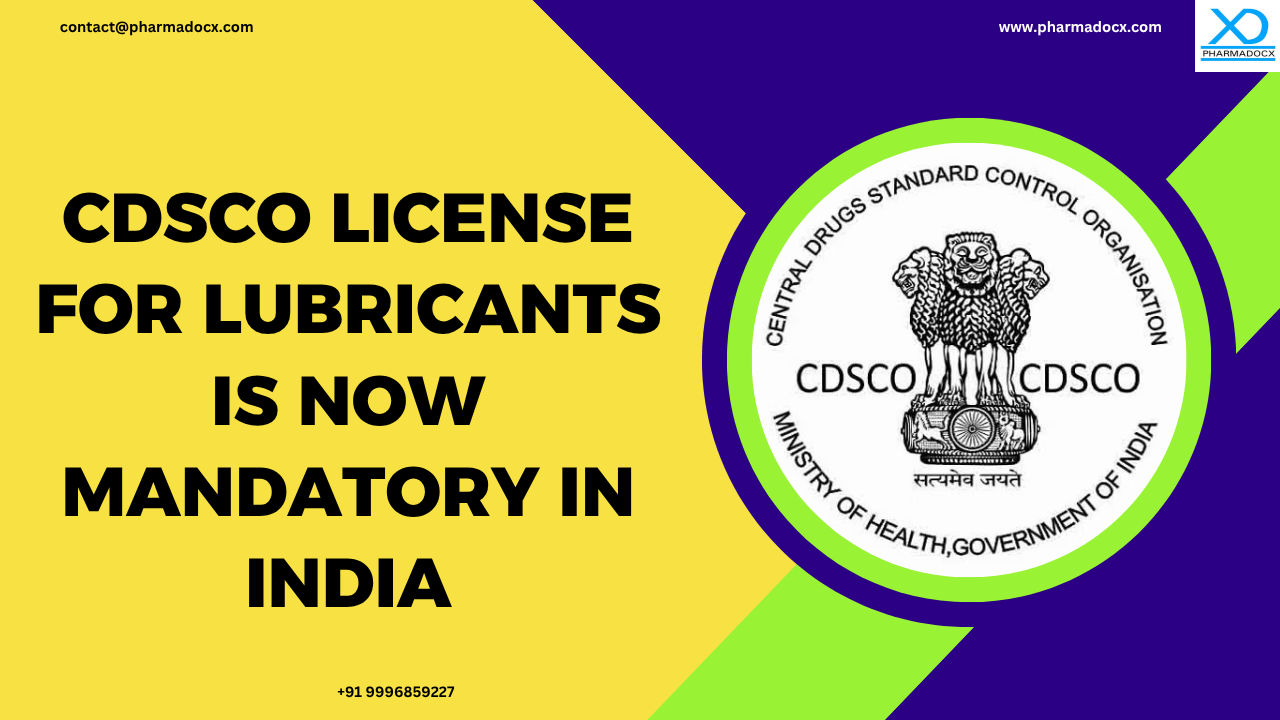
Previously in India, intimate lubricants were generally treated as cosmetic or personal care products rather than medical devices. However, CDSCO recognized that lubricants, when used for intimate or reproductive purposes, pose health risks. Therefore, they require stricter oversight. Moreover, global regulators, such as the FDA and EU MDR, had already classified lubricants as medical devices. Thus, India moved to harmonize its framework to ensure consumer safety, export credibility, and regulatory consistency. Thus, to be marketed in India, lubricants will have to comply with CDSCO medical device regulatory guidelines. Notably, CDSCO license for lubricants will have to be mandatorily secured to launch your product in India.
Change in regulatory guidelines for lubricants
Previously, lubricants were regulated as cosmetic or personal care products. Manufacturers only needed to comply with basic safety and labeling requirements. This meant there was no mandatory risk-based classification, no requirement for biocompatibility testing, and no premarket approval process. As cosmetics, lubricants could be marketed without the need to demonstrate condom compatibility, fertility safety, or intimate tissue biocompatibility. This lighter regulatory framework made entry into the market easier but left gaps in consumer protection, especially for products used in sensitive reproductive health contexts.
Regulations for lubricants in India were changed because the CDSCO recognized that lubricants, when used for intimate or reproductive purposes, pose health risks. Therefore, they require stricter regulatory framework. Unlike general personal care products, lubricants come into direct contact with mucosal tissues. They can affect condom integrity and may influence fertility outcomes. Furthermore, global regulators had already classified lubricants as medical devices. Thus, CDSCO moved to harmonize its regulatory framework with global standards. The aim was to ensure consumer safety and regulatory consistency. By shifting lubricants under the Medical Devices Rules, 2017, CDSCO now enforces risk-based classification, biocompatibility testing, and licensing requirements. This closes earlier gaps in consumer protection and aligns India’s market with international standards.
Why are lubricants being considered medical devices in India now?
Lubricants are being classified as medical devices because their intended use involves direct application to sensitive human tissues, often in intimate or reproductive contexts, which requires strict safety and biocompatibility standards. CDSCO now treats lubricants as medical devices rather than cosmetics. Thus, CDSCO license for lubricants is a mandatory requirement now.
CDSCO regulations for lubricants
CDSCO class for lubricants
The CDSCO class for lubricants is Class B. Lubricants have been classified as Class B because they involve prolonged contact with mucosal membranes, which carries a low-to-moderate risk of adverse effects. Class B is assigned to products that are not life-supporting but still require controlled safety validation due to their intimate use. The classification ensures that lubricants undergo biocompatibility testing (ISO 10993), condom compatibility studies, and quality system compliance (ISO 13485) before approval. Unlike Class A (minimal risk devices), lubricants cannot be treated as trivial consumer products, as improper formulation may cause irritation, infections, or compromise reproductive health. Thus, CDSCO has placed lubricants in Class B to balance accessibility with stricter safety oversight, aligning India’s framework with FDA and EU MDR standards.
CDSCO license for lubricants
CDSCO license for lubricants and license application pathway will be per the requirements of CDSCO class B guidelines.
- Manufacturing license: The CDSCO license for manufacturing lubricants is MD 5. The applicant will have to use MD 3 to apply for a license to manufacture, sell, and distribute lubricants in India. The lubricants manufacturing license for sale and distribution in India will be granted under MD 5.
- Loan license: A loan license permits a company without a manufacturing facility to manufacture medical devices. With the loan license, the company can use the manufacturing facility of another company that is manufacturing the same product. The applicant will have to use MD 4 to apply for a loan license for lubricants. The loan license to manufacture lubricants without a manufacturing facility will be granted under MD 6.
- Import license: The CDSCO license for importing lubricants is MD 15. The applicant will have to use MD 14 to apply for a license to import lubricants into India. The lubricants import license for sale and distribution in India will be granted under MD 15.
- Test license: CDSCO MD 13 test license permits manufacture of small quantities of medical devices for testing purpose only and not for sale. The MD-13 license is a valuable resource for manufacturers to develop and assess medical devices in controlled settings. This license aims to promote innovation, quality assurance, and advancements in the medical device manufacturing industry without the need for a manufacturing license. To manufacture small quantities of lubricants for testing purposes, you need to obtain the CDSCO MD 13 test license. The applicant will have to use MD 12 to apply for a test license for lubricants. CDSCO will grant the test license for manufacturing lubricants for testing purposes under Form MD-13.
Documents required for CDSCO license for lubricants
We have provided an overview of the documents required for CDSCO license for lubricants.
- Cover letter
- Device master file
- Plant master file
- Constitution proof (GST Certificate / CIN / MOA AOA)
- Sale Deed/Rent Deed proving legal ownership of the manufacturing facility.
- Organization identity proof, such as UDYAM Aadhar, PAN card, etc.
- Certificate of analysis of 3 consecutive batches
- Manufacturing facility building layout presenting the dimensions of each room and the location of all the equipment in the facility.
- ISO 13485 Certificate
- Fire and Pollution NOCs
- In case of loan license application, consent letter from the principal manufacturing unit, principal manufacturer’s license and product permit, and wholesale license of the applicant.
- Documents proving the manufacturing team comprises competent, qualified, and experienced staff.
- Test license (if applicable)
- Free sale certificate for import license
For a detailed list of documents, feel free to reach out to us. Additionally, we provide comprehensive document preparation service. We will prepare and compile the necessary documents per CDSCO guidelines.
How to apply for CDSCO license for lubricants?
We have provided a step-by-step guide on how to apply for CDSCO license for lubricants.
- Portal login: Sign in or login to CDSCO online registration portal, SUGAM.
- Form filling: Fill the application form (MD 3, MD 4, MD 14, or MD 12; as applicable for your license type). Details, such as device’s classification, brand name, intended use, and a detailed product description, will be required.
- Document submission: Prepare and upload essential supporting documents required for license application. This will include ISO 13485 certificate, Plant Master File, Device Master File, organisation details etc.
- Fee payment: Pay the necessary CDSCO license application fee.
- Application confirmation: Once all documents are submitted and fees are paid, you will receive an application number. This will confirm successful submission.
- Application review: CDSCO will meticulously review the application and all attached documents.
- CDSCO queries: If there are queries or discrepancies, CDSCO will reach out for clarification or additional information.
- Query response: CDSCO queries have to be promptly and accurately addressed. Submit any necessary supporting documents through the portal.
- License grant: Once all criteria are satisfied, the CDSCO license for lubricants (MD 5, MD 6, MD 13, or MD 15; as applicable) will be granted.
CDSCO lubricants license validity
CDSCO lubricants license will remain valid indefinitely. However, a license retention fee has to be paid every 5 years.
To easily secure the CDSCO license for lubricants, drop an email at [email protected] or call/Whatsapp on 9996859227.