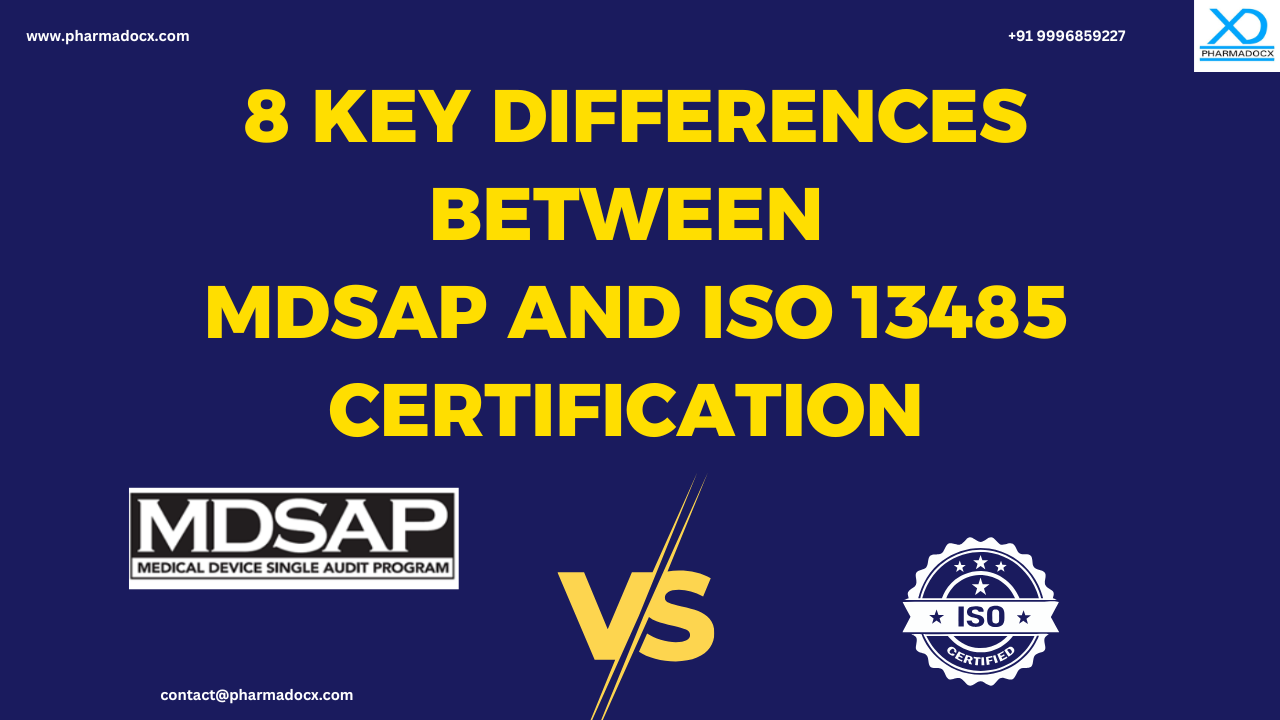
ISO 13485 is a global medical device quality management standard. On the other hand, MDSAP is a regulatory audit program built on ISO 13485 but extended to meet country‑specific requirements. Thus, ISO 13485 builds the QMS foundation whereas MDSAP verifies compliance across multiple jurisdictions. When entering the global medical device market, the question of whether MDSAP or ISO 13485 certification is required arises. Choosing the wrong certification can hinder approvals and limit access to markets, like Canada, where MDSAP is compulsory. Both certifications ensure medical device safety and effectiveness. However, they serve different purposes. While ISO 13485 establishes a strong QMS, MDSAP simplifies regulatory audits across multiple participating countries. In this blog, we have presented the key differences between MDSAP and ISO 13485 to help you choose the correct certification.
What is MDSAP?
The Medical Device Single Audit Program (MDSAP) is an international initiative that allows a single regulatory audit of a medical device manufacturer’s quality management system to satisfy the requirements of multiple regulatory authorities. Built on the foundation of ISO 13485, MDSAP expands audits to include country‑specific regulations from the U.S. FDA, Health Canada, Brazil’s ANVISA, Japan’s PMDA/MHLW, and Australia’s TGA. Instead of undergoing separate audits for each jurisdiction, manufacturers can streamline compliance through one rigorous, standardized audit cycle. This program not only reduces duplication and audit fatigue but also enhances global market access and strengthens regulatory confidence. Additionally, it ensures consistent oversight of risk management, post‑market surveillance, and supplier controls across participating countries. We have presented the list of MDSAP participating countries.
- Canada: Health Canada
- United States: FDA (Food and Drug Administration)
- Brazil: ANVISA (National Health Surveillance Agency)
- Australia: TGA (Therapeutic Goods Administration)
- Japan: PMDA (Pharmaceuticals and Medical Devices Agency)/MHLW (Ministry of Health, Labour and Welfare of Japan)
6 Benefits of MDSAP
- Extended market access: MDSAP enables manufacturers to meet regulatory requirements of five major jurisdictions (USA, Canada, Brazil, Japan, Australia) through a single audit. This reduces barriers to entry and accelerates global expansion opportunities.
- Reduced audit burden: Instead of undergoing multiple separate audits, companies face one comprehensive audit that satisfies multiple regulators. This saves time, resources, and minimizes operational disruptions.
- Regulatory confidence: Regulators view MDSAP certification as a strong indicator of compliance and reliability. It enhances credibility with authorities, investors, and customers alike.
- Cost efficiency: Although MDSAP audits are more rigorous, they consolidate costs compared to multiple country‑specific audits. Over time, this reduces compliance expenses and improves ROI.
- Consistent oversight: MDSAP enforces standardized audit procedures across jurisdictions, ensuring uniform quality and risk management practices. This consistency strengthens internal QMS discipline and supplier governance.
- Risk mitigation: By integrating vigilance, CAPA, and supplier controls across regions, MDSAP reduces the chance of regulatory non‑conformities. It also improves readiness for inspections and product recalls.
A clear understanding of the MDSAP certification benefits will help you correctly choose between MDSAP and ISO 13485.
What is ISO 13485?
ISO 13485 is an internationally recognized standard that defines the requirements for a Quality Management System (QMS) specifically tailored to organizations involved in the design, production, installation, and servicing of medical devices. It ensures that manufacturers consistently meet both customer and regulatory requirements while prioritizing patient safety. The standard emphasizes risk management, process control, documentation discipline, and regulatory compliance throughout the entire device lifecycle. Achieving ISO 13485 certification demonstrates that a company has established a robust, compliant QMS, which is often a prerequisite for market access in regions, such as the European Union, United States, Canada, and India. Hence, ISO 13485 certification is a cornerstone of global medical device regulation.
6 Benefits of ISO 13485
- Global market access: ISO 13485 certification is widely recognized by regulators across the EU, USA, Canada, India, and other regions. It is gateway for medical device manufacturers to enter international markets.
- Regulatory compliance: The certification demonstrates that a company’s QMS meets stringent regulatory requirements. This reduces the risk of product rejections, delays, or penalties during submissions and inspections.
- Quality and risk management: ISO 13485 enforces strong process controls, documentation discipline, and risk‑based thinking. This ensures safer products and minimizes the likelihood of recalls or adverse events.
- Business credibility: Certification signals to customers, partners, and investors that the company operates under globally accepted standards. It builds trust and strengthens competitive positioning in the medical device industry.
- Operational efficiency: By standardizing processes and documentation, ISO 13485 reduces inefficiencies and errors. This leads to smoother audits, better supplier management, and cost savings over time.
- Continuous improvement: The standard requires ongoing monitoring, CAPA (Corrective and Preventive Actions), and internal audits. This fosters a culture of continuous improvement and long‑term sustainability.
A clear understanding of the ISO 13485 certification benefits will help you correctly choose between MDSAP and ISO 13485.
8 Key differences between MDSAP and ISO 13485
MDSAP and ISO 13485 differ in scope, purpose, and regulatory impact. MDSAP is a regulatory audit program built on ISO 13485 but extended to verify compliance with country‑specific requirements across five jurisdictions (USA, Canada, Brazil, Japan, and Australia). In contrast, ISO 13485 is an international quality management standard that establishes the framework for designing, manufacturing, and servicing medical devices. Its focus is on risk management, documentation, and continuous improvement. While ISO 13485 certification is globally recognized and often a prerequisite for market entry, MDSAP consolidates multiple audits into one, reducing duplication but imposing a more rigorous, prescriptive audit sequence. Thus, ISO 13485 provides the foundation for compliance, whereas MDSAP acts as the overlay that validates regulatory readiness across multiple markets simultaneously.
| Feature | ISO 13485 | MDSAP |
| Type | International Quality Management System (QMS) standard | Single Audit Program accepted by multiple regulators |
| Purpose | Establishes a compliant QMS for medical device design, manufacturing, and servicing | Verifies compliance with ISO 13485 and country‑specific regulations |
| Scope | Global recognition (EU MDR, CDSCO, FDA submissions, UKCA, SFDA, etc.) | USA (FDA), Canada (Health Canada), Brazil (ANVISA), Japan (PMDA/MHLW), and Australia (TGA) only |
| Mandatory Status | Not mandatory but essential for CE Marking, CDSCO, FDA 510(k) | Mandatory in Canada for Class II–IV devices; optional but advantageous in participating countries |
| Audit Level | Moderate, clause‑based audits | Highly rigorous, prescriptive sequence covering risk, vigilance, CAPA, supplier management |
| Cost & Timeline | Lower cost, faster certification | Higher cost, longer audit cycle (3 years: initial + surveillance audits) |
| Best For | Startups, new manufacturers, firms entering single regions | Export‑focused companies targeting multiple regulated markets |
| Foundation vs Overlay | ISO 13485 is the foundation | MDSAP is the overlay built on ISO 13485 with added regulatory layers |
How to correctly choose between MDSAP and ISO 13485?
Choosing between MDSAP and ISO 13485 depends on your company’s stage, target markets, and regulatory strategy. If you are a new manufacturer or entering a single region, ISO 13485 is the right starting point. On the other hand, if you are expanding into multiple regulated markets (especially Canada, where MDSAP is mandatory for Class II–IV devices), MDSAP becomes the strategic choice.
- Starting as a new manufacturer: Choose ISO 13485 if you are a new manufacturer or entering a single market (EU, India, USA).It builds the QMS foundation and is often mandatory for CE Marking, CDSCO registration, and FDA submissions.
- Entering Canadian medical device market: Opt for MDSAP if you plan to sell your medical devices in Canada, where it is compulsory for Class II–IV devices. Without MDSAP, you cannot legally market Class II–IV devices in Canada.
- Audit complexity and cost: ISO 13485 audits are clause‑based and less resource‑intensive. MDSAP audits are more rigorous, prescriptive, and costlier but reduce duplication across participating regulatory jurisdictions.
We at Pharmadocx Consultants provide assistance with both MDSAP and ISO 13485 certification. To avail our service, drop an email at [email protected] or call/Whatsapp on 9996859227.